When a baby shows fussiness or gas due to lactose sensitivity, choosing a formula designed for gentle digestion is essential. This guide highlights five reliable options that are widely available on Amazon, explaining who each is best for, and why they’re strong choices for calming tummy troubles without sacrificing nutrition. The top picks are good for parents seeking lactose-friendly, easy-to-digest formulas for infants from newborn to the first year. A quick comparison table follows to help you decide at a glance.
| Product | Best For | Key Benefit |
|---|---|---|
| Similac 360 Total Care Sensitive (34.9-oz, value can) | Infants with lactose sensitivity needing all-day nutrition | 5 HMO prebiotics; three-pronged support for immune, digestion, and brain development |
| Similac 360 Total Care Sensitive (20.1-oz Tub) | Families seeking closer-to-breast-mmilk prebiotic blend | Exclusive 5-HMO blend; fussiness and gas relief |
| Similac 360 Total Care Sensitive Ready-to-Feed (2 oz, pack of 12) | On-the-go feeding or travel | Ready-to-feed format; includes kosher, halal, and gluten-free notes |
| Mama Bear Sensitivity Premium Infant Formula with Iron | Lactose-sensitive infants needing dual HMOs | Dual HMOs (2′-FL and LNnT); non-GMO; immune support |
| Earth’s Best Organic Sensitivity Infant Formula | Parents preferring organic, reduced-lactose option | Organic milk with prebiotics; DHA and ARA for development |
Similac 360 Total Care Sensitive (34.9-oz Value Can)

This formula targets fussiness and gas linked to lactose sensitivity while delivering complete nutrition. It includes 5 HMO prebiotics designed to mirror breast milk’s gut-friendly environment, supporting immune function and digestive health. Best for: parents seeking a robust, lactose-sensitive option with immune and digestive benefits in a value-size container.
- Best for: infants with lactose sensitivity who need reliable daily nutrition
- Why chosen: Strong triple-health focus—immune, brain development, and digestion
- Caution: Large can size may be inconvenient for smaller households; ensure proper storage after opening
Similac 360 Total Care Sensitive (20.1-oz Tub)

Designed for fussiness and gas related to lactose sensitivity, this formula emphasizes a near-breast-milk prebiotic blend. It’s a solid option for families who want a dependable daily formula with a focus on easing tummy troubles. Best for: households prioritizing a close-to-breast-mmilk prebiotic profile in a manageable tub size.
- Best for: easy-to-use tub format with strong prebiotic blend
- Why chosen: Represents the product line’s core approach to lactose sensitivity
- Caution: Not a ready-to-feed option; requires standard preparation
Similac 360 Total Care Sensitive Ready-To-Feed (2-fl-oz Bottle, Pack of 12)

This ready-to-feed option is ideal for busy families who travel or need quick feeds without mixing. It’s designed for fussiness and gas caused by lactose sensitivity, with a compact bottle size and practical single-serve portions. Best for: parents seeking a convenient, mess-free feeding option for on-the-go days.
- Best for: travel, daycare, or quick feeds
- Why chosen: Convenience without sacrificing the sensitive-tummy focus
- Caution: More expensive per ounce than powder forms; plan for volume needs
Mama Bear Sensitivity Premium Infant Formula With Iron

This powder formula includes dual HMOs (2′-FL and LNnT) for immune and digestive support, and it is non-GMO. It’s positioned as a lactose-sensitive option with enhanced tummy relief. Best for: families seeking dual-HMO support and a non-GMO option in a single-jar purchase.
- Best for: dual-HMO approach to mimic breast milk benefits
- Why chosen: Strong immune-digestive support claim via HMOs
- Caution: Check for any specific dietary considerations (e.g., iron needs) per infant
Earth’s Best Organic Sensitivity Infant Formula
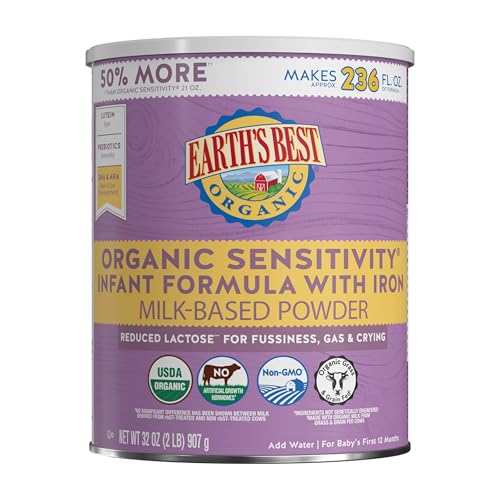
This organic option reduces lactose and adds prebiotics, DHA, and ARA to support brain and eye development while aiming to ease tummy troubles. Best for: parents who prefer organic dairy with a gentle lactose approach to support sensitive tummies in the first year.
- Best for: organic preference with sensitivity-focus
- Why chosen: Organic sourcing, plus DHA and ARA for development
- Caution: Organic formulas may have different taste preferences; gradual transition may be needed
Buying Guide: Key Considerations For Sensitive-Baby Formulas
When selecting a formula for a lactose-sensitive baby, consider these practical questions and factors to guide your choice.
- What level of lactose sensitivity does your baby have? Some formulas are reduced-lactose, while others are designed for lactose intolerance-like symptoms.
- Are prebiotics HMOs included? Look for blends similar to those in breast milk to support digestion and immune health.
- Powder vs. ready-to-feed. Do you need travel-friendly options or a convenient daily routine with less preparation?
- Organic vs. non-organic. Is an organic option important for your family’s preferences?
- DHA and lutein presence. Are you prioritizing brain and eye development alongside lactose sensitivity?
- Allergen considerations. Check for kosher, halal, gluten-free, or non-GMO status if relevant to your family.
Frequently Asked Questions
- What is the main sign that a baby might need a sensitive formula? Fussiness, gas, and upset tummy after feeding can indicate lactose sensitivity or intolerance.
- Is ready-to-feed formula better for sensitive babies? It can be more convenient for busy days, but powder formulas often offer the same nutritional profile with lower cost per ounce.
- Do HMOs in formula make a big difference? HMOs support immune health and gut bacteria, which may help reduce tummy discomfort for some babies.
- Can I switch between formulas easily? A gradual transition over several days is usually recommended to minimize digestive changes for babies.
- Are organic formulas more gentle for sensitive tummies? Organic status addresses farming and processing standards but does not guarantee reduced lactose; verify the label for lactose content.
- How should I store formula to maintain quality? Follow the product’s storage instructions after opening, and keep containers sealed in a cool, dry place.