Serious about safe, easy self-feeding? The best fruit feeders for babies let little mouths explore solids while minimizing choking risk. These 5 options cover a range of pouches, teats, and freezer-ready features for babies from 4 to 12 months and beyond. They’re ideal for parents seeking BPA-free, easy-to-clean feeders that work with both purees and frozen snacks. The top picks below are best for parents prioritizing safety, hygiene, and growth-free feeding stages.
| Product | Why it’s a fit |
|---|---|
| PandaEar 3 Pack | Three sizes for growing infants; durable silicone; teether function. |
| NatureBond 2 Pack | Easy to dismantle and wash; certified safety; value-packed. |
| Frida Baby Push Pop | Mess-minimizing design; great for fresh and frozen foods; teething aid. |
| RAZBABY 2-Pack | Freezable, supports baby-led weaning; ergonomic handle for little hands. |
| WAJIAYON 3 Pack | Multiple sizes included; versatile with frozen foods; teething relief. |
PandaEar 3 Pack Baby Fruit Food Feeder Pacifier

Best for multi-stage feeding, PandaEar’s set includes three sizes to follow a baby’s weaning journey. The feeders are made from 100% food-grade silicone and are BPA, lead, and phthalate-free. The 2mm holes allow safe exploration of soft solids, while the textured bow-handle doubles as a teether. This is a strong pick for parents who want a single brand solution across months-old stages.
- Best for growth: Three pouch sizes cover early tastes to chunkier textures.
- Better for teething: Textured handle provides gum relief.
- Limitation: Some caregivers may prefer simpler single-size options for very young infants.
NatureBond Baby Food Feeder / Fruit Feeder Pacifier (2 Pack)
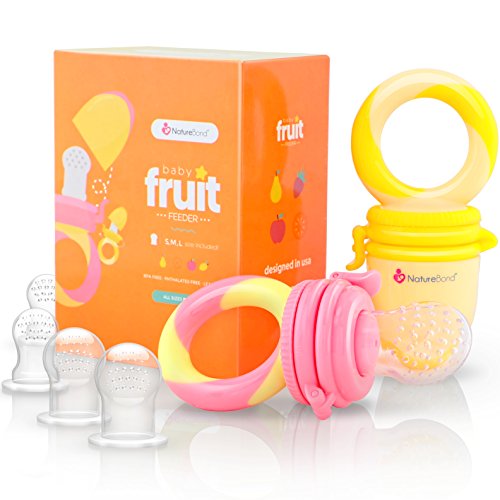
NatureBond is positioned as high-value, safety-first. This 2-pack feeder set is designed to be easy to dismantle and wash, with BPA-free and lead-free construction. The feeders are designed to work with a variety of foods and can be fully disassembled for thorough cleaning, which is ideal for parents focusing on hygiene and long-term use.
- Best for budget-conscious families needing multiple feeders.
- Better for thorough cleaning and long-term use.
- Limitation: May require more careful assembly for first-time users.
Frida Baby Push Pop Silicone Feeder (3 Count)

The Frida Push Pop focuses on a mess-minimizing design with a stand-up cap for easy filling and surface cleanliness. It’s suitable for both fresh and frozen foods, including breastmilk popsicles. This can be a strong pick for caregivers who want predictable cleanup and ease of use at mealtime and snack times alike.
- Best for quick meals and portability.
- Better for reducing kitchen messes during feeding.
- Limitation: The push-pop design may require familiarization for very small infants.
RAZBABY Baby Solids / Frozen Fruit Feeder Pacifier (2-Pack)

RAZBABY’s two-pack is designed to support baby-led weaning with a freezable, BPA-free silicone pouch. The ergonomic handle is sized for small hands, promoting a secure grip during independent feeding. It’s especially suitable for parents who want a durable option that doubles as teether relief when not feeding.
- Best for baby-led weaning and teething relief.
- Better for introducing cold textures safely.
- Limitation: Some babies may prefer larger textures as they grow older.
WAJIAYON Baby Fruit Feeder (3 Pack)
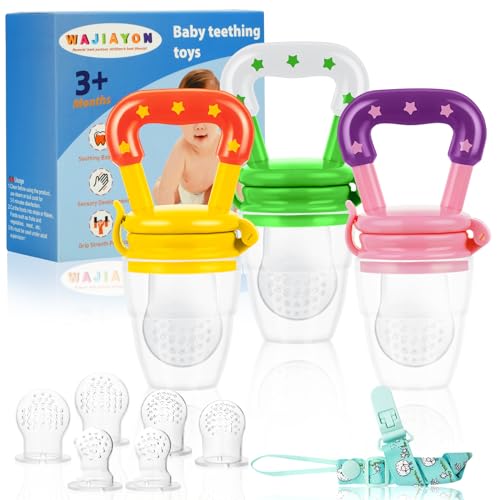
WAJIAYON includes three different pouch sizes—S, M, and L—to adapt to a baby’s development from 4 to 12 months and beyond. The feeders support a range of foods, including frozen fruits and vegetables, and aim to soothe gums during teething via the included textures. This set is practical for families wanting flexible sizing in one purchase.
- Best for adaptable sizing across months.
- Better for varied feeding textures from puree to finger foods.
- Limitation: Pouch sizes may be smaller than some separate oversized options.
Buying Guide: Key Considerations For Choosing A Baby Fruit Feeder
Material safety tops the list. Look for BPA-free, lead-free, and phthalate-free silicone to guard baby health during self-feeding. Consider how easy the feeder is to clean; feeders that dismantle fully and are dishwasher safe simplify hygiene. Pouch size and hole diameter matter for the child’s age and bite strength; 2mm holes help minimize choking risk while allowing safe exploration. Multi-pack options are convenient for growing babies and households with more than one child. Finally, a teething-friendly design adds value when the pouch doubles as a chew toy.
- Size matters: Start with the smallest pouch if your baby is early in weaning, then move up to larger sizes as teeth and control develop.
- Cleaning ease: Choose models that can be fully disassembled and, ideally, are dishwasher safe or boil-cleanable.
- Freezing capabilities: If you want chilled or frozen options, ensure the product supports freezer use and remains safe to handle.
- Durability: Silicone pouches and sturdy handles reduce the need for frequent replacement.
Frequently Asked Questions
- What is the best age to start using a fruit feeder?
- Do fruit feeders reduce choking risk?
- Can fruit feeders be used with breast milk or formula?
- Are all fruit feeders dishwasher safe?
- What maintenance helps feeders last longer?
Most feeders are suitable from around 4 to 6 months and up, depending on your child’s readiness for solids and teething stage. Always consult your pediatrician if unsure.
Yes, by containing small, digestible pieces. Look for feeders with 2mm holes to limit larger chunks while allowing flavor and texture exposure.
Some feeders are designed to hold breast milk or formula in addition to purees or frozen foods. Always verify the product’s intended use and safety guidelines before use.
Many are designed for easy cleaning and are dishwasher safe; check each product’s cleaning instructions to confirm.
Regular dismantling, thorough rinsing after use, and sterilizing or boiling as recommended by the manufacturer helps prevent buildup and extends lifespan.