Finding the right hip seat carrier helps keep your baby close while protecting your back and hips. This guide presents five top options suited for newborns through toddlers, highlighting who each is best for and why it stands out. Use the quick comparison table below to compare core features at a glance.
| Product | Best For | Key Benefit | Weight Range |
|---|---|---|---|
| HKAI Baby Hip Carrier | Parents needing multiple pockets and a breathable design | Five pockets, breathable mesh, ergonomic hip seat | Newborn to 36 months |
| Tushbaby Original Hip Seat Carrier (Grey) | Caregivers prioritizing lumbar support and simple setup | No foam padding; built-in lumbar support | Up to 45 lbs |
| Tushbaby Original Hip Seat Carrier (Black & Gold) | Caregivers seeking a stylish option with practical support | Firm hip seat; comfortable waistband | Up to 45 lbs |
| KAENU Baby Carrier With Hip Seat (Upgraded) | Parents wanting updated comfort and multiple positions | Upgraded design, multi-position, wide waistband | Newborn to toddler |
| Momcozy Carrier With Hip Seat | Active families requiring versatile carry modes | Six positions; 10mm cushion for comfort | Up to 44 lbs |
Buyer profiles: the right hip seat carrier for you depends on how you plan to use it (daily errands vs. long walks), whether you value lumbar support, storage capacity, or a lightweight setup, and the age range you expect to carry. The five options below cover a spectrum of needs—from ergonomic seats that support hip development to models with built-in storage for on-the-go families.
HKAI Hip Seat Carrier With Ergonomic Design
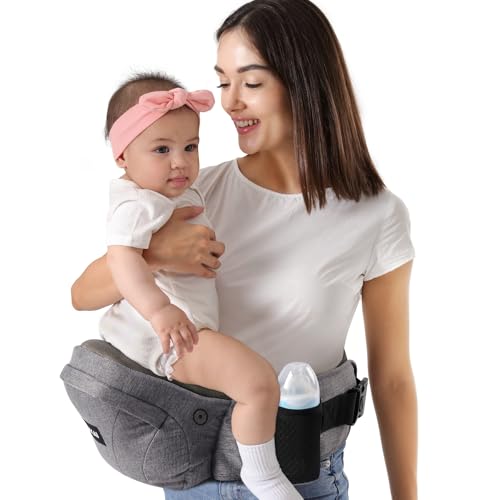
Best for caregivers who need organization on the go. HKAI’s hip seat supports newborns to about 36 months (up to 44 lbs) with multiple carrying positions, including facing in, facing out, side carry, and feeding. The five pockets and secure clasp provide convenient storage for bottles, wallets, keys, wipes, and diapers. The ergonomic design promotes a natural hip position with a 30-degree seat angle that keeps baby close for stability. Caution: heavier loads may feel bulkier, and proper adjustment is essential for comfort.
Tushbaby Original Hip Seat Carrier (Grey)

Best for caregivers seeking lumbar support and a straightforward setup. This hip seat carrier shifts weight to the hips and lower back, reducing shoulder strain. It uses a structured hip seat without foam padding and includes a built-in lumbar support and wide waistband for comfort during frequent transitions. Best for daily use and extended wear, but users should ensure proper fit to avoid discomfort from the fixed seat geometry.
Tushbaby Original Hip Seat Carrier (Black & Gold)
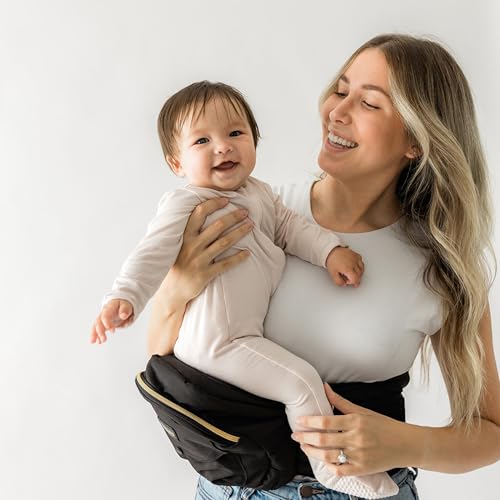
Best for parents wanting a stylish option with the same supportive design as the grey version. The leather-like aesthetic offers a modern look while maintaining ergonomic support. The hip seat carries babies up to 45 lbs with a firm seat, built-in lumbar support, and a wide waistband. Limitation: non-slip stability and fit may require proper adjustment, especially for larger adults or toddlers nearing the upper weight limit.
KAENU Baby Carrier With Hip Seat – Upgraded Version
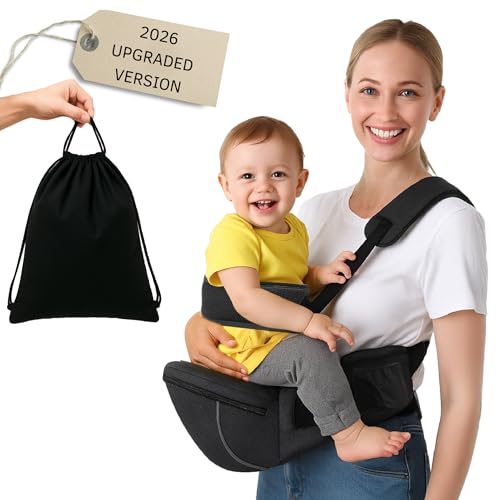
Best for families seeking an upgraded, multi-position carrier. KAENU emphasizes an ergonomic M-position for healthy hip development, with an extra-wide reinforced waistband for stability. It supports newborns to toddlers and provides several carrying methods to adapt as the child grows. Caution: the waistband may require firm fastening to ensure safety during movement.
Momcozy 2-in-1 Carrier With Hip Seat

Best for active families who want six carry positions and long-walking comfort. Momcozy offers a 2-in-1 design with a hip seat, allowing transitions between cradle, hip, forward-facing, and back carry. The carrier emphasizes a firm, wide seat for stable hip alignment and features a 10mm thick cushion for shock absorption. Consider: under heavy use, the overall weight can feel noticeable, and proper adjustment is essential for comfort.
Buying Guide
Key considerations when choosing a hip seat carrier include age and weight range, ergonomic design, and carry positions. For newborns and younger babies, prioritize seats that promote an M-shaped leg posture and close contact with the caregiver. As children grow, options with adjustable waistbands and multiple carry modes help maintain comfort and support. Storage and pockets can be a practical factor for daily use, especially during errands or travel.
What should I look for in an ergonomic hip seat?
- Supportive hip seat that keeps the baby’s hips in an M-position.
- A wide, supportive waistband to distribute weight evenly.
- Breathable fabrics and proper padding to prevent overheating and discomfort.
How important is adjustability?
- Adjustable waistbands and multiple carrying positions help fit different body types and growth stages.
- Proper fit reduces back, neck, and shoulder strain for the caregiver.
Are pockets and storage a deciding factor?
- Built-in pockets can improve convenience for parents, especially during outings.
- Ensure pockets do not compromise the carrier’s balance or safety.
Durability and materials
- Look for sturdy stitching and high-quality fabric that resists wear from frequent use.
- Breathable mesh or airy fabrics help maintain a comfortable climate for the baby.
Who should consider each option?
- HKAI: Great for families needing extensive storage and versatile positions.
- Tushbaby (Grey or Black & Gold): Excellent for lumbar support and straightforward use.
- KAENU (Upgraded): Useful for parents seeking modern adjustments and multiple modes.
- Momcozy: Best for those who want six positions and long-walk comfort.
FAQ
- What age is best for hip seat carriers? Answer: They are suitable from newborn up to toddler stages, depending on weight limits and seating guidance from the manufacturer.
- Do hip seat carriers help with hip development? Answer: Yes, many designs promote a natural M-position which supports healthy hip development when used correctly.
- Can I use these carriers for long walks? Answer: Yes, some models emphasize lumbar support and wide waistbands to reduce fatigue during extended wear.
- Are there safety concerns I should watch for? Answer: Ensure proper fastening, correct seat angle, and age-appropriate weight limits to prevent falls and discomfort.
- Which carrier offers the most pockets? Answer: HKAI stands out for its multiple pockets plus secure clasps for easy access on the go.
- Is fabric comfort a priority? Answer: Look for breathable, skin-friendly materials and adequate padding to maintain comfort for both baby and caregiver.