Answering the common search for safe baby food feeders, this guide compares top mesh- and silicone-based feeders ideal for babies around 6 months and up. It highlights who each product is best for, from first tastes to teething relief, and explains practical pros and limitations. This overview helps caregivers choose a feeder that minimizes choking risk while expanding your baby’s diet. The table below summarizes five strong options to consider.
| Product | Best For | |
|---|---|---|
| Munchkin Baby Feeder for Fresh Food and Fruit, 2 Pack | First solids, variety of fruits | Choking-reduction design; suitable for frozen breastmilk and purees |
| POIKSHARK 2 Pack Silicone Baby Fruit Feeder | Safe self-feeding with easy cleanup | Dishwasher safe; BPA-free; easy dismantle |
| PandaEar 3 Pack Bow Series Silicone Feeders | Teething relief and varied sizes | Three pouch sizes; safe silicone; teether function |
| NatureBond 2 Pack Baby Feeder / Teether | Budget-friendly, easy cleaning | Two feeders with four silicone sacs; BPA-free; easy to dismantle |
| WAJIAYON 3 Pack Baby Fruit Feeder Pacifier | Growing baby with multiple sizes | Three sizes; safe 2mm holes; teething relief |
Munchkin Baby Feeder for Fresh Food and Fruit, 2 Pack
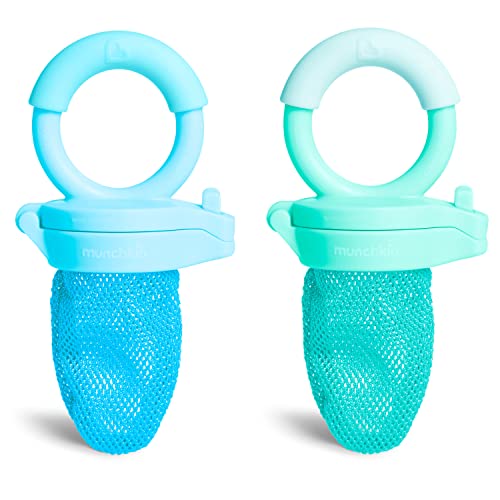
Best for: Parents introducing solids with a controlled feeding approach. The feeder design restricts larger pieces, reducing choking risk. It suits frozen breastmilk, purees, bananas, and ice chips, making it versatile for early tastes and cold snacks. Selection note: its two-pack format provides extra filters for routine feeding.
Why chosen: This Munchkin feeder is widely used for gentle introduction of solid foods and frozen items. The small-hole design supports safe texture progression, essential for weaning.
Caution: Some caregivers report the need to ensure small pieces remain digestible; inspect food textures to avoid lumps that could exceed the sieve capability.
POIKSHARK 2 Pack Silicone Baby Fruit Feeder

Best for: Caregivers who want a self-feeding experience with easy cleaning. The one-piece silicone handle design reduces choking hazards and supports simple maintenance. It’s well-suited for babies exploring new textures and teething.
Why chosen: The set emphasizes a safety-first approach with BPA-free silicone, straightforward dismantling, and dishwasher-friendly cleaning. It also includes a freezer-friendly advantage for newer tastes.
Caution: While silicone feeders are durable, ensure the pouch is fully intact after each wash to prevent small tears that could trap food.
Munchkin Baby Feeder for Fresh Food and Fruit, 2 Pack (Coral/Purple)
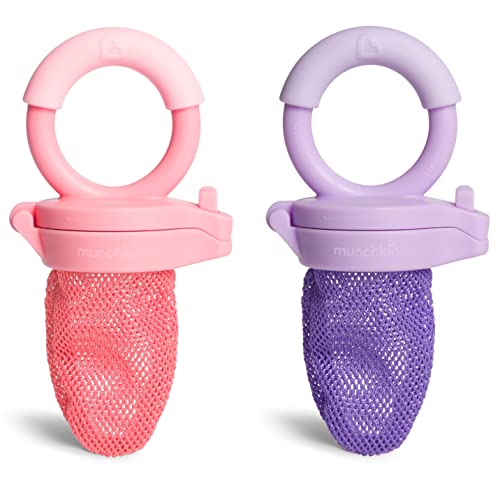
Best for: Families wanting a second color option for siblings or different meal times. It shares the same choking-reduction design as the blue/green variant and supports a range of solid and semi-solid foods.
Why chosen: The product mirrors the original Munchkin feeder’s safety-focused design, offering a consistent experience across color variants and two-pack value.
Caution: Color variation should not influence material safety; verify pouches remain intact after multiple washes.
PandaEar 3 Pack Bow Series Silicone Feeders

Best for: Babies needing teething relief and gentle introduction to solids via multiple-sized pouches. The 3-pack includes small to large sizes to match months of age and appetite growth.
Why chosen: The silicone pouch is 100% food-grade and BPA-free, with a textured bow-handle that doubles as a teether. It supports a gradual weaning path and reduces gagging by portioning food into smaller pieces.
Caution: Ensure the protective cap is used when not feeding to maintain hygiene and prevent contamination of the silicone tip.
NatureBond Baby Food Feeder / Teether (2 Pack)
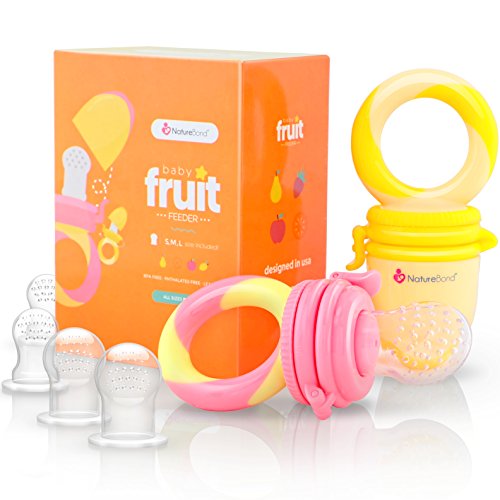
Best for: Budget-conscious caregivers seeking value and easy cleaning. The two feeders include four silicone sacs to support a longer weaning timeline and teething relief.
Why chosen: NatureBond emphasizes safety with BPA, latex, lead, and phthalate-free materials. The design prioritizes easy dismantling for thorough cleaning and hygiene.
Caution: Some buyers may prefer larger capacity pouches as babies grow; check pouch sizes to align with your baby’s age range.
PandaEar 3 Pack Silicone Baby Fruit Food Feeder Pacifier

Best for: Parents seeking a 100% silicone, BPA-free option with multiple pouch sizes and a protective cap for hygiene.
Why chosen: This PandaEar model highlights multi-functionality as both pacifier and feeder, with a cap that helps keep the feeding tip clean and ready for use.
Caution: The protective cap adds one more piece to manage; ensure it’s reattached securely after cleaning to maintain hygiene.
Buying Guide: Key Considerations For Choosing A Baby Feeder
- Safety first: Look for BPA-free silicone or food-grade materials. Avoid products with sharp edges or removable parts that could pose choking risks.
- Texture and size: Choose pouch sizes and hole diameters that match your baby’s age and chewing ability. Smaller holes reduce choking risk for younger babies.
- Ease of cleaning: Dismantlable designs or dishwasher-safe components save time and improve hygiene. Verify whether caps, pouches, and handles are easy to clean and reassemble.
- Feeding goals: If teething relief is important, select products with textured handles or teether features. For beginners, a simple, single pouch may be preferred.
- Versatility: Some feeders work with frozen foods and breast milk popsicles, while others focus on fresh fruits and purees. Align with your feeding plan.
- Durability and maintenance: Consider if your family will need multiple sizes over time or if a two-pack or three-pack set better fits your routine and budget.
- Hygiene accessories: Protective caps and easy-dismantling designs help maintain cleanliness between uses.
FAQ
- What age is best for using baby feeders?
Typically around 6 months, when babies begin solids and show readiness for self-feeding, under parental supervision. - Are mesh feeders safer than silicone feeders?
Both are designed to reduce choking. Silicone feeders are typically easier to clean and fully seal, while mesh feeders rely on small holes to limit piece size. - Can feeders be used for frozen foods?
Some models support frozen fruits or breast milk popsicles; check product details for freezer suitability. - How should feeders be cleaned?
Dismantle and wash thoroughly after each use; many models are dishwasher-safe but always follow the manufacturer’s cleaning instructions. - What should I look for in a teething feeder?
Look for textured handles or bonus teether features to soothe gums while feeding. - Is BPA-free material enough for safety?
BPA-free is essential, but also check for phthalate-free, lead-free, and latex-free certifications to ensure comprehensive safety.