Open cups help babies develop oral motor skills and healthier drinking habits. This guide showcases five open-cup options best suited for 6-month-olds starting to explore sipping, with a focus on small, stable designs, easy handling, and spill resistance. Each option targets different needs—ease of grip, transition from bottle, or added stability. The top picks are ideal for parents seeking low-muss and nose-to-mouth learning curves, while encouraging baby-led weaning milestones.
| Product | Best For | Why It Stands Out |
|---|---|---|
| SAMiGO Silicone Baby Cups (2 oz) | First open-cup experience | Tiny, baby-friendly size with weighted bottom to reduce spills. |
| ezpz Tiny Cup (Sage) | Guided transition from bottle | Form-fitting mouth design with non-slip grip and weighted base. |
| PandaEar 3.5oz Tiny Cup | Rugged practice with toddler-friendly grip | Non-slip bumps and durable silicone for everyday use. |
| Seposeve Tiny Open Training Cup (2 oz) | Clear capacity cues | Mouth-like design with capacity markings and topple resistance. |
| Nuby Open Training Cup (2 oz) | Open-cup transition with safety | Soft rim and weighted base for stable sipping. |
SAMiGO Silicone Baby Cups (2 oz) Open Cup

Designed to shorten the learning curve, this tiny cup is perfectly shaped for little hands to grip easily. It offers a baby-approved 2 oz capacity, providing just the right amount per sip. The weighted, textured bottom reduces tipping, making it better for early open-cup practice. Best for first-time open-cup users who need a compact, comfortable transition from bottle to cup. A caution: spills can still occur, especially with fast-paced sipping.
SAMiGO Silicone Baby Cups (2 oz) Open Cup (Variant)

Another SAMiGO 2 oz option with the same core benefits: compact size for tiny hands, a soft feel, and bottom stability to cut down on spills. Best for parents who want a consistent, predictable open-cup experience as their baby grows from the bottle. Limitation: limited volume per sip may require more frequent refills during busy meal times.
ezpz Tiny Cup (Sage) – 100% Silicone Training Cup
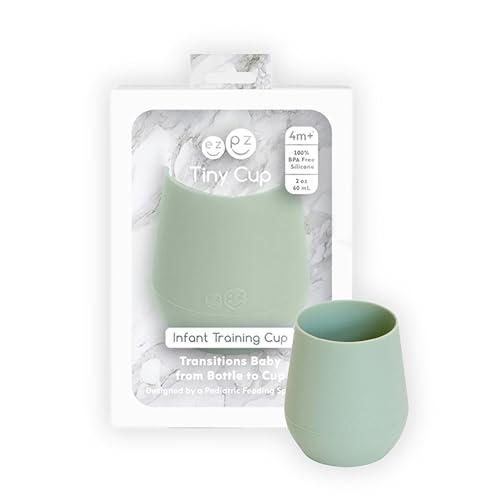
Designed by a pediatric feeding specialist, the Tiny Cup targets safe, incremental drinking transitions. It fits baby’s mouth and hands and includes a non-slip grip for easier mouth-to-cup movements. The interior angle provides a steady flow, and the weighted base plus tactile bumps improve topple resistance. Best for babies moving from bottle to cup in a milestone-driven approach. Caution: higher price point than basic open cups might be a consideration for budget-conscious buyers.
PandaEar 2 Pack Tiny Silicone Training Cup

This 2-pack offers a budget-friendly option with a 3.5 oz capacity, designed for little hands with non-slip grip bumps. The cups are sturdy and dishwasher-safe, making daily cleanups easier. Best for families needing multiple cups for different feeding areas or siblings. Limitation: the 3.5 oz size is larger than the 2 oz training cups, which may require more frequent refills for 6-month-olds during initial practice.
Moonkie Tiny Open Cups (2 Pack)

Moonkie offers a 2-pack of 2 oz cups with a focus on ergonomic grip and stability. The open cup format encourages lip closure and safe swallowing while supporting teething. Best for parents who want a simple, effective transition tool without extra features. Caution: some parents may prefer cups with built-in spill deterrents for mess-prone babies.
Seposeve Silicone Baby Cups (Pack of 2)

Seposeve cups feature a baby mouth-like design with capacity markings (15-30 ml). The 2 oz size is easy to hold and includes a non-slip texture to help prevent tipping. Best for parents who want clear volume cues during early practice. Limitation: markings may be less precise for very small sips, requiring careful filling guidance.
Buying Guide: Open-Cup Buying Considerations
- Age and transition stage: For 6-month-olds, choose cups with small capacity (2 oz) and a comfortable grip.
- Stability: Look for weighted bases and textured bottoms to reduce tipping risks.
- Grip and mouth fit: Cups with non-slip bumps or ergonomic designs help babies hold and sip more confidently.
- Material safety: 100% silicone options are BPA-free and gentle on gums, supporting teething as sipping begins.
- Maintenance: Dishwasher-safe cups simplify cleaning after meals.
- Open-cup benefits: Open cups promote oral motor development and can assist with early speech milestones and tooth decay prevention when used appropriately.
- Usage context: For on-the-go use, choose durable, leak-resistant designs or compact options that fit small hands.
FAQ
- What is the main benefit of open cups for a 6-month-old?
Open cups help develop oral motor skills, lip closure, and transition from bottle to cup. - Are silicone cups safer for teething babies?
Yes, silicone is soft on gums and teeth, with BPA-free materials common in baby cups. - Which cup is best for minimal spills?
Cups with a weighted base and textured bottom reduce tipping; look for added non-slip features. - How do I choose the right size?
Start with 2 oz options to fit tiny hands and to provide small sips, then graduate to larger volumes as the baby progresses. - Should I buy more than one style?
Having a mix (simple open cup plus a transition cup) can cover various meal setups and prevent mess during training. - What maintenance considerations are important?
Choose dishwasher-safe silicone to simplify daily cleaning and reduce residue buildup.