If your baby resists pacifiers, this guide helps you find dependable options that suit different ages and feeding needs. The top picks below are chosen for babies who are picky about texture, shape, or comfort. Each product is described for who it’s best for and why it stands out. This summary helps you compare at a glance before diving into details.
| Product | Best For | Why It Stands Out |
|---|---|---|
| Philips Avent Soothie 0-3 Months | Newborns, self-soothing | One-piece design, medical-grade silicone, BPA-free |
| Itzy Ritzy Natural Rubber 0-6 Months | Style-meets-safety, breastfed babies | Natural rubber, large air holes, BPA-free |
| Dr. Brown’s HappyPaci 0-6 Months | One-piece silicone comfort | Contoured shield, familiar bottle-nipple shape |
| Philips Avent Soothie 3-18 Months | Slightly older babies, transition option | Durable silicone, age-appropriate design |
| Philips Avent Soothie 0-3 Months Lilac/Pink | Newborns, color preferences | Same trusted Soothie design with color pairing |
This article includes five pacifiers chosen for babies who won’t take a pacifier readily. It explains who each is best for, why it was selected, and practical cautions to consider. A concise buying guide and FAQ follow the product descriptions to help you decide with confidence.
Philips Avent Soothie 0-3 Months Pacifier (SCF190/41)

The Philips Avent Soothie 0-3 Months pacifier is designed to support a newborn’s natural suckling reflex. Its one-piece, medical-grade silicone construction aims to promote comfort and oral development from day one. This option adheres to pediatric guidelines and helps establish feeding routines by softly training muscles used for drinking. Best for: newborns who rely on a soothing latch and who benefit from a straightforward silicone design.
Best for parents seeking a simple, durable silicone pacifier that aligns with breastfeeding goals. Caution: some babies may prefer softer textures or different nipple shapes; introduce gradually to minimize disruption to feeding schedules.
Itzy Ritzy Natural Rubber Pacifiers (0-6 Months)

This set of newborn pacifiers uses natural rubber with a cherry-shaped nipple and large air holes in the shield. They mimic breastfeeding while staying BPA-free and PVC-free. The shield’s design, plus a cable-style handle, adds style and ease of inspection for parents. Best for: babies who show interest in a more natural feel and for parents prioritizing safe, fashion-forward accessories. Caution: rubber may differ in texture and durability from silicone, which some babies prefer later on.
Dr. Brown’s HappyPaci 0-6 Months (3-Pack)

The Dr. Brown’s HappyPaci line features a 100% silicone, one-piece design with a contoured shield that curves away from the face. The bulb shape mirrors familiar bottle nipples, aiding transition for babies accustomed to bottle feeding. Best for: babies who respond to the familiar bottle shape and need a lightweight, comfortable pacifier. Caution: some infants may prefer a different shield size; verify fit as the baby grows.
Dr. Brown’s HappyPaci 0-6 Months (4-Pack)
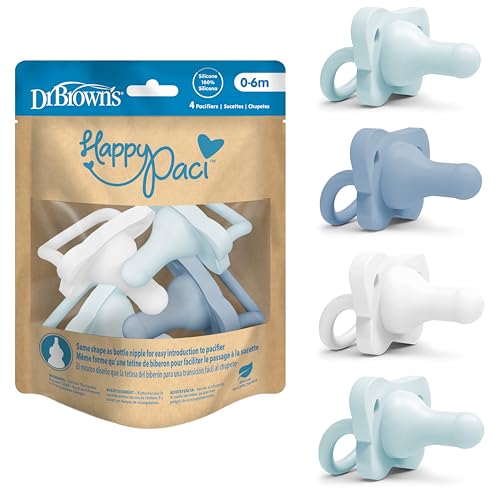
The four-pack Dr. Brown’s HappyPaci continues the same silicone, contoured design with a one-piece construction. It is designed for 0-6 months and emphasizes an ample shield area for nose, chin, and cheeks. Best for: families who want multiple backups for quick swaps and frequent washings. Caution: ensure the colors or bottle-nipple familiarity align with the baby’s preferences over time.
Philips Avent Soothie 3-18 Months Pacifier

This Soothie design for 3-18 months supports older infants with the same goal of soothing through natural suckling. It uses 100% medical-grade silicone and maintains a one-piece construction for durability. Best for: toddlers who need a robust option that continues to support oral development while satisfying comfort. Caution: older babies may gradually outgrow certain nipple feels; monitor comfort during growth spurts.
Philips Avent Soothie 0-3 Months Lilac & Pink

This color-coordinated Soothie variant for newborns blends the trusted Soothie form with appealing color options. It aims to support natural sucking reflex and early oral development. Best for: parents who prefer a color-coded option to distinguish pacifiers for different siblings or times of day. Caution: color preference may change as the baby grows; introduce gradually to avoid new clashes with other schemes.
Buying Guide: Key Considerations For Choosing A Pacifier
- Age range and development goals: Match the pacifier to your baby’s current age (0-3 months, 3-18 months, etc.) and whether the focus is soothing, latch transition, or oral development.
- Material: Silicone is durable and easy to clean; natural rubber offers a softer feel but may differ in wear. Consider allergies and BPA-free construction.
- One-piece design vs. multi-part: One-piece pacifiers reduce choking risk and are easier to clean; evaluate if your baby shows a preference for a specific shield shape or nipple style.
- Shield design and airflow: A shield with ample air holes helps prevent skin irritation. Evaluate whether the guard size fits your baby’s face without causing discomfort.
- Brand alignment and pediatric recommendations: Brands like Philips Avent and Dr. Brown’s frequently align with pediatric guidelines and standardized nipple shapes to ease transitions with feeding.
- Durability and cleaning: Reusable pacifiers should be easy to sterilize; consider dishwasher-safe options if you value ease of cleaning.
Frequently Asked Questions
- What should I consider if my baby won’t take a pacifier? If reluctance persists, try different nipple shapes, textures, and shield sizes, and consider a pacifier that mimics breastfeeding more closely.
- Is silicone better than natural rubber for pacifiers? Silicone tends to be more durable and easy to clean, while natural rubber can feel softer; choose based on baby comfort and bite resistance.
- Can pacifiers affect feeding routines? Some models are designed to support feeding routines by training oral muscles; introduce slowly to avoid interfering with breastfeeding if that is a goal.
- Are one-piece pacifiers safer for newborns? Yes, one-piece designs eliminate seams that can harbor bacteria and reduce choking risk when used as directed.
- How many pacifiers should I have on hand? Having 2-4 clean pacifiers ready for swaps and cleaning helps maintain continuous soothing without delay.
- When should I stop giving a pacifier? Pediatric guidance varies; some parents transition away around 6-12 months as the child’s teeth develop, but follow your pediatrician’s advice.