Choosing the right pacifier for a two-year-old focuses on comfort, dental-friendly design, and durability. This guide highlights top options that suit toddlers who still benefit from soothing aids. The best picks are chosen for parents seeking symmetrical nipples, skin-friendly materials, and easy nighttime use. Below, you’ll find a quick summary and reasons why each product may fit a specific toddler’s needs.
| Product | Best For | Key Benefit |
|---|---|---|
| Tommee Tippee Ultra-Light Silicone Pacifier (4-Pack) | Toddlers who drop pacifiers often | Lightweight design reduces germs from ground contact |
| NUK First Choice Classic Orthodontic Pacifier | Parents prioritizing natural oral development | Unique nipple fits baby’s palate for comfort |
| Tommee Tippee Night Time Pacifier (6-Pack) | Nighttime soothing and locating pacifier in dark | Glow-in-the-dark feature plus symmetrical nipple |
| Philips Avent Ultra Air Nighttime Pacifiers | Skin comfort and orthodontic support during sleep | Extra-large air holes and breathable design |
| MAM Air Pacifier (4-Pack) | Toddlers with sensitive skin needing air flow | Skin Soft silicone and flexible nipples |
Buyer profiles: For parents who want easy visibility in the dark, for those who prioritize dental-friendliness, and for toddlers with sensitive skin or mouth development needs. The following sections detail each top pick with what makes it stand out and who should consider it most.
Tommee Tippee Ultra-Light Silicone Pacifier – 18-36 Months

Best for caregivers seeking a lightweight option that reduces the chance of germ exposure when dropped. The symmetrical one-piece design ensures the nipple is always correctly oriented, aiding soothing comfort. The air holes help keep the skin breathable, reducing irritation for toddlers who wear a pacifier long days. This 18-36 month version comes in multiple colorways to appeal to different preferences.
- Best for parents who want a lightweight, one-piece pacifier.
- Better for toddlers who frequently drop pacifiers, minimizing ground contamination.
- Caution: Ensure frequent inspection for wear and tear due to toddler use.
NUK First Choice Classic Orthodontic Pacifier – 5-Pack

Selected for natural oral development with a nipple designed to fit a toddler’s palate. Its heart-shaped shield is crafted to fit under the nose for easy breathing, which can be important for a two-year-old who uses a pacifier during sleep. The 5-pack option provides a budget-friendly quantity for households with multiple daily needs.
- Best for toddlers prioritizing natural oral development.
- Better for families wanting a cost-effective multi-pack.
- Caution: Some toddlers may need a longer transition to reduce pacifier reliance.
Tommee Tippee Night Time Pacifier – 18-36 Months

Designed for nighttime use with glow-in-the-dark technology. The symmetrical silicone baglet and comfortable air holes help protect delicate skin during long sleep sessions. Glow-in-the-dark capability makes locating the pacifier easier in dark rooms, reducing nighttime searching disruptions.
- Best for night-time soothing and easy locating in dark rooms.
- Better for toddlers who wake frequently at night.
- Caution: Glow features rely on exposure to light to recharge; ambient lighting affects glow duration.
Philips Avent Ultra Air Nighttime Pacifiers
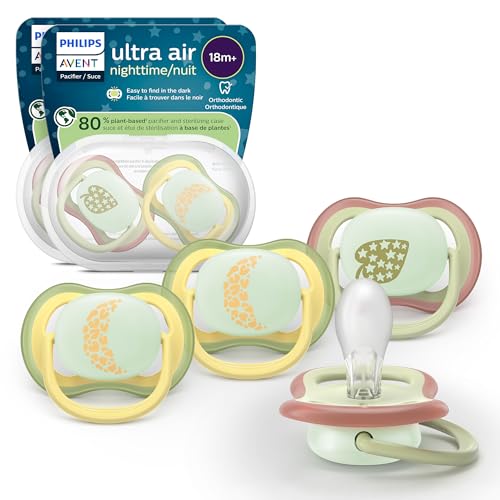
Best for parents who want an orthodontic design that supports healthy teething and speech development. Extra-large air holes keep the skin drier and comfortable. The silicone nipple is symmetrical and firm to respect the palate’s natural shape, offering durable nighttime comfort for 18 months and older toddlers.
- Best for orthodontic support and dry skin during sleep.
- Better for toddlers with longer nighttime use due to robust construction.
- Caution: Nipples are extra-firm, which may feel different to a child transitioning from softer options.
MAM Air Pacifier – 16+ Months

Chosen for toddlers with sensitive skin needing better air flow. The Skin Soft silicone nipple is thin and comfortable, developed with orthodontists and pediatric dentists. The nipple is symmetrical to support natural oral development, and the glow-in-the-dark feature aids nighttime soothing and quick checks in low light.
- Best for sensitive-skin toddlers needing better air circulation.
- Better for families wanting clinically-informed design features.
- Caution: Some children may prefer other textures if transitioning from different brands.
Buying Guide: Key Considerations For Two-Year-Old Pacifiers
What matters most when choosing?
For two-year-olds, look for orthodontic or symmetrical nipples that support natural teeth and jaw development. Consider skin-friendly materials with breathable venting to prevent irritation during extended wear. If lighting helps you locate the pacifier at night, glow-in-the-dark features can be valuable.
How to match pacifier design to toddler needs
If your child often drops pacifiers, choose lightweight, one-piece designs that minimize germ exposure. For toddlers with sensitive skin, select models with larger air holes or softer silicone to reduce irritation. If nighttime use is common, glow-in-the-dark options or easy-to-locate shapes improve bedtime routines.
Material quality and safety considerations
Ensure the pacifier is BPA-free and made from medical-grade silicone. Orthodontic designs (when available) can support healthy oral development. Regular inspection for wear, cracking, or color changes is essential for safety and hygiene.
Transition and usage tips
Limit pacifier use to nap and bedtime or specific soothing moments to reduce dependency. Introduce one new style at a time to minimize confusion during a transition. If the child resists, consult a pediatrician for guidance on weaning strategies.
Practical storage and cleaning tips
Use the included sterilizing cases if provided, and wash pacifiers with mild soap and warm water daily. Avoid boiling silicone pacifiers for extended periods, as harsh heat can alter texture over time. Dry thoroughly before offering again.
FAQ
- Are orthodontic pacifiers better for two-year-olds?
Orthodontic designs support the natural shape of the palate and teeth, which may be beneficial as children begin to develop permanent teeth and speech patterns. - How do I know if a pacifier is safe for my toddler?
Look for BPA-free silicone, symmetrical or orthodontic nipples, and reputable brand certifications. Inspect regularly for tears or discoloration. - Should I use glow-in-the-dark pacifiers at night?
Glow features help locate the pacifier quickly in darkness, reducing disruption to bedtime routines. - How often should I replace a pacifier?
Replace when there are signs of wear, hardening, cracking, or if the nipple becomes misshapen to maintain a proper seal and safety. - Can pacifier use affect a toddler’s teeth?
Prolonged or improper use can influence bite development. Limit daily usage after age two and consult a pediatric dentist if you have concerns.