Looking for safe, engaging play balls for babies? This guide highlights five top options that support early development through tactile exploration, visual stimulation, and coordinated play. Each pick is suited to different needs—from sensory exploration and teething to motor skills practice and group play. Use the quick summary table to compare key points at a glance.
| Product | Best For | Notes |
|---|---|---|
| ROHSCE Sensory Balls For Baby | Toddlers and babies (6–12 months) seeking textured, safe sensory toys | Multi-textured, BPA-free, easy to clean |
| Bright Starts Oball Easy Grasp Classic Ball | Young infants learning grip and motor skills | Large finger holes, encourages crawling and chasing |
| Vanland Ball Pit Balls | Ball pit or bath-play; multi-use for toddlers | Non-PVC, phthalate/BPA/lead-free, durable |
| Hovenlay Ball Pit Balls | Colorful ball pits and soft play spaces | 7 colors, BPA/phthalate-free, compact storage |
| Rhode Island Novelty Knobby Balls | Outdoor play and group games | 7-inch knobby design, great for kicking and rolling |
ROHSCE Sensory Balls For Baby

Best for tactile and sensory development, these multi-textured balls support exploration as babies grab, squeeze, and teethe. Their bright colors aid visual stimulation and imagination. The set is BPA-free and designed to meet US safety standards, with no small parts that pose choking hazards. Easy to wipe clean makes them practical for daily use.
Who this is for: parents seeking safe, engaging sensory toys for babies aged 6–12 months and toddlers who enjoy interactive play with older siblings. Caution: avoid if a child has a known latex allergy, and supervise teething use to prevent rough chewing.
Bright Starts Oball Easy Grasp Classic Ball

Best for early grip development and gross motor skills, the Oball features large finger holes that make grasping and rolling easier for tiny hands. Its flexible, durable design encourages crawling and chasing, supporting independent play as babies grow. This option is especially suitable for newborns and up, offering a simple way to start motor skill practice.
Who this is for: caregivers wanting an iconic, easy-grasp ball that promotes confidence in gripping and rolling. Caution: its soft material may be easier to compress under heavier hands, so supervise vigorous throws around furniture or hard objects.
Vanland Ball Pit Balls

Best for multi-use play spaces, these 2.2-inch pit balls fit ball pits, play tents, kiddie pools, and bath toys. They are phthalate-free, BPA-free, and lead-free, with a durable construction that can handle little hands and light squishing. The compact size helps little fingers explore grasping and releasing with ease.
Who this is for: families building a versatile play area, from ball pits to mini pools. Caution: ensure storage bags are closed properly to prevent scattering during play.
Hovenlay Ball Pit Balls

Best for bright, kid-friendly color variety, these BPA- and phthalate-free balls come in seven colors and are sized at 5.5 cm (2.2 inches). They work well in ball pits, tents, playhouses, and bounce houses. The colorful mix supports visual tracking and color recognition while offering safe, light play for toddlers.
Who this is for: households with expansive play areas seeking colorful, durable pit balls. Caution: avoid using with very young infants who may mouth multiple balls simultaneously; supervise to prevent choking hazards.
Rhode Island Novelty Knobby Balls
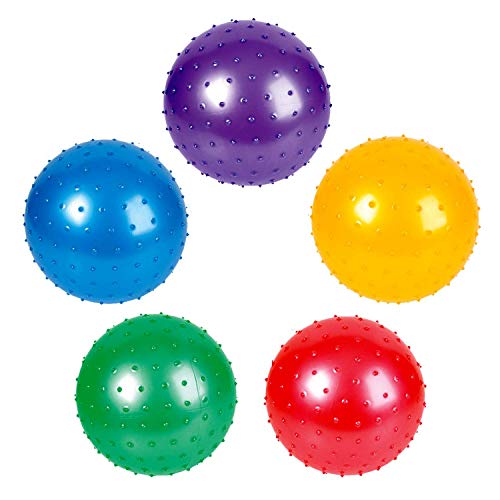
Best for outdoor and group play, these seven-inch knobby balls are ideal for kicking, bouncing, and rolling on grass or pavement. The assorted colors spark visual interest and collective play with friends or siblings. Sold deflated for easy shipping and inflation, they’re a simple option for gift-giving or bulk outdoor fun.
Who this is for: families planning outdoor games or classroom activities that involve multiple children. Caution: knobby texture may be too stimulating for very young babies; use under supervision with appropriate age ranges.
Buying Guide: How To Choose The Right Baby Play Balls
- Safety first: Look for BPA-free, phthalate-free materials and verify small parts do not pose choking hazards. Choose products compliant with applicable toy-safety standards.
- Age and development stage: For newborns to 6 months, prefer easy-to-grasp, soft textures. For toddlers, choose balls that encourage crawling, throwing, and ball-pit engagement.
- Texture and sensory features: Textured or knobby surfaces aid tactile exploration and teething, while smooth balls support rolling and throwing practice.
- Durability and cleaning: Washable surfaces and sturdy construction are important for frequent handling, teething, and rough play.
- Play space compatibility: Consider whether you need pit balls, ball-pits, tubs, or outdoor playground balls to match your play area.
- Storage and portability: Reusable storage bags or containers help keep balls organized and ready for travel or visits.
FAQ
- What age are sensory balls appropriate for? — Most are suitable from around 6 months and up, with younger babies benefiting from simple textures and bright colors.
- Are ball pit balls safe for babies? — Look for phthalate-free and BPA-free options; ensure they are the correct size to minimize choking risks and use under supervision.
- Is a knobby ball better for toddlers or infants? — Knobby balls are great for gross motor skills and outdoor play, especially for toddlers; infants may prefer smoother, smaller toys.
- Can these balls be used in water? — Many are designed for dry play, but some can be used in bathtubs or pools; always check product instructions.
- How should I clean play balls? — Wipe with a damp cloth or mild soap and water; avoid harsh chemicals and let them dry before storage.
- What is the best way to store multiple balls? — Use a storage bag or bin to keep colors organized and to prevent loss during travel or messy play sessions.