Answering the buyer’s search intent, these play tables offer engaging, development-focused activities for babies and toddlers. The top picks below suit new walkers who want sit-and-play options, as well as everyone from curious infants to early preschoolers who benefit from color, sound, and fine motor play. The summary table helps compare key points at a glance.
| Product | Best For | Stage | Key Benefit |
|---|---|---|---|
| VTech Magic Star Learning Table | Infants learning colors and sounds | 6+ months | Bilingual activities; music and gears |
| Skip Hop Interactive Activity Center | Toddlers through early preschoolers | 4 months–25 lbs | Grow-with-me with 3 stages; 360° seat |
| LeapFrog Little Office Learning Center | Imitative play and early literacy | 12+ months | Laptop, phone, globe; Explore/Learn/Music modes |
| VTech Buzz and Learn Activity Table | Active toddlers who like music | 12+ months | Seven play zones; light-up music |
| Vanplay 8-in-1 Activity Table | All-in-one sensory exploration | 12–36 months | Eight learning activities; durable build |
VTech Magic Star Learning Table
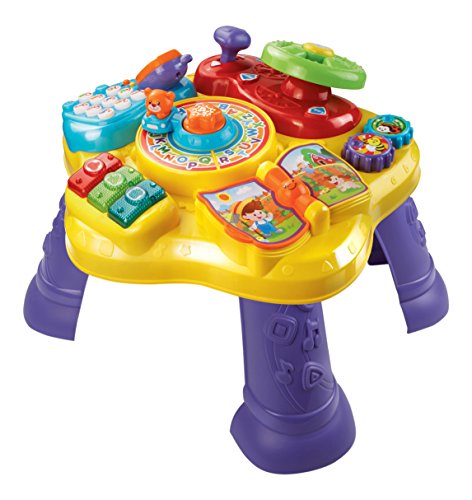
The VTech Magic Star Learning Table offers six bilingual activities in English and Spanish to encourage exploration and learning. Children can turn a steering wheel to drive a bear around the table, flip a book page to hear nursery rhymes, and turn gears to strengthen fine motor skills. Light-up music buttons teach colors and play melodies. Best for babies who respond to auditory cues and simple cause-and-effect, and ideal for early language exposure. A limitation is that complex multi-step tasks may require adult guidance.
Skip Hop Activity Center: 3-Stage Grow-with-Me
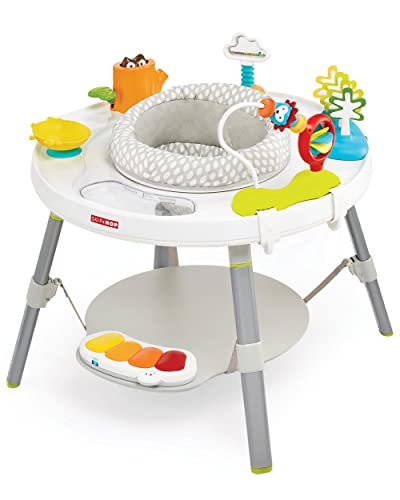
This center grows with the child in three stages: Sit, Swivel & Play; Cruise & Interact; and a toddler activity table for crafts and snacks. It features a 360° rotating seat and 25+ developmentally engaging activities, with toy loops and reusable clip-on toys for customizable play. Best for babies who gain motivation from movement and for households seeking long-term use. Caution: heavier components require careful setup to ensure stability as the child grows.
LeapFrog Little Office Learning Center
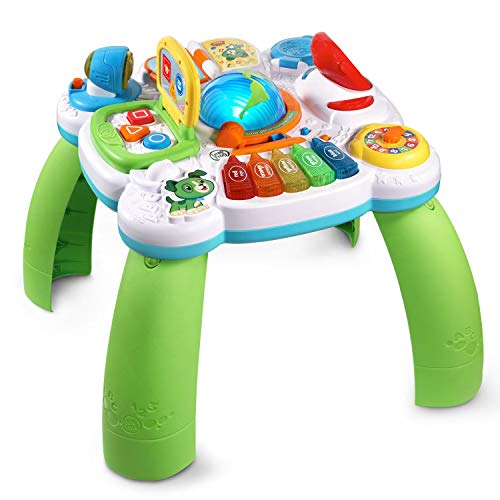
This desk-style activity center includes a laptop, phone, globe, and 27 electronic touchpoints for imitative play. It offers Explore, Learn, and Music modes to expose children to first words, greetings, and world music, plus a pretend-work experience with Scout the mascot. Best for toddlers who enjoy pretend play and early vocabulary practice. Limitation: content relies on button-press interactions; some kids may prefer more physical exploration beyond screens.
VTech Buzz and Learn Activity Table
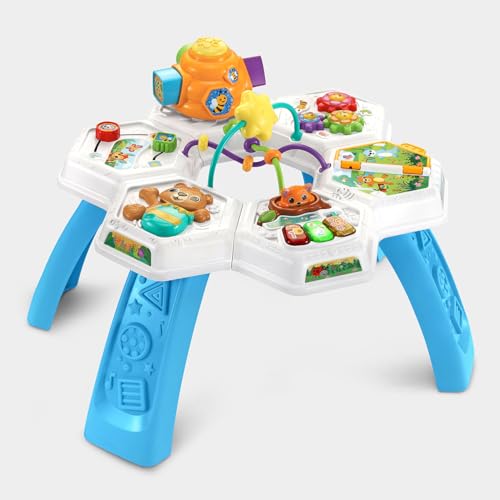
With seven interactive play zones, this table grows from floor to standing play and includes a light-up beehive and music notes. The pop-up fox toy and color-number introductions support early cognitive development and cause-and-effect learning. Best for active toddlers who respond to musical cues and visual stimuli. A potential drawback is the need for three AAA batteries, which can affect long-term cost and maintenance.
Vanplay 8-in-1 Activity Table

This 8-in-1 wooden sensory play table combines bead mazes, fishing, shape sorters, spinning gears, and more to maximize hands-on learning. It emphasizes eye-hand coordination, problem-solving, and music interaction. Best for parents seeking a durable wooden option with a broad range of activities. Limitation: wooden tables can be heavier and may require more storage space than plastic counterparts.
Buying Guide: Key Purchase Considerations
- Age and developmental stage: Choose a table aligned with the child’s current abilities and growth trajectory. Some are best for early milestones (6–12 months), others for 12–24 months, and beyond.
- Activity variety: Look for a mix of fine motor, cognitive, and sensory elements—buttons, gears, beads, and music—to keep engagement high.
- Durability and materials: Plastic tables are lightweight and easy to clean; wooden tables offer sturdiness and potentially longer life. Consider safety features like rounded edges and non-toxic finishes.
- Grow-with-me design: Systems that adapt from floor play to standing use can extend the table’s usefulness and justify the investment.
- Portability and space: Assess the footprint and whether the table fits your play area. Some models disassemble or fold for storage.
- Battery and maintenance: Some products require batteries for lights and sounds. Check availability of replacements and cost over time.
- Educational value: Prioritize tables that introduce language, numbers, colors, and shapes through engaging prompts and repetition.
FAQ: Quick Answers For Buyers
- What age is best for a learning activity table?
– Most are suitable for babies around 6 months and older, with continued use through toddler years depending on the model. - Are wooden activity tables safer than plastic?
– Both can be safe when well-made; wood offers durability, while plastic can be lighter and easier to clean. Look for smooth edges and non-toxic finishes. - Do these tables require batteries?
– Several models include lights and songs that use batteries. Check the product details for battery requirements. - Which table grows with a child the most?
– Models with three or more stages or those that convert from floor to standing use tend to offer the broadest longevity. - Is supervision recommended during play?
– Yes, especially with small parts, moving pieces, and musical features, to ensure safe use. - What features seriously impact learning outcomes?
– A balance of sensory inputs (sound, light, touch) and opportunities for pretend play, problem-solving, and fine motor practice.