Looking for a push cart for babies that blends safety, engagement, and ease of use? The following five products are well-suited for active toddlers who are learning to push, walk, and pretend. Each choice targets a distinct need: from active ride-ons and compact walkers to wooden stability toys and multi-mode walkers. This guide helps you pick the right option based on your child’s age, space, and developmental stage.
Summary table of selected products:
| Product | Best For | Key Benefit | Age Range |
|---|---|---|---|
| Step2 Push Around Buggy | Toddlers who want a ride-on substitute | Wide parent grip, horn, storage under hood | 1.5–4 years |
| Bautia Wooden Walker | First steps with wooden stability | Natural wood, silent wheels, durable | 6–12+ months |
| PULA Baby Push Walker | Indoor/outdoor exploration | 2-in-1 walker and wagon, enclosed wheels | 6–12 months |
| QDRAGON 3 in 1 Walker | Multi-mode activity and sit-to-stand | Detachable activity panel, stable frame | 12+ months |
| Fisher-Price 4-in-1 Snack Cart Walker | Growing toddler with pretend play | 4 play modes, multilingual options | 6+ months |
Step2 Push Around Buggy Kids Push Car

Best for toddlers who want a ride-on feel without a full vehicle. This pink push toy car includes an extra-wide rear parent grip handle for stable pushing, a real car horn, steering wheel, and cup holders. It also features an adjustable seat belt and under-hood storage for snacks or small toys. The design prioritizes a quiet, smooth ride and easy transport thanks to a folding handle. Suitable for children up to 50 lbs, making it a long-lasting push-along option for curious toddlers.
Who it’s best for: families seeking a compact, stroller-like substitute with simple controls and a safer, more secure push experience for active toddlers.
Limitations: While the toy includes storage and a horn, it is not a basic walker and may be less suitable for very early walkers who need wide stability and hands-free support.
VTech Sit-to-Stand Learning Walker
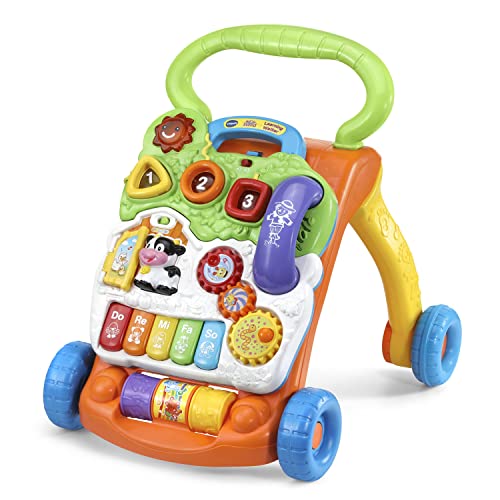
Best for babies who can sit up and are ready to explore with a detachable activity tray. This walker features a removable tray that can detach for on-the-go play and reattach on carpet or bare floors. The activity center includes five piano keys, a pretend telephone, shape sorters, and other components to encourage auditory and fine-motor development. It helps promote motor skills while offering engagement for independent play and social interaction.
Who it’s best for: parents looking for a sit-to-stand walker with expandable learning content that grows with their child’s abilities.
Limitation: Some users may want more robust terrain adaptability; this model works best on flat surfaces and indoors.*
Bautia Wooden Baby Walker

Best for first steps with a natural, durable design. This wooden walker includes a lively interactive panel with a rolling letter wheel, xylophone, flip board, and tracking game to stimulate hand-eye coordination and cognitive growth. The natural wood construction and smooth edges support safe exploration. Rubber wheels are silent and floor-friendly, reducing scuffing and damage risk while providing a stable walking frame for new walkers.
Who it’s for: families prioritizing a non-plastic, eco-friendly walker with multiple activity elements to encourage early learning and balance.
Caution: Wooden walkers can be heavier than plastic options and may require some assistance for very early crawlers transitioning to standing.
PULA Baby Push Walker With Wheels

Best for a versatile indoor/outdoor push-and-pull experience. The 2-in-1 design functions as both a walker and a play wagon, letting kids explore by pushing or pulling. Fully enclosed wheels with a non-slip handlebar and a low-gravity design help prevent side falls or body injuries. The hopper uses food-grade PP material and is water- and corrosion-resistant. EVA wheels provide smooth rolling and shock absorption for various surfaces.
Who it’s for: for families who want a compact, adaptable toy that transitions from walking practice to light transport play in different environments.
Limitation: The 2-in-1 design may not offer the deepest learning activities of dedicated activity walkers; it focuses more on mobility and simple pretend play.
QDRAGON 3 in 1 Baby Walker And Activity Center

Best for a balanced, multi-mode experience. This walker offers three modes: push walker, sit-to-stand activity center, and a detachable entertainment panel with turning cube, shape blocks, and other activities. The frame uses a stable triangle and four-point base to reduce tipping risk. A weight-adding water tank feature can be used to increase stability, making forward movement smoother on various surfaces.
Who it’s for: parents seeking a versatile, feature-rich walker that supports growth from early standing through walking and interactive play.
Limitation: The detachable panel and multiple modes may require additional setup and troubleshooting for caregivers new to walkers.
Fisher-Price 4-in-1 Snack Cart Walker
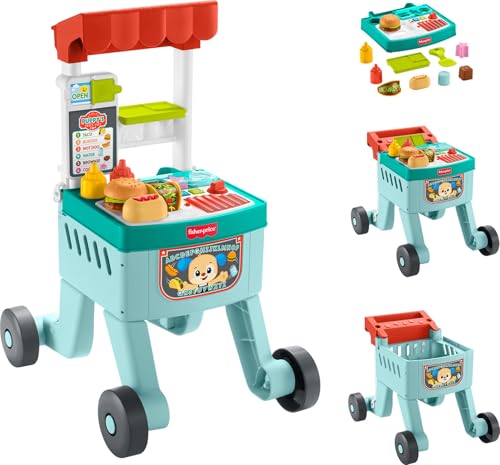
Best for long-term pretend play combined with early learning. This snack cart-themed push walker evolves through four play modes: sitting, walking, pretend play, and a language-learning experience with multiple voices and songs. It includes 135+ songs, sounds, and phrases and offers multilingual support. Features like a globe button for language selection, a cooler door, and interactive push features promote cognitive and motor development as toddlers grow.
Who it’s for: families wanting a comprehensive learning tool that grows with the child, offering diverse sensory and language stimuli.
Limitation: The breadth of features can be overwhelming for very young babies who are just starting to stand.
Buying Guide: How To Choose The Best Push Cart For Your Baby
What should I consider for age and development?
Choose a product that matches your child’s current ability. Early walkers benefit from wooden or low-profile push toys with stable bases, while kids ready for more pretend play may enjoy multi-mode walkers or ride-ons.
What materials are safest and most durable?
Natural wood options offer a classic, sturdy feel, while high-quality plastics can be lighter and easier to clean. Look for smooth edges, non-slip handles, and non-toxic finishes.
How much space will it require?
Indoor use benefits from compact designs like foldable push cars or narrow walkers. Outdoor use may warrant larger, more durable frames with stable wheels.
What features add real value?
Consider seat belts, locking gates, detachable activity panels, sound and language options, and storage compartments. These features can enhance safety and engagement but may increase cost.
How do I assess stability and safety?
Prefer wide bases, low centers of gravity, and three- or four-point support. Check for small parts that could detach and ensure wheels roll smoothly on your home surfaces.
Maintenance and longevity considerations
Wooden walkers require occasional maintenance of joints and finishes. Plastic toy bodies should be inspected for cracks, while fabric components should be kept clean to prevent wear.
Frequently Asked Questions
- What age should a child start using a push walker?
Typically around 6–12 months for basic walkers, progressing to sit-to-stand activity centers as coordination develops.
- Are wooden walkers safer than plastic ones?
Wooden walkers offer durability and a classic feel, with smooth, rounded edges. Plastic walkers can be lighter and easier to maneuver but should be inspected for cracks.
- Can a walker help with balance and walking practice?
Yes. A walker provides support as babies practice standing and taking steps, helping develop balance and leg strength.
- What features should I prioritize for safety?
Look for secure seat belts, stable wheel bases, non-slip handles, and properly secured toy components.
- Are multi-mode walkers worth the extra cost?
Multi-mode walkers grow with a child, offering extended use and richer play experiences; they are often worth the investment for parents seeking long-term versatility.