Discover the best baby safety mats that cushion every crawl, roll, and tummy time session. Each option below is designed for different living spaces and activity levels, helping parents choose by fit, material, and ease of cleaning. Best for active toddlers, small apartments, or households with carpets, these mats offer non-toxic surfaces, thick padding, and durable backing to protect floors and little knees.
| Product | Size | Best For | Key Benefit |
|---|---|---|---|
| Huloo Sleep Ultra Soft | 50″ x 50″ | Toddlers and infants in playpens | 1.3″ memory foam cushioning |
| ProSource Play Mat | 16 tiles (4′ x 4′) | Budget-friendly, modular spaces | Interlocking, easy storage |
| Blissful Diary 50″ x 50″ | 50″ x 50″ | Small to medium rooms, frequent cleanup | Thicker, washable surface |
| ILPEOD 50″ x 50″ | 50″ x 50″ | Colorful decor, versatile use | Velvet surface with thick foam |
| AEOCOO 60″ x 80″ | 60″ x 80″ | Spacious rooms, tummy time mats | 1.3″ thick, anti-slip |
Huloo Sleep Ultra Soft Baby Play Mat
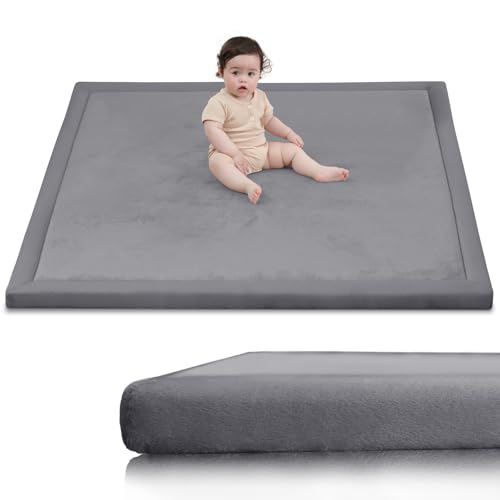
Size: 50″ x 50″; Material: 1.3″ thick Elasti-Foam; Backing: non-slip; Design: tatami style, dark grey. Features emphasize safety with OEKO-TEX certification and CPSIA/ASTM compliance, non-toxic materials, and slow-rebound foam for cushioning during crawling and tummy time. Best for parents who want a large, all-purpose play area in a playpen or on hardwood floors.
Best for: Families needing a single, large, non-toxic mat to cover hardwood floors or fit inside a playpen. Why selected: It combines generous surface area with strong safety credentials and a plush feel for early movers. Caution: The mat’s bulk may be heavier to move and reposition in smaller spaces.
ProSource Baby Play Mat, Interlocking Tiles
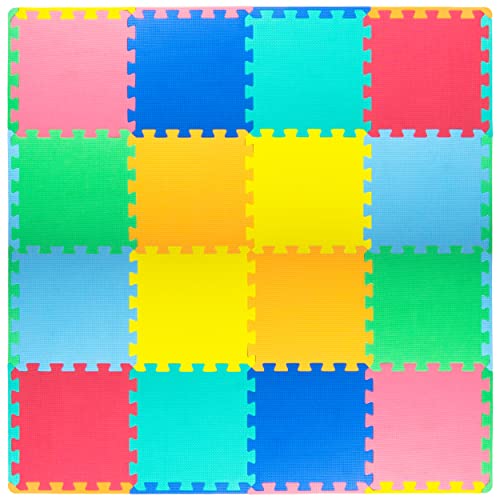
Mat Type: Interlocking EVA tiles; Coverage: 16 tiles (4′ x 4′ area) with border pieces; Ease: Quick assembly and disassembly for storage; Safety: Non-toxic materials suitable for play areas. Best for: Parents seeking modular flooring that can be adjusted to fit irregular spaces or used in playpens.
Why selected: Easy to customize space and simple cleanup; the interlocking design helps maintain a flat surface on uneven floors. Caution: Some tiles may be less cushioned than single-piece mats, so place high-traffic zones where crawling occurs most.
Blissful Diary 50×50 Play Mat

Size: 50″ x 50″; Thickness: Extra thick for additional cushioning; Cleanability: Machine washable cover with note about durability with frequent machine washing; Use: Fits most playpens with matching interior dimensions; Features: Non-slip surface and machine-washable design. Best for: Families who want a larger cushion and easy upkeep in rooms with higher activity levels.
Why selected: Extra thickness improves protection for wrists and knees and accommodates longer tummy time sessions. Caution: Heavier and bulkier than some portable mats, so consider storage and transport needs.
ILPEOD Baby Play Mat 50″ x 50″

Material: 3.5 cm thick elastic foam with velvet cover; Colors: 16 color options and 14 sizes; Use: Crawling, sitting, and general floor play; Edge: padded for additional comfort. Best for: Buyers seeking a color-rich mat that matches decor and provides strong edge support for active babies.
Why selected: Dense foam and velvet surface offer a soft landing while the bright color options support visual stimulation. Caution: Velvet fabric may require careful cleaning to avoid staining; check care instructions for heavy messes.
AEOCOO 60×80 Thick Baby Play Mat

Size: 60″ x 80″; Thickness: 1.3″ memory foam; Texture: Velvet surface with anti-slip bottom; Use: Large tummy time and play areas in living rooms or spacious nurseries. Best for: Homes that need ample space for babies to roll, crawl, and play without lateral risk of slipping.
Why selected: Large surface and thick cushioning provide long-lasting comfort and floor protection. Caution: Larger footprint may not be ideal for compact rooms; ensure floor space is sufficient before purchase.
Buying Guide
What size is right for your space?
Choose a size that fits your play area. A 50″ x 50″ mat covers most play zones, while 60″ x 80″ mats suit larger rooms or dens. For playpens, a mat designed to fit interior dimensions avoids exposed edges.
What thickness is best for safety and comfort?
Thicker mats (about 1.3 inches or more) provide better knee and elbow protection during crawling and tummy time. Thicker mats are heavier and less portable, so balance space and mobility needs.
What materials ensure safety and easy cleaning?
Look for non-toxic certifications (OEKO-TEX, CPSIA, ASTM) and water-repellent fabrics for quick wipeups. Machine-washable covers simplify ongoing cleaning in homes with spills.
Can the mat double as decor?
Many mats come in neutral tones or colorful designs that complement room aesthetics. Velvet or plush covers can add style while maintaining comfort.
Is modular or single-piece better for you?
Interlocking tiles offer customization for irregular layouts and easy storage. Single-piece mats provide seamless surfaces with uniform cushioning, ideal for open spaces.
Maintenance and care tips
- Spot clean spills immediately with mild soap and water.
- Air dry to prevent moisture buildup under the backing.
- Avoid harsh chemicals that could affect fabric integrity.
- Inspect edges for separation and resecure interlocks if used.
Summary of key considerations
- Safety certifications and non-toxic materials
- Appropriate size and thickness for space and baby activity
- Ease of cleaning and maintenance
- Durability for daily toddler use and longevity
FAQ
- Are baby play mats safe for infants with sensitive skin?
Yes, choose mats with OEKO-TEX or CPSIA certifications and soft, non-toxic fabrics. - Is a larger mat always better for tummy time?
A larger surface provides more space for movement but requires more room and stability. - Can mats be used outdoors?
Some mats are designed for indoor use; check manufacturer guidance before outdoor use to avoid moisture damage. - How should I clean a non-slip play mat with a velvet surface?
Wipe surface for spills and spot-clean; avoid saturating with water to protect backing. - What is the main difference between interlocking tiles and single-piece mats?
Interlocking tiles offer customizable sizes and easier storage; single-piece mats provide a seamless, uniform surface.