Finding the right seat for a baby six months and older means prioritizing stability, safety, and versatility. This guide highlights five seat options that support babies learning to sit, feeding, and transitioning to a toddler seat. Each option suits different needs: sturdy booster seats for dining, bath-time seats for careful handling, and floor seats that help babies observe and engage. The selections emphasize simple setup, durable materials, and practical features that aid caregivers during meals, baths, and playtime.
Summary table of chosen products
| Product | Best For | Key Benefit |
|---|---|---|
| Ingenuity Baby Base 2-in-1 Booster (Peony) | Diners and toddlers | Grows with child; convertible from baby booster to toddler seat |
| Ingenuity Baby Base 2-in-1 Booster (Slate) | Same as Peony focus on durability | Sturdy chair-to-tray setup; adjustable chair straps |
| Bright Starts 3-in-1 SuperSeat | Play, feed, and learn to sit | Rotating tray; adds variety with toys |
| WyfKyd Bath Seat | Bath time safety and stability | 4 suction cups; non-slip design |
| KEST NEST Sit Up Floor Seat | Independent sitting practice | Ergonomic, non-slip, soft support |
Ingenuity Baby Base 2-in-1 Booster (Peony)

The Ingenuity Baby Base is designed to support babies who are sitting up, with a harness and adjustable straps to attach to most dining chairs. It converts from a baby booster to a toddler seat by removing a foam insert, which makes it practical as your child grows. It supports up to 33 lbs and includes a self-storing tray.
Best for: parents who want a seating solution that grows with their child and can function as both a feeding booster and a floor option. Consider this if you need a compact, chair-strap-secure booster for mealtimes.
Limitations: The back strap is fixed; the seat back is not removable after installation, which may affect portability between setups.
Ingenuity Baby Base 2-in-1 Booster (Slate)

This Slate variant mirrors the Peony model with a similar kit: a harness, adjustable chair straps, and a tray that stores away when not in use. It is also designed to convert into a toddler seat and supports up to 33 lbs. Dimensions measure around 17.25 x 15.25 x 11.75 inches.
Best for: households needing the same multi-use function as Peony but preferring a different color to match kitchen décor. Choose this if you want a consistent, grow-with-b child seating option.
Limitation: Similar to the Peony option, the back strap remains non-removable after installation, which may limit flexibility for travel or quick chair changes.
Bright Starts 3-in-1 SuperSeat

Bright Starts 3-in-1 SuperSeat transitions from a supportive activity seat to a floor seat with a rotating tray, and further to a booster seat for mealtime. It includes six jungle-themed sensory toys to aid development and a BPA-free tray with cupholders. The tray rotates for easy access during play and feeding.
Best for: caregivers seeking an all-in-one play-and-eat seat with integrated toys to promote gross motor skills and independent sitting. Opt for this if you value interactive play without swapping multiple devices.
Limitation: The structure may be larger and heavier than simpler booster seats, which could matter in smaller dining areas or travel scenarios.
WyfKyd Bath Seat For Six Months Up
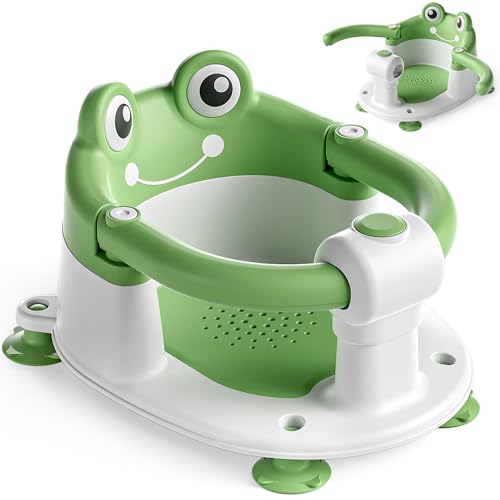
This bath seat emphasizes safety and stability with a 360° surround design, non-toxic materials, and four strong suction cups for attachment to tub surfaces. It is designed for babies up to 6-12 months and beyond, depending on the child’s size and mobility in the bath.
Best for: parents prioritizing a secure bath-time seating option that minimizes slips. Choose this if you want additional back and side support during baths.
Limitation: It is a bath-time seat only, so you’ll still need separate high-chair or booster options for feeding outside the tub.
KEST NEST Sit Up Floor Seat

This sit-up floor seat focuses on ergonomic support with a cradle-like backrest and contoured design to align with a baby’s spine. It uses high-density foam to maintain shape and includes a non-slip bottom for stability on various surfaces. Dual front openings support leg movement and reduce hip strain.
Best for: babies transitioning to independent sitting who need gentle posture support. Opt for this if you want a sofa-style option that helps babies sit up with confidence.
Limitation: It is a floor seat without tray or strap fixtures for chair use, so you’ll need additional accessories for meals or chair attachment if needed.
Buying Guide: How to Choose Seats For Babies 6 Months Plus
What activity will you use the seat for most?
Choose a seat that aligns with your primary activity—mealtime, bath time, or floor play. Booster seats with secure straps are ideal for dining, while floor seats or activity seats support independent sitting and exploration.
Is grow-with-baby versatility important?
Seats that convert from infant boosters to toddler seating or include detachable trays offer longer use. Consider how long the seat remains suitable as your child grows beyond 6 months.
How important is portability and storage?
Fixed-back designs or seats with built-in trays may be less portable. If you travel often or have limited space, prefer compact models with stowaway features or easy disassembly.
What safety features matter most?
Look for secure harnesses, non-slip bases, and stable support. For baths, ensure suction cups and water-proof materials; for dining, ensure chair straps fit a range of chair types and that the back remains secure during use.
Materials, cleaning, and longevity
Non-toxic, BPA-free materials are important for baby products. Durable fabrics and easy-to-clean surfaces save time and keep usage hygienic, especially for items used during meals and baths.
Maintenance and assembly considerations
Understand if assembly requires removing trays, detaching backs, or adjusting straps. Clear assembly steps help ensure safety and correct usage from the first use.
FAQ
- What age is appropriate for a booster seat?
- Can a floor seat replace a high chair?
- What features improve bath-time safety?
- Are convertible seats worth the extra cost?
- How do I clean these seats?
- Which seat is best for travel?
Booster seats are typically suitable for babies who can sit up unassisted and weigh around 20 pounds or more, but always follow the product’s weight and usage guidelines.
Floor seats support babies learning to sit and exploring posture, but they do not replace a dedicated high chair for sustained feeding at a table. Use them in combination with a proper high chair or booster when feeding at meals.
Non-slip suction cups, a robust back support, and non-toxic materials improve bath-time safety. Look for seats with stable bases and water-safe construction.
Convertible seats that transition from infant booster to toddler seat offer extended use, saving space and money over time. They’re useful as babies grow and require different seating configurations.
Most seats feature wipe-clean surfaces or removable, washable components. Check the product’s cleaning instructions for best results and to maintain safety standards.
Travel-friendly options are typically lighter, foldable, and easy to store in a bag or car. Consider seats with compact frames and simple assembly for on-the-go use.