Answering the common question “which sign language chart is best for babies?” this guide highlights five top options designed to support early communication. These posters are best for parents, caregivers, classrooms, and therapy settings aiming to reduce frustration and boost early language skills. The following selections balance clear visuals, durable materials, and beginner-friendly signs, helping families choose the right chart for home or school use. The included summary table compares key strengths at a glance.
| Product | Best For | Format | Material |
|---|---|---|---|
| CZOURPVU Baby Sign Language Poster | Homes and bedrooms seeking decorative, educational wall art | Poster | Canvas |
| Aposwow Sign Language Posters for Classroom | Classrooms and therapy settings needing multiple signs | Card posters | Premium paper |
| 25 Must-Know Baby Sign Language Poster | Nursery and daycare with simple, essential signs | Poster | Canvas |
| YIYDONG 24 Boho ASL Posters | Colorful, engaging classroom decor | Poster set | Laminate/PET |
CZOURPVU Baby Sign Language Poster Review
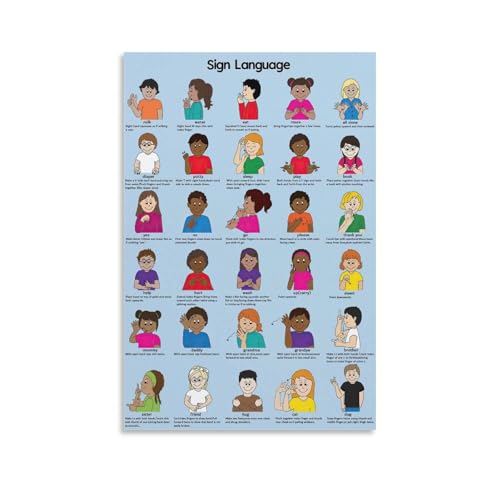
The CZOURPVU poster is designed as a broad, visually engaging wall art piece that doubles as a quick-reference sign guide. It suits a kid’s bedroom or play area, offering a decorative yet functional learning tool. Best for families who want a single, all-purpose sign chart that also enhances room aesthetics. A potential limitation is its broad coverage; busy classrooms may prefer smaller, more focused sets for targeted lessons.
Aposwow Classroom Sign Language Posters

This set includes 24 ASL hand signs covering common words and phrases. It is well-suited for classrooms, homes, and therapy settings where multiple cues help learners build vocabulary. The visuals are clear, with bold labels that facilitate quick recognition. The posters are made from durable paper and are reusable with water-based markers, making them a good option for ongoing lessons. Use this when you need a broad, repeatable set of signs for group instruction; avoid if you require laminated surfaces for heavy wear.
25 Must-Know Baby Sign Language Poster

This canvas wall art focuses on 25 essential signs to bridge early communication gaps. It is ideal for nurseries, daycares, and playrooms where vivid colors grab a baby’s attention. Best for parents and caregivers seeking a concise, starter set that supports simple daily interactions (Hungry, Milk, More, etc.). A limitation is fewer signs than some multi-card sets, which may require supplementing with additional cues over time.
YIYDONG Boho ASL Posters For Kids

The YIYDONG set presents 24 ASL posters with a boho design theme, including alphabet, numbers, colors, days, months, and more. It’s best for families and classrooms that want a visually engaging, themed display that covers a broad range of signs. The design uses laminated PET materials for durability and dry-erase compatibility, making it practical for repeated use. Choose this for variety and visual appeal; skip if you strictly need a single-topic chart without decorative elements.
Buying Guide: Key Purchase Considerations
- Learning goals: Choose a chart with signs most relevant to your daily routines, such as common needs (hungry, thirsty) or classroom objectives (colors, numbers).
- Durability: For nurseries or high-traffic areas, look for laminated, water-resistant or canvas materials that resist wear and tear.
- Size and layout: Consider whether a single large poster or multiple smaller cards will fit your space and teaching method.
- Ease of use: Clear illustrations and bold labels help newborns and toddlers recognize signs quickly. Dry-erase compatibility is helpful for ongoing practice in some sets.
- Integration with decor: If you want wall art that doubles as decor, choose designs that complement room aesthetics while remaining instructional.
- Longevity and updates: For evolving sign vocab, sets with additional signs or repeatable content may better support growing skills.
Practical Tips for Using Sign Language Charts
- Introduce a few signs at a time; pair each sign with a spoken word to reinforce associations.
- Use consistent hand shapes and gestures to avoid confusion across signs.
- Place charts at child-eye level and label signs with both images and words for accessibility.
- In group settings, use a rotation method to keep lessons engaging and prevent fatigue.
Frequently Asked Questions
- What is the best type of sign language chart for babies?
– A durable, visually clear chart with essential signs suitable for daily communication is typically best for babies and toddlers. - Should I choose a large poster or multiple smaller cards?
– For limited wall space or quick reference in a classroom, multiple cards can be easier to update and rearrange; a large poster benefits room decor and visibility in a play area. - Are laminated signs better than unlaminated?
– Laminated or PET-coated signs tend to be more durable and easier to clean, which is beneficial for high-traffic areas. - Can these charts replace speech therapy?
– No. They are supportive tools that aid communication but should complement professional guidance and individualized therapy plans. - How many signs should a beginner learn first?
– Start with 5–10 essential signs (e.g., eat, drink, more, all done, want) and gradually add more as comprehension grows. - Are these charts suitable for both babies and toddlers?
– Yes. They’re designed to be accessible for early learners and adaptable for older children as vocabulary expands.