Looking for the best silicone cup for your baby or toddler? This guide highlights top open and straw cups made from 100% food-grade silicone, designed to support early drinking skills, teething comfort, and mess reduction. Each option is suited to different stages, from bottle transition to independent drinking. The top picks emphasize safety, grip, and ease of cleaning for busy families.
| Product | Best For | Key Benefit |
|---|---|---|
| PandaEar 2 Pack Tiny Silicone Drinking Training Cup (Blue/Green) | Toddlers learning to grip | Non-slip grip and 3.5 oz capacity |
| Moonkie Silicone Baby Sippy Cups (4 oz) | Bottlereplacement transition | Three-in-one design: sippy, straw, open cup |
| ezpz Tiny Cup (Sage) | Baby-led weaning transition | Weighted base and non-slip grip for upright sipping |
| SAMiGO Silicone Baby Cups (2 oz) | Open cup practice for tiny hands | Weighted, textured bottom to reduce spills |
| Seposeve Silicone Baby Cups (2 oz) | Steady, age-graded transitions | Baby mouth-like design with capacity markings |
The products below are organized to help you compare grip, tipping resistance, and stage suitability. Each entry includes a brief rationale for who should consider it, plus a practical limitation to weigh before buying.
PandaEar Tiny Silicone Cups With Handles

- Best for: toddlers who need a stable grip and a compact 3.5 oz capacity.
- Why selected: The cups feature non-slip grip bumps and a silicone design that protects developing teeth while providing a simple, everyday-use option.
- Limitation: Smaller capacity means more frequent refilling during meals or outings.
Moonkie Silicone Baby Sippy Cups (4 oz)
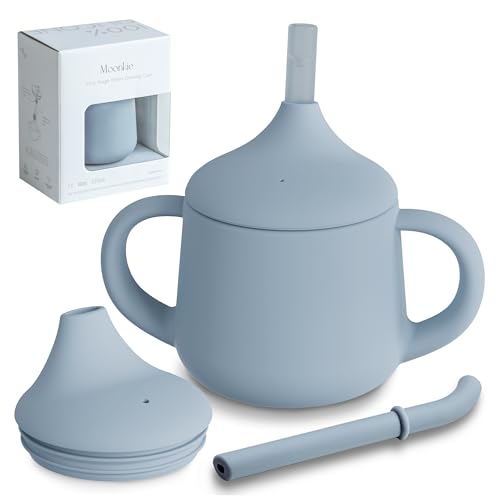
- Best for: babies ready to practice independent drinking with flexible transition options.
- Why selected: Three-in-one design (sippy, straw, open cup) supports gradual skill development and lip closure.
- Limitation: Slightly larger than some ultra-compact options, which could affect tiny hands at the earliest stage.
ezpz Tiny Cup (Sage)
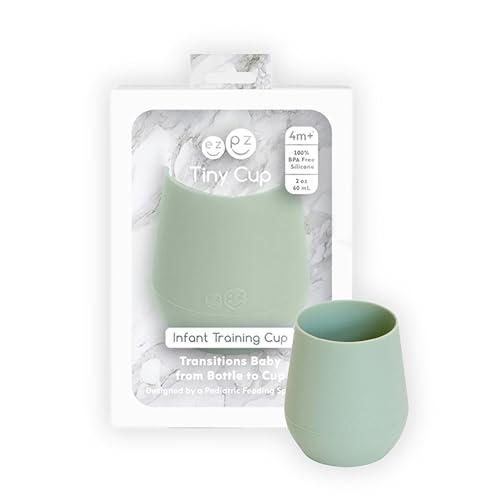
- Best for: caregivers seeking a pediatric-fed specialist-backed design for a baby-led weaning transition.
- Why selected: Thoughtful interior angle for even flow, weighted base, and tactile bumps to minimize toppling.
- Limitation: As a transition cup, it emphasizes open-mouth sipping; it may be less spill-resistant than straws for very active toddlers.
SAMiGO Tiny Open Cups (2 oz)

- Best for: precise open-cup practice with a small capacity that reduces spill risk for new drinkers.
- Why selected: Compact 2 oz size, firm grip feel, and weight distribution to minimize tipping during early stages.
- Limitation: Open cups require careful supervision to avoid spills when learning.
Seposeve Open Cup Sets (2-Pack)

- Best for: families seeking a two-pack option with size-appropriate handles and a mouth-friendly design.
- Why selected: Baby mouth-like arc design with capacity markings for easy measuring of fluids and milestones.
- Limitation: Two-pack customization may not include a straw option, depending on the kit.
Infantino My 1st Tumbler, 9 Oz. Silicone Sippy Cup

- Best for: older toddlers needing a larger, on-the-go sippy solution with a straw.
- Why selected: 9 oz capacity, leak-resistant straw design, and easy-to-hold handle for travel or daycare.
- Limitation: Larger size may not be ideal for the smallest hands or early training stages.
Buying Guide
Key purchase considerations help match a silicone cup to your child’s age, development, and daily routine.
- Age and Stage: For first-year transitions, consider smaller cups (2–4 oz) with non-slip grips. For toddlers practicing independent drinking, 4 oz or larger with a straw can be beneficial.
- Grip and Handle Design: Look for textured grips, ergonomic handles, or built-in straw features to minimize spills and encourage confident handling.
- Spill Reduction: Weigh the trade-off between open cups (better for oral development) and spill-resistant designs (better for containment in bags and car seats).
- Materials and Safety: Ensure 100% food-grade silicone, BPA-free construction, and simple cleaning routines (dishwasher-safe if possible).
- Cleaning Convenience: Dishwasher compatibility and removable parts support quick cleanup after meals or outings.
- Durability and Care: Look for scratch resistance and stain resistance for long-term use with real-life wear and teething.
FAQ
- What age is best for transitioning from a bottle to a cup? Experts commonly recommend starting around 6–12 months, with a progression to open-cup drinking as teeth and oral muscles develop.
- Are silicone cups safe for babies? Yes. Most silicone cups used here are BPA-free, phthalate-free, and made from 100% food-grade silicone, designed for gentle contact with growing teeth and gums.
- Which design reduces spills the most? Cup designs with weighted bottoms, non-slip textures, or straw mechanisms tend to reduce spills more reliably than plain open cups.
- How should I clean silicone cups? Most are top-rack dishwasher safe, but hand-washing is recommended for longevity if the manufacturer suggests it.
- Is an open cup better than a sippy cup? Open cups support lip closure and speech development, while sippy cups are useful for early training and mess minimization during transitions.
- How many cups should I own? A two-cup starter set is practical for daily use and rotation, plus a backup during travel or daycare.