Answer: A sitting activity center is ideal for babies who can hold their head up and sit with support, typically from around 4 months, up to when they’re ready to crawl or walk. This guide highlights top options that grow with your child, offer engaging toys, and support development. The best picks include multi-stage centers that transition from sit-and-play to standing and even into toddler tables, plus seat-and-snack combinations for mealtime.
| Product | Brand | Best For |
|---|---|---|
| Skip Hop Interactive Activity Center | Skip Hop | Babies who benefit from 3-stage grow-with-me play, early movement |
| Bright Starts Finding Nemo Sea of Activities Jumper | Bright Starts | Active babies who love a 360° rotating seat and musical interactions |
| Skip Hop Silver Lining Cloud Activity Center | Skip Hop | infants who enjoy 3-stage play and cause-and-effect toys |
| Little Acorn 4-in-1 Baby Activity Center | little acorn | Long-term versatility with Montessori-inspired toys |
| Infantino 3-in-1 Discovery Seat & Booster | Infantino | Long-lasting seating that transitions to dining and toddler booster |
Skip Hop Interactive Activity Center
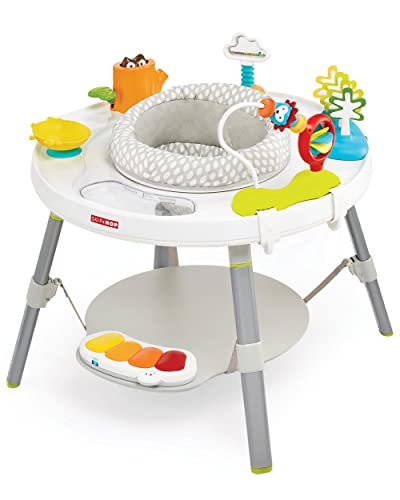
The Skip Hop Interactive Activity Center grows with baby in three stages, from Sit to Swivel to Play, and finally to a toddler activity table. It features a 360° rotating seat, more than 25 developmental activities, and adjustable toy placement. The Discovery Window plus a musical light-up piano provides multisensory play. This option is best for babies who respond well to rotating play zones and desire a long-term, evolving play space.
- Best for: Parents seeking a true grow-with-me center that converts to a toddler table.
- Why chosen: Comprehensive, pediatrician-influenced design with many activities and easy customization.
- Caution: Requires 3 AAA batteries for the piano; batteries not included.
Bright Starts Finding Nemo Sea of Activities Jumper

This jumper centers on a 360-degree rotating seat that gives access to 13+ activities, including a toy tray, rollerball station, turtle piano, bead chaser, and soft mirror. It grows with baby from 6 months to about 1 year or up to 25 lbs with adjustable height settings. It’s best for babies who enjoy dynamic, music-enhanced play and quick toy repositioning as they grow.
- Best for: Parents seeking a vibrant, toy-rich jumper with deep-seat access for infants who are seated and exploring.
- Why chosen: High activity count and engaging musical elements support early motor and sensory skills.
- Caution: Not a long-term stationary activity center; intended primarily for jumping play and early exploration.
Skip Hop Silver Lining Cloud Activity Center

The Silver Lining Cloud center is designed for the same family as the Explore & More model, offering three stages of growth: Sit, Swivel, and Cruise & Interact, plus the 360° rotating seat and 25+ activities. It emphasizes cause-and-effect through a light-up piano with multiple play modes. The removable piano and customizable toy loops support ongoing development as baby grows.
- Best for: Families who want a second option in the same brand family with similar grow-with-me features.
- Why chosen: Robust activity selection with a focus on motor and cognitive growth.
- Caution: Requires batteries (not included) for the light-up piano.
Little Acorn 4-in-1 Baby Activity Center
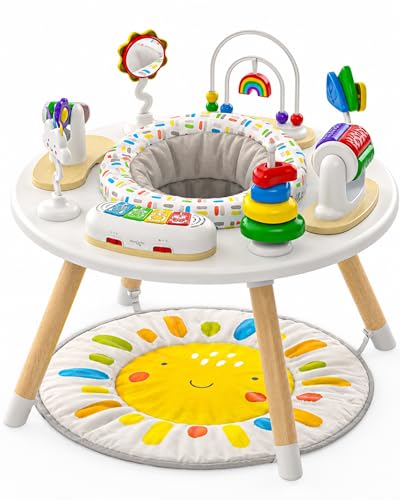
This Montessori-inspired 4-in-1 activity center grows with baby from tummy time to toddler table, featuring 8 removable toys designed to foster motor control, tactile exploration, self-awareness, and problem-solving. The interactive piano offers over 30 phrases, sounds, and songs to engage early musical learning. Batteries are included for immediate use. It emphasizes guided, age-appropriate activities and prompts for extended play.
- Best for: Parents seeking a versatile, Montessori-inspired toy set that transitions across stages.
- Why chosen: Strong emphasis on self-directed exploration with removable toys and varied play modes.
- Caution: With multiple parts, assembly and small toy components require supervision for younger babies.
Infantino 3-in-1 Discovery Seat & Booster
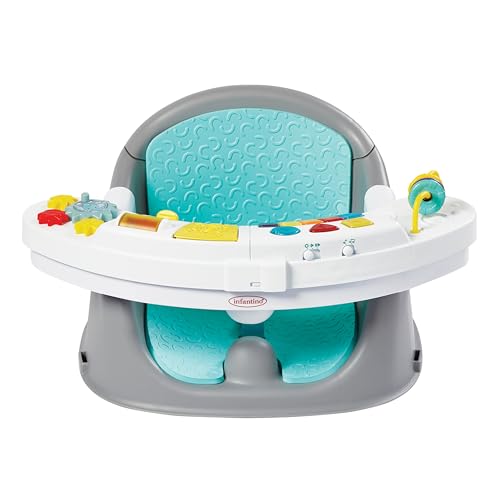
The Infantino 3-in-1 Discovery Seat converts from a baby activity center to a snack seat and then to a toddler booster. It supports use from 4 months up to 4 years (33 lbs). A built-in light-up piano with 20 songs, plus interactive toy pods, encourages motor and sensory exploration. The hidden snack tray simplifies transitions between play and feeding.
- Best for: Families wanting a compact, all-in-one seat that grows into mealtime seating.
- Why chosen: Combines play, learning, and dining in one versatile piece.
- Caution: Some models may require careful cleaning due to folds and tray access areas.
Infantino 3-in-1 Discovery Seat & Booster (Variant)

Another Infantino variant offers the same 3-in-1 progression: activity center, snack seat, and toddler booster. It includes a light-up piano with 20 songs and interactive pod toys. The hidden snack tray and cup holder support smooth transitions between play and meals. It is well-suited for families prioritizing long-term use from early infancy to toddler years.
- Best for: Shoppers who value a cost-effective, long-lasting seating solution with musical play and snack integration.
- Why chosen: Additional model provides a comparable experience with consistent Infantino design philosophy.
- Caution: Ensure compatibility with your chair height for booster mode.
Buying Guide
What to consider when choosing a sitting activity center
Growth stages: Look for centers that transition from infant play to toddler activities to maximize value and use over time.
Activity variety: Prioritize centers with multiple toy stations, rotating seats, and customization options to maintain engagement as your child grows.
Safety and durability: Check for sturdy bases, non-slip feet, BPA-free materials, and toy attachments that are easy to clean and age-appropriate.
Size and space: Consider whether the center fits your play area and if it folds or disassembles for storage.
Mealtime versatility: If dining use matters, consider seats with snack trays or booster configurations that simplify transitions.
Battery needs: Some centers rely on batteries for features like light-up pianos. Note whether batteries are included or required separately.
How to compare similar models
- Growth scope: Which model covers the longest period of baby development?
- Number of activities: Which option offers the most distinct play experiences?
- Rotating access: Does the seat rotate 360° for easy reach of toys?
- Transition features: Can the center convert into a table or booster easily?
Practical usage tips
- Rotate toys to maintain novelty and support fine motor skills.
- Place toys at different heights to encourage reaching and balance.
- Supervise during play, especially with removable components and trays.
FAQ
- What age should I start using a sitting activity center? Answer: Typically around 4 months when babies can hold their heads up with support.
- Do these centers require batteries? Answer: Some include a light-up piano or motion features that require batteries; check included items for each model.
- Are these centers safe for tummy time? Answer: Many are designed for seated play; always supervise and use tummy time separately as part of a broader play routine.
- Can I wash the components? Answer: Most toy surfaces are wipe-clean; removable parts may be hand-washed or machine-washed as recommended by the manufacturer.
- Which model is best for extended use? Answer: Look for 3-in-1 or 4-in-1 designs that convert from infant play to toddler seating and table activities.
- Do these centers help with development? Answer: They encourage motor skills, hand-eye coordination, sensory exploration, and early cause-and-effect learning.