Answering the need for slow, comfortable feeding, these nipple options are ideal for newborns or babies transitioning from preemie or so-called “very slow” flow feeders. This guide highlights bottles with true slow-flow designs, anti-colic features, and breast-like textures to support a calm feeding pace. Best for parents seeking reduced air intake, fewer spit-ups, and a more natural latch during early bottle feeding.
| Product | Brand | Best For | Why It Stands Out |
|---|---|---|---|
| Dr. Brown’s Natural Flow Level T Narrow Nipple | Dr. Brown’s | Newborns needing the slowest available flow | Hospital-grade pace with anti-colic venting |
| MAM Extra Slow Flow Nipple | MAM | Newborns who tolerate breast-like textures | SkinSoft silicone and anti-colic airflow |
| Pigeon Silicone Nipple (SS) with Latch-On Line | PIGEON | Newborns needing guided latch | Latching curve and advanced venting to minimize air |
| Lansinoh NaturalWave Extra Slow Flow | Lansinoh | Newborns focused on gradual milk flow | AVS air-flow system for reduced colic and gas |
| Tommee Tippee Natural Start Extra Slow Flow | Tommee Tippee | Babies transitioning from breast to bottle | Breast-like latch and natural-feel silicone |
Dr. Brown’s Natural Flow Level T Narrow Nipple

The Level T Narrow Nipple is designed for newborns needing a slower flow than standard Level 1 nipples. It is used in NICUs and is paired with an anti-colic internal vent system to reduce spit-up, burping, and gas. Best for babies with sensitivity to flow rates and families seeking a hospital-grade option. Limitation: may require a transition period for babies used to faster flows.
MAM Extra Slow Flow Nipple

The Extra Slow Flow nipple from MAM uses SkinSoft BPA-free silicone to feel similar to mom’s skin. It is designed for newborns to drink at a slow, steady pace, with the benefit of reduced gas and easier acceptance of the nipple. Best for newborns who accept soft textures and require minimal air intake. Limitation: acceptance rates can vary by infant; some may prefer a slightly faster flow initially.
Pigeon Silicone Nipple (SS) With Latch-On Line

Designed around research on natural sucking movements, this nipple features a latch-on line that guides proper latch and an anti-colic venting system to minimize swallowed air. Best for newborns who benefit from guided latch and reduced gas. Limitation: availability and price may vary by region.
Lansinoh NaturalWave Extra Slow Flow
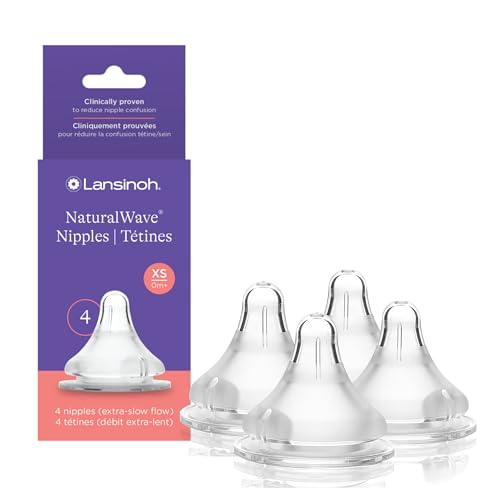
These nipples feature a wide base and textured surface for easy latch, plus an Advanced Airflow System that minimizes air intake for less colic. Best for babies needing a gentle, natural-feeling flow with support for oral development. Limitation: some users report a slower flow may be too slow for certain babies’ appetites at times.
Tommee Tippee Natural Start Extra Slow Flow

The Natural Start nipple aims to mimic breastfeeding to encourage a natural latch and reduce air intake. The anti-colic valve and soft silicone support a comfortable feeding pace for newborns and early transitions. Best for parents seeking a familiar latch-feel in a bottle. Limitation: some babies may require adjustments to flow pace over time.
Buying Guide: Key Purchase Considerations
- Flow rate and transition needs: Choose slow or extra-slow flow nipples for newborns, especially when transitioning from breast or from faster bottle flows.
- Anti-colic features: Look for nipples with internal vents or AVS systems to minimize gulping air, gas, and spit-up.
- Breast-like feel: Nipples designed to mimic the breast can aid latch and acceptance for babies transitioning between breast and bottle.
- Material safety: Most options use BPA-free silicone; confirm total material compatibility with your baby’s sensitivities.
- Latch and comfort: Textured bases or latching guides can support babies learning to latch, especially for first-time parents.
- Compatibility: If you use a specific bottle brand, ensure the nipple is compatible or listed as fitting that bottle to avoid leaks or poor flow.
Frequently Asked Questions
- What is a slow-flow nipple, and who should use it?
It is a nipple designed to deliver milk at a slower rate, suitable for newborns or babies who struggle with faster flows or have reflux symptoms. - Do slow-flow nipples reduce colic?
Many slow-flow designs include venting to reduce swallowed air, which can help lessen colic symptoms in some babies. - When should I switch nipples?
Consider moving up a flow rate if your baby consistently finishes quickly or appears hungry after a slow-flow feeding. - Are breast-like nipples better for newborns?
Breast-like textures can ease latch and comfort for many babies, facilitating smoother bottle transitions. - Can I mix nipple brands?
It’s common to try different brands; just ensure the bottle and nipple are compatible and watch for any feeding difficulties. - What should I do if my baby rejects a nipple?
Reassess flow pace, nipple shape, and texture; sometimes a different brand with a slightly different design works better.