Answering parents seeking gentle, development-friendly companions for infants and toddlers, this guide highlights soft toys ideal from birth to 18 months. Each pick offers tactile textures, soothing sounds, and safe materials designed for tiny hands. Best for newborns and up to 18 months, these toys support sensory development, early motor skills, and comforting companionship. Below, you’ll find five carefully chosen options with clear reasons to choose each, plus practical buying tips to help you compare at a glance.
Quick comparison at a glance (selected products):
- OUOZZZ Soft Baby Doll 10″ — Best for newborns and small hands; ultra-soft, washable, eco-friendly.
- hahaland Montessori Fishing Game 10 in 1 — Best for cognitive & fine motor development; color and number sorting.
- hahaland Surprise Barn with Stuffed Farm Animals — Best for multisensory play; sounds, crinkles, mirror, and open-and-close play.
- KMUYSL My First Sports Bag Plush Toy — Best for early sensory play; built-in squeaks, rattles, crinkle, and safe materials.
- Aprilwolf Shape Sorting Cube & Blocks — Best for problem-solving; spatial reasoning and fine motor practice.
OUOZZZ Soft Baby Doll 10″ Tulip Pink

Overview: This 10-inch plush doll features embroidered eyes and a pastel outfit, designed for easy holding by tiny hands. The plush fabric is ultra-soft, making it a comforting cuddle buddy for naps and car rides. The doll is described as safe and eco-friendly, CPC certified and CPSIA tested, suitable for delicate infant skin and easy to clean by machine or hand wash.
Why it’s best for: Best for newborns and 6–18 months, especially for babies needing a secure, soothing friend during sleep or stroller time. The compact size fits into small arms and helps with gentle association of comfort with a familiar presence.
Limitations to consider: While the toy is washable, frequent washing may affect surface softness over time. Ensure gentle cycles to preserve fabric integrity.
hahaland 10 in 1 Cloth Fishing Game

Overview: A Montessori-inspired fishing set with 22 pieces, including a fishing pole, 15 fish, and 5 stackable fish buckets. The ocean mat doubles as a storage bag. The design uses Velcro and felt rather than magnets for safe, tactile play, encouraging color sorting and counting as children explore the catch and buckets.
Why it’s best for: Best for toddlers learning numbers and colors, with hands-on sorting play that supports early math and cognitive skills. It also fosters fine motor development through the fishing action and stacking play.
Limitations to consider: Small Velcro pieces require supervision to ensure safe play; ensure all pieces are present before use to prevent choking hazards in younger infants who may mouth items.
hahaland Baby Toys 6-12 Months – Surprise Barn

Overview: A barn playset featuring six talking farm animals with gentle sounds, a fold-out play mat, and a barn with openings to encourage placement and retrieval play. The set emphasizes Montessori-inspired learning through cause-and-effect interactions, with crinkle paper textures and a mirror for self-discovery.
Why it’s best for: Best for babies 6–12 months who enjoy auditory feedback and reach-and-pick activities. The combination of sounds, textures, and spatial play supports sensory exploration and early language cues.
Limitations to consider: The presence of sounds may be too stimulating for some babies at nap time; consider using during active play rather than around sleep routines.
KMUYSL Baby Toys 0-12 Months — My First Sports Bag

Overview: A soft sports bag with four sensory balls—basketball squeaker, jingle soccer ball, football rattle, and crinkle paper baseball. Designed for babies 0–12 months, the set highlights safe plush materials and easy machine washing. Each ball includes built-in rattles or squeaks for multisensory engagement.
Why it’s best for: Best for early sensory stimulation and gross motor play. The assortment helps babies practice reaching, grasping, squeezing, and shaking, while the safe fabrics support repeated exploration.
Caution: Check for any loose stitching after washing; lint and thread wear can occur with active teething or rough handling.
Aprilwolf Montessori Toys Cube & 6 Shape Blocks
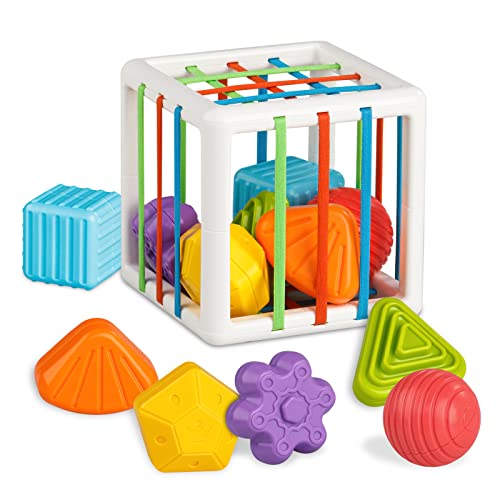
Overview: A shape-sorting cube paired with six textured blocks, plus elastic bands on the cube to add play possibilities. This set targets spatial reasoning, hand-eye coordination, and fine motor skills as babies push, pull, twist, and sort shapes into the cube.
Why it’s best for: Best for 12–18 months, especially for toddlers ready to expand problem-solving and imaginative play. It provides a structured activity that still feels exploratory and engaging.
Limitation to consider: Some babies may prefer simpler activities first; use this set as a progression after mastering basic grasping and mouthing behaviors.
Buying Guide: Choosing Safe, Developmental Soft Toys
- Age-appropriate textures and sizes: Look for toys designed for newborns through 18 months, with small parts securely attached and fabrics that are soft but durable.
- Material safety: Prioritize CPC certification, CPSIA compliance, and non-toxic fabrics. Washable toys are practical for babies who explore with mouth and hands.
- Sensory variety: A mix of plush with sounds (squeaks, crinkles, gentle music) and visual cues (bright colors, contrasting patterns) supports multisensory development.
- Developmental targets: Choose toys that promote fine motor skills (grasping, pinching), gross motor skills (reaching, shaking), and early cognitive skills (sorting, counting, color recognition).
- Safety considerations: Inspect stitching, seams, and any attachments. Avoid pieces that could detach and pose choking hazards for the 0–12 month range.
- Care and cleaning: Prefer machine-washable options for easy maintenance. Follow care instructions to preserve fabric integrity and colors.
- Portability and ease of use: Compact, lightweight toys are ideal for travel, car rides, and strollers, while larger toys can fill a play mat at home.
Frequently Asked Questions
- What age is best for soft baby toys? Answer: Soft toys are appropriate from birth through 18 months, with gradual introduction of more complex textures and sounds as the child grows.
- Are scented or fluffy toys safe for babies? Answer: Choose unscented, hypoallergenic fabrics. Strong fragrances can irritate sensitive baby skin and airways.
- How can I tell if a toy is safe for mouthing? Answer: Look for high-quality stitching, filled fibers that are securely enclosed, and materials that are non-toxic and CPSIA-compliant.
- Which toys support early learning the most? Answer: Toys that encourage grasping, shaking, sorting, and matching textures help develop fine motor skills, hand-eye coordination, and early cognitive abilities.
- Should I avoid electronic sounds for newborns? Answer: For newborns, opt for non-noise or softly padded sounds; screen-free, gentle sounds are more calming and developmentally appropriate early on.
- How many soft toys should a baby have? Answer: A small set (3–5 varied toys) allows variety without overwhelming the baby’s environment; rotate them to maintain interest.