Top options for toddler stair safety include adjustable indoor gates and secure stairway barriers. This guide highlights five practical products best suited for homes with young children. It explains who each gate is ideal for, how to install, and potential limitations to consider before purchase.
Summary of chosen products
- Toddleroo by North States – Supergate Ergo (Ivory) — Versatile, adjustable 26–42″ width; stair and doorway use
- Toddleroo by North States – Supergate Ergo (Sand) — Similar adjustability; best for wide openings and stairs
- Cumbor 30–46″ Baby Gate for Stairs — Auto-close, double-lock, supports stairuse with hardware mounting
- Regalo Safety 29–38.5″ — Extra-wide, pressure-mounted for doorways and bottom of stairs
- Regalo Safety 28″–42″ Extra Wide — Wide openings, pressure-mounted, proven design for long openings
Toddleroo By North States Supergate Ergo (Sand)
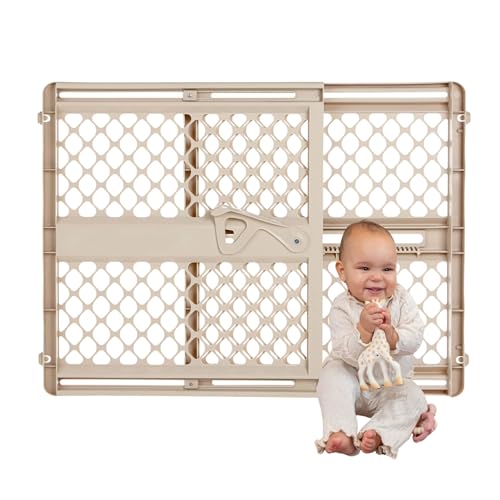
This plastic gate provides a secure barrier to limit access to stairs, kitchens, and other off-limits areas. It is adjustable to fit 26–42 inches and stands 26 inches tall, making it suitable for standard stair openings and wide doorways.
Best for parents seeking a straightforward, hardware-optional setup for stair safety and easy placement. The hardware mounting option is available for stair use, while pressure mounting offers quick, tool-free installation.
Limitations: When used on stairs, hardware mounting is required for best stability. Always verify the stair angle and banister design before installation.
Toddleroo By North States Supergate Ergo (Ivory)

This gate is identical in function to the Sand version, with 26–42 inch width adjustment and 26 inch height. It is designed to be difficult for toddlers to climb and supports use at stairs, doorways, and hallways.
Best for households needing flexibility in placement and a consistent safety barrier across multiple openings. Hardware mounting is recommended for stair use to maximize stability.
Caution: Ensure compatibility with your rail design and confirm hardware mounting is properly installed for stairs.
Cumbor 30–46″ Baby Gate For Stairs

This gate supports a wide range (30–46 inches) with auto-close and a double-lock system. It offers both pressure mounting for quick setup and hardware mounting for stair use, enhancing security where stairs are involved.
Best for homes with long stair openings and high-traffic areas where a secure, hands-free gate is beneficial. The bottom support bar improves stability.
Limitation: Verify threshold compatibility before purchase to ensure the included hardware aligns with your stairs.
Regalo Safety 29–38.5″ Gate

Expands to fit openings 29–38.5 inches wide and stands 30 inches tall. It’s a well-established option for doorways and the bottom of stairs, with a focus on ease for adults and safety for toddlers.
Best for standard-width doorways and lower stair openings where frequent passage occurs. It offers a long-standing design trusted by families.
Limitation: Not ideal for extremely wide stair openings beyond the stated range without extensions.
Regalo Safety 28″–42″ Extra Wide Gate

This extra-wide gate fits openings from 28 to 42 inches and stands 23 inches tall. It’s a flexible solution for bottom-of-stairs and wide hallways, ideal for open-floor plans.
Best for larger openings where standard gates feel too narrow. Choose this if you need broad coverage with a simple setup.
Limitation: Slightly shorter height may be less suitable for very active toddlers who lean or climb near the top edge.
Buying Guide: Stair Safety For Toddlers
- What opening width do you need to cover? Measure the widest point between banisters or doorway frames. Choose gates that fit within the standard ranges (e.g., 26–42 inches, 29–38.5 inches, 30–46 inches) for best stability.
- Do you need hardware mounting for stairs? Hardware mounting provides a more secure barrier on stairs, reducing the risk of gate movement or tipping. Pressure-mounted gates are quicker to install but may be less stable on stairs.
- What height is appropriate for toddlers? Gates around 26–30 inches high deter climbing for most toddlers, while taller options offer extra safety for more active kids.
- Is auto-close or dual-lock important? Auto-close and double-lock features help prevent gate remains propped open and reduce the chance a child can bypass the barrier.
- Material and installation considerations? Plastic gates are lightweight and easy to install, while metal gates offer durability. Make sure hardware and mounting options suit your staircase design.
- Can you adapt to different openings? Gates with adjustable width and multiple installation modes suit multiple spaces—stairs, doorways, and hallways.
Frequently Asked Questions
- What type of gate is best for stairs? A gate with hardware mounting is typically best for stairs due to greater stability, especially on uneven or curved banisters.
- How high should a toddler gate be? About 26–30 inches is common; taller gates are preferable for very mobile or climber-prone toddlers.
- Can gates be used for pets? Most gates work for small dogs; check weight and width limits if you plan to use them for pets as well as children.
- Are extra-wide gates necessary? Use wide-opening gates if you have large entryways or long stair landings to reduce gaps and gaps around the opening.
- How do I know if a gate fits my stairs? Verify the stair angle, railing shape, and whether hardware mounting is recommended for that product before purchasing.
- Is installation difficult? Many gates offer tool-free pressure mounting, but stair use often benefits from hardware installation with included instructions.