Finding the right step stool for a growing child is essential for safe potty training, hand washing, and reaching sinks or counters. This guide highlights five practical options that balance stability, ease of use, and durability for American families. Each pick suits different needs—some prioritize portability, others emphasize extra features like handles or learning aids. Use the buyer notes to match the stool to your child’s age, space, and daily routines.
Summary table of selected products:
| Product | Best For | Key Benefit |
|---|---|---|
| Dreambaby Step Stool | Toddlers needing non-slip grip | 117 rubber dots for traction; contoured around toilet bases |
| Forbena Toddler Stool | Portability and simple setup | Lightweight with handles; supports up to 200 lb |
| Onasti 3-Step Tower | Versatile use around kitchen and bathroom | Convertible 3-to-2 steps; lightweight with handles |
| Fisher-Price Toddler Step Stool | Daily bathroom and sink use | Textured top; wide base; lightweight |
| Woodure 4-in-1 Stool | Learning space and folding use | Built-in blackboard; table/chair transformation |
Dreambaby Step Stool for Kids

The Dreambaby step stool is designed for growing toddlers, featuring 117 rubber dots for maximum traction and a non-slip base. It is contoured to fit around toilet bases and can be used at sinks, in kitchens, or for brushing teeth. The stool combines sturdiness with light weight, supporting up to 175 lb. Dimensions are 14.3″ wide, 9.6″ deep, and 5.6″ high. Best for toddlers who need reliable grip and a compact footprint for small bathrooms.
- Best for: Toddlers who require strong non-slip footing and a compact footprint.
- Why selected: Non-slip base and contoured design address common potty-training challenges.
- Caution: Ensure the height is appropriate for your child to avoid overreaching.
Forbena Toddler Stool for Bathroom Sink
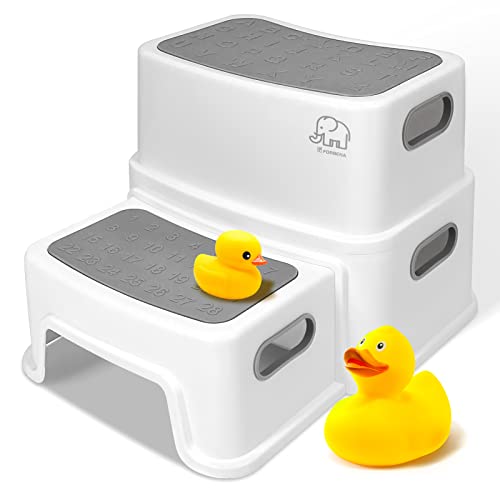
Forbena’s two-step stool provides sturdy support with eight slip-resistant feet for stability on tile floors. It includes carrying handles and a weight capacity up to 200 lb, making it suitable for both potty training and other daily tasks. The stool is easy to assemble and can be moved easily by children who are learning independence. Best for families wanting additional handles and a higher weight limit.
- Best for: Toddlers who need easy-to-grip handles and a stable footprint.
- Why selected: Combines safety features with a relatively high weight capacity.
- Caution: Some users may prefer a more compact option for very small bathrooms.
Onasti Toddler 3-Step Standing Tower

The Onasti tower is designed for versatility, allowing a 3-step configuration that can convert into a 2-step stool. Its A-shaped, stable frame has non-slip pedals and double armrests for extra safety. Lightweight construction makes it easy for kids to move from room to room. Best for households needing a flexible stool that grows with a child’s abilities. Limitations include the need for careful setup when converting between configurations.
- Best for: Families seeking a multi-use stool that adapts to growth.
- Why selected: Convertible design reduces the need for multiple stools.
- Caution: Conversion mechanism should be used per instructions to prevent pinching.
Fisher-Price Toddler Step Stool

The Fisher-Price step stool features a textured, non-slip top that helps keep little feet steady during potty training and routine tasks. Its wide base provides reliable support, and the lightweight design facilitates easy movement between rooms. Best for parents who want a classic, dependable option with straightforward use. Caution: Texture may wear with heavy use; check for wear over time.
- Best for: Everyday bathroom and sink assistance.
- Why selected: Combines stability with simple, familiar design.
- Caution: Non-slip surface should be checked for wear to maintain grip.
Woodure 4-in-1 Toddler Stool

The Woodure 4-in-1 stool offers an evolving learning space with a built-in blackboard and a quick transform into a table and chair setup. The sturdy A-frame design and removable safety bar enhance stability during use. Best for families seeking a single, expandable solution for kitchen, bath, and learning activities. Limitation: May be bulkier for very small play areas.
- Best for: Early learning and playtime alongside basic stool use.
- Why selected: 4-in-1 functionality saves space and grows with the child.
- Caution: Consider room size before purchasing to avoid clutter.
Buying Guide: Key Considerations For Choosing A Baby Step Stool
- Height and reach: Choose a height that allows your child to reach sinks or toilets without overreaching. Consider stools with adjustable configurations if your child’s height will change quickly.
- Stability and grip: Look for non-slip bases, textured tops, and wide, low-profile designs. Rubber feet or anti-slip pads reduce tipping risk on slick floors.
- Weight capacity: Confirm the stool supports your child as they grow and avoid lightweight units if your child is nearing the higher end of typical toddler weights.
- Durability and materials: Plastic options tend to be lightweight and easy to clean; wooden or composite designs can offer added durability and a sturdier feel.
- Portability and storage: If you have limited space, consider folding or stackable models and lightweight designs for easy relocation.
- Safety features: Rounded edges, built-in handles, and secure locking mechanisms help prevent sudden collapses and pinching hazards.
- Multi-use potential: Some stools convert into two or three configurations or include learning elements like a blackboard to maximize value.
FAQ
- What height should a toddler stool have? – Choose a stool that allows your child to stand with knees slightly bent and feet flat on the stool without needing to rise onto tiptoe.
- Is a two-step stool better than a three-step stool? – A two-step stool is usually lighter and simpler, while a three-step variant provides extra reach for taller tasks and early independence.
- Do stools need safety certifications? – While not always required, CPC-certified options indicate alignment with child safety standards and are worth prioritizing.
- Can stools be used by adults too? – Some stools are rated for higher weight limits, making them usable by adults in a pinch; verify the product’s weight rating before use.
- How do I clean these stools? – Use mild soap and water; avoid harsh chemicals that could degrade non-slip surfaces or finishes.
- What materials are safest for toddlers? – BPA-free plastics or untreated wood with rounded edges and smooth finishes are commonly preferred for safety.