If you’re shopping for stocking stuffers for a 6‑month‑old, choose toys that are safe, developmentally appropriate, and easy to grasp. Ideal picks support teething relief, sensory exploration, and early motor skills. Below are five carefully chosen products best suited for babies in the 6–12 month range, plus a quick buying guide and a short FAQ to help you compare options quickly.
Summary table of selected products:
| Product | Best For | Why It Stands Out |
|---|---|---|
| TOHIBEE Montessori Sensory Toys | Teething and sensory exploration | Multi-sensory with bright colors, silicone textures, and easy‑grip parts |
| Fisher-Price Baby’s First Blocks | Fine motor and early sorting | Classic, compact set for stacking and travel play |
| JKHEPL 14‑Piece Rattles & Teethers Set | Varied sounds and textures | Multiple toy types in one set for varied play |
| hahaland Baby Books 0–6 Months | Tummy time and tactile exploration | Textured pages and safe materials |
| GRESEESM Rain Stick Montessori Toy | Auditory and visual tracking | Soothing rain sounds and bead movement |
TOHIBEE Montessori Sensory Toys For 0-6 Months

Best for teething relief and early sensory play. This toy combines 12 bright colors, textured silicone balls, and a rattle ring to engage a baby’s senses. The silicone teether and safe ABS components support soothing soothing gums while encouraging grasping.
Who it suits: This is ideal for babies starting to explore with their mouths and hands, especially those around 6–12 months who benefit from multi-sensory stimulation. Selected for portability and lightweight design, it travels well in a caregiver’s bag.
Limitation: Material safety is noted as high quality, but always supervise teething toys during chewing and discard if any part shows wear.
Fisher-Price Baby’s First Blocks

Best for early motor skills and visual tracking. This set includes 10 blocks designed for stacking, sorting, and dropping, with easy storage in a bucket and a travel-friendly handle.
Best for: Babies who enjoy cause-and-effect play and like to lift, stack, and carry. It’s a practical stocking stuffer that encourages hand–eye coordination and spatial awareness.
Limitation: The blocks are simple but do not include sound or texture variety beyond shape and color. Consider pairing with a rattling toy for more sensory depth.
JKHEPL 14PCS Rattles Teethers Set
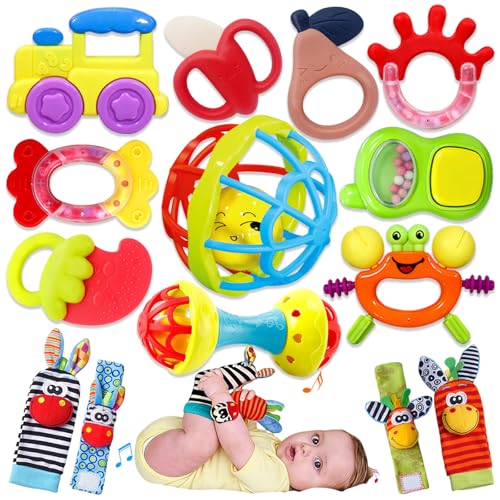
Best for varied engagement in a single purchase. This set combines rattles, wrist socks, and teethers, with multiple easy-grip handles and bright patterns to entice grabbing, reaching, and exploring.
Who it’s for: Perfect for babies who benefit from different textures and sounds in one gift. It supports early sensory skills, color recognition, and hand coordination.
Limitation: Some items are small enough to pose a choking hazard if not age-appropriate or used without supervision; always supervise play and separate items as the child grows.
hahaland Baby Books 0–6 Months
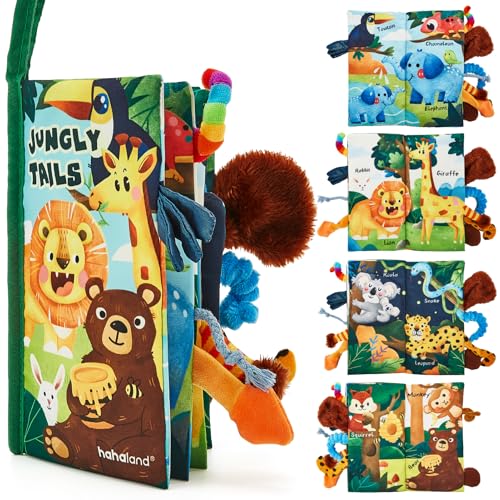
Best for tummy time and early tactile exploration. This soft cloth book uses BPA-free fabric with 3D tails and varied textures to stimulate touch and vision. Sound features add auditory interest as the baby interacts with pages.
Best for: Babies learning to sit and explore with hands and mouth. It provides a soft, chewable experience while supporting gross and fine motor development during early play sessions.
Limitation: Fabric books can fade with frequent washing; ensure colors and textures remain distinct after multiple cleanings.
GRESEESM Rain Stick Montessori Toy

Best for soothing auditory stimulation and visual tracking. A wooden rainmaker creates clear rain sounds, with beads moving through a translucent chamber to captivate a baby’s attention while promoting sensory development.
Why to choose: It’s an engaging, low-tech option that supports focus, listening skills, and rhythm awareness, making it a good stocking stuffer for babies who enjoy gentle soundscapes.
Limitation: The size and weight may be slightly larger than other stocking stuffers—ensure it fits comfortably in your stocking or use as a small crate gift for younger infants who can handle it safely.
Buying Guide: Key Purchase Considerations
- Age-appropriateness: Look for toys labeled for 0–6 or 6–12 months with simple shapes, large pieces, and no small parts.
- Safety: Prefer BPA-free materials, non-toxic finishes, and smooth edges to reduce choking hazards. Always supervise teething and rattling toys.
- Teething relief: Teethers with soft silicone or flexible texture can help soothe gums during the teething phase.
- Motor and sensory development: Choose a mix of items that encourage grasping, reaching, tapping, and twisting to promote fine motor skills and sensory exploration.
- Portability and storage: Compact toys and sets with easy storage are ideal for travel or stocking stuffers.
- Maintenance: Dishwasher-safe or easy-clean toys reduce cleaning effort during busy seasons.
- Sound and light: Consider whether the baby responds well to sounds (rattles, crinkles, rain sounds) or prefers quiet toys for calmer play.
- Durability: Toys should withstand chewing and rough handling typical in early play.
FAQ
- What is the best type of stocking stuffer for a 6-month-old?
– A mix of teething toys, soft books, and simple rattles that support sensory exploration and motor skills. - Are plush farm animals good for this age?
– Yes, if they have soft textures, no loose parts, and are large enough to avoid choking hazards. - Should I buy a set or individual items?
– Sets offer variety and value, while individual items can be tailored to a baby’s current interests and developmental stage. - Are wooden toys safe for teething babies?
– Wooden toys should be well-finished, non-toxic, and free of splinters; they provide a different sensory experience. - How many stocking stuffers are appropriate for a baby?
– A small selection (3–5 items) is typically enough to create excitement without overwhelming the baby or caregiver. - What materials are best for 6–12 months?
– Silicone, fabrics, and soft plastics that are easy to clean and safe for mouthing are ideal at this stage.