For families seeking practical mobility aids for cerebral palsy, this guide highlights 5 reliable options designed to support balance, posture, and independence. These devices range from adjustable strollers to walkers and foldable wheelchairs, each chosen for safety features, growth adaptability, and ease of use. The top picks suit different needs: younger children who require support while walking, older kids who need more upright posture, and caregivers who want adjustable, grow-with-me solutions.
Summary table of selected products:
| Product | Best For | Key Benefit | Limitations |
|---|---|---|---|
| CXYTX Special Needs Stroller for Big Kids | Older kids needing a reclining, adjustable stroller | 45° tilt, 90°–130° recline for comfort | Manual operation; width may affect narrow doorways |
| Walkers Disabled Children Cerebral Palsy Walker Six Wheel | Active kids requiring multi-wheel support | Six wheels, anti-tilt design, adjustable height | Basic functions; may be less foldable for travel |
| 6-Wheels Walkers Disabled Children Cerebral Palsy Walker | Young children with balance needs | Double cushions, solid tires, adjustable speed and brakes | Bulkier; storage space needed |
| KarFri Mobility Walker for Children | Peripheral support with ergonomic comfort | U-shaped panel, cushioned support, easy cleaning | Limited reclining features |
| CXYTX Cerebral Palsy 18″ Seat Wheel Chair | Compact reclining chair for daily use | Foldable, adjustable back and seat; breathable padding | Heavier and bulkier than standard strollers |
CXYTX Special Needs Stroller for Big Kids

Best for older children who require a reclined seating option. This stroller features an ergonomic tilt and recline mechanism, offering a 45° tilt and a 90° to 130° backrest range. The design supports growing children with postural safety pads and a removable, adjustable headrest. Made for long sit sessions, it helps reduce fatigue while maintaining alignment. Choose this if your child benefits from a more supported, reclined position during activities.
Who it’s best for: families seeking a growth-oriented stroller that supports posture and comfort for cerebral palsy in bigger kids. Limitation: it may be heavier than non-reclining strollers, affecting travel and portability.
Walkers Disabled Children Cerebral Palsy Walker Six Wheel
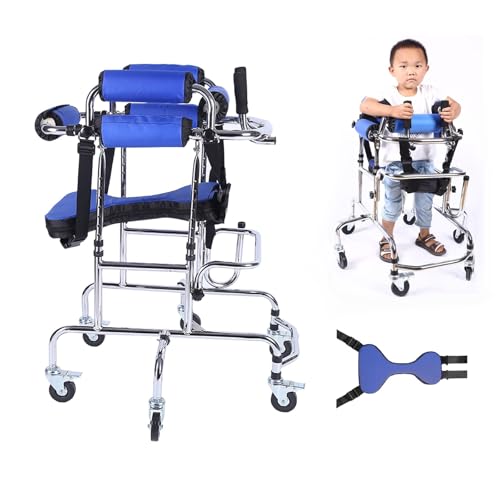
Best for hemiplegia and adjustable height needs. This six-wheel, foldable walker uses a thickened stainless steel frame with a handrail designed to reduce sweat and slip. It supports users around 32–48 inches tall and is suitable for postoperative rehabilitation and balance training. The handrail’s high-density foam improves grip stability. Choose this if you want a sturdy, foldable walker with anti-slip features for daily activities.
Who it’s best for: active children who need a stable walker with a comfortable grip. Caution: may require assistance for folding and transporting in tight spaces.
6-Wheels Walkers Disabled Children Cerebral Palsy Walker

Best for younger children needing extra safety and seating support. This model adds double cushions and new armrests to simplify fitting and positioning. The solid tires offer anti-slip traction, and wheel speed is adjustable with built-in braking for safer maneuvering. Choose this if you prioritize adjustable cushions and safer winter or damp conditions. Limitation: bulkier design may impact storage in small homes.
KarFri Mobility Walker for Children

Best for ergonomic support with easy maintenance. The walker uses an ergonomic U-shaped panel and cushioned elbow support to minimize fatigue and maximize comfort during long sessions. It also features an infusion stand socket and adjustable seat belt, and the cushion height can be adjusted for a personalized fit. Choose this if you value a design that emphasizes comfort and ease of cleaning. Limitation: infusion stand socket is an added feature that may not be needed for all users.
CXYTX Cerebral Palsy 18″ Seat Wheel Chair

Best for compact daily mobility with reclining capability. This wheelchair pairs a light aluminum alloy frame with a foldable design, offering a breathable interior, a built-in back pocket, and adjustable back and seat features. The cushion is thick and supportive for long outings. Choose this if a folding wheelchair is needed for transport, but be aware of its bulk compared with lightweight strollers.
Buying Guide: Key Considerations For Cerebral Palsy Mobility Aids
- Growth compatibility: Look for adjustable seat heights, backrests, and leg supports to accommodate growth over time.
- Posture and comfort: Prioritize devices with reclining options, padded supports, and height-adjustable components to help maintain proper alignment.
- Portability vs stability: Foldable designs are easier to transport, while sturdier frames offer more stability for active use.
- Safety features: Consider anti-slip handrails, braking systems, and secure seating belts to reduce fall risk.
- Maintenance: Removable cushions and washable fabrics simplify cleaning; check for rust-resistant materials.
- Usage scenarios: Define whether the device is for daily indoor use, outdoor activities, or rehab sessions to choose the right combination of features.
Frequently Asked Questions
- What type of mobility aid is best for a child with cerebral palsy who can walk but needs support? A walker with adjustable height and supportive handrails is often suitable for balance training and mobility assistance.
- Should I choose a stroller or a walker for a growing child? If posture and long sitting comfort are priority, a reclinable stroller or wheelchair with growth features is beneficial; for quick, standing assistance, a walker may be best.
- Are there safety considerations for using multiple mobility aids at home? Yes, ensure door widths and passageways are wide enough, and designate safe storage areas to prevent trips and falls.
- Do these products require professional fitting? Some devices offer adjustable settings; professional assessment can help optimize fit and safety, especially for growing children.
- Can these aids be used for rehabilitation at home? Many models support at-home rehab with adjustable seating, posture supports, and safe movement guidance.
- Is a higher-weight wheelchair better for CP children? Heavier frames can be more durable and stable, but consider portability, storage, and caregiver handling when choosing.