Finding the right stroller for a child with special needs involves balancing weight capacity, maneuverability, seating space, and ease of use. This guide highlights five top options suited for older kids or larger toddlers, focusing on stability, adjustability, and transportability. Best for caregivers seeking sturdy, large-seat strollers with simple folding and reliable wheels; better for families needing smooth rides on varied terrain; choose this if you want a long-lasting, adaptable pushchair that accommodates growth and daily outings.
The following table summarizes the selected products, including who they’re best for and the key strengths to compare quickly.
- Best for: Older kids who need extra seating space and robust weight capacity.
- Better for: Maneuverability and quick folding in busy environments.
- Choose this if: You want a compact fold while maintaining high support.
Coche XL Special Needs Stroller – Black

The Coche XL Special Needs Stroller is designed for older children requiring a sturdy yet lightweight aluminum frame. It offers a large seating area with 15-inch width and 10-inch depth, supporting up to 110 pounds and accommodating children up to 48 inches tall. Features include 360-degree front swivel wheels, puncture-free tires, an adjustable footrest, and an umbrella-style fold for easy transport. Best for parents who prioritize a durable, space-ready pushchair that remains nimble in crowded places. A potential limitation is the slightly larger footprint when folded, which may affect car trunk space.
Coche XL Special Needs Stroller – Blue

This blue variant shares the same robust design as the black model, including the 15-inch seating width and 10-inch depth, 110-pound weight capacity, and 48-inch height accommodation. The 360-degree front swivel wheels, solid puncture-free tires, and easy umbrella-fold system enhance portability. It is best for caregivers who prefer color options without sacrificing function. A caution: ensure the folded size fits your storage or vehicle space, as the umbrella fold can still be relatively sizable in compact cars.
Smilez Special Needs Stroller – Big Kids
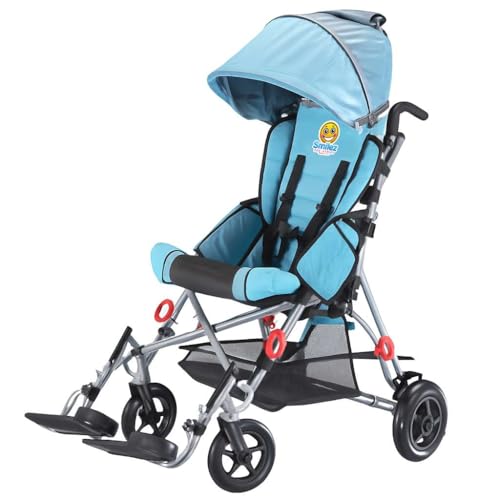
The Smilez adaptive stroller is designed for children with autism, disabilities, or mobility challenges, offering an alternative to pediatric wheelchairs. It provides multiple seat widths—12″, 14″, 16″, and 18″—to customize the fit as a child grows, along with a 5-point harness and adjustable recline. Removable upholstery simplifies cleaning. Best for families seeking a modular stroller that can grow with the child and adapt to different seating needs. A limitation is thatSmilez’s fold mechanism and weight distribution may feel bulkier compared to umbrella-style models for very tight spaces.
Coche XL Special Needs Stroller – Pink

This pink version provides the same essential attributes as the black and blue Coche XL models: a sturdy aluminum frame, 15-inch wide seating, 110-pound capacity, and 360-degree front wheels with puncture-free tires. The adjustable footrest and umbrella fold suit caregivers who want a reliable travel companion for appointments or outings. Best for families who prefer a color choice that aligns with personal preferences. Limitation: color availability may influence perceived durability or maintenance expectations; verify the color’s fabric wear over time if used heavily.
Baby Jogger Advance Mobility Freedom Stroller

The Baby Jogger Advance Mobility Freedom Stroller is designed for individuals with disabilities or mobility needs up to 200 pounds. It excels on varied terrain with 16-inch rear wheels and a 16-inch fixed front wheel; the front wheel can be swapped for a swivel option for city strolls. A reclining, padded seat and a large footplate with individual foot straps support comfort for longer outings. Best for families who require all-terrain capability and flexible steering. Limitation: sensory accessibility and maneuverability may vary if compact storage is a priority, as the stroller is larger than umbrella types.
Buying Guide
What features matter most for a special needs stroller?
- Weight capacity and height range: Choose a model that supports the child as they grow to avoid frequent replacements.
- Seating width and recline: Ensure adequate space and adjustable positions for comfort and safety.
- Wheels and suspension: Look for front swivel or fixed wheels and puncture-resistant tires for smoother rides on different surfaces.
- Fold mechanism and portability: Umbrella-style folds are compact, while larger models may offer quicker setup and takedown in busy environments.
- Maintenance and cleaning: Removable upholstery and easy-to-clean fabrics reduce upkeep between outings.
Frequently Asked Questions
- What should I consider when choosing a stroller for a child with special needs?
Focus on weight capacity, seating options, wheel quality, and foldability for transport. - Are umbrella-fold strollers suitable for older kids?
They are generally lighter and compact but may offer less seating space and weight support compared to larger pushchairs. - Is a modular seat width important for growth?
Yes, seats that accommodate multiple widths help the stroller adapt to a child’s changing size. - Can these strollers handle uneven terrain?
Some models are built for all-terrain use, especially those with larger wheels and robust suspension. - What maintenance steps help extend stroller life?
Regularly inspect wheels, lubricate moving parts, and clean upholstery to prevent wear and tear.