Direct answer: For toddlers learning to swim or enjoying water play, these disposable and reusable swim diapers help contain mess while staying comfortable in water. The best options balance no-swim swelling, secure fit, and easy removal. This guide presents five top choices and explains who each is best for, plus a practical buying checklist.
Summary table of chosen products:
| Product | Best For | Key Benefit |
|---|---|---|
| Huggies Little Swimmers Disposable Swim Diapers (Size 5-6, 34 Ct) | Toddlers 32+ lbs; frequent swimmers | No swelling in water; secure fit |
| Pampers Splashers Swim Diapers (Size 6+) | Active water-sports toddlers | Contains mess; comfortable in water |
| Pampers Splashers Swim Diapers (Size 4) | Younger toddlers or smaller fits | No swelling; practical for water activities |
| Huggies Little Swimmers (Size 4, 18 Ct) | Active toddlers, smaller waist | Non-swelling; secure fit |
| Hello Bello Premium Swim Diapers (Size Medium) | Plant-derived core; leak guards |
Huggies Little Swimmers Disposable Swim Diapers, Size 5-6
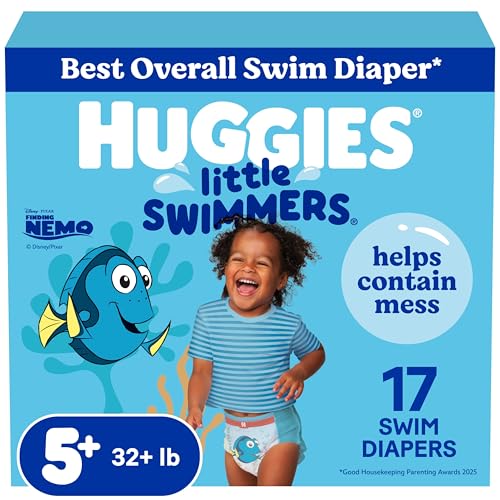
Best for toddlers who swim or splash often and weigh 32+ pounds. These swim diapers are designed not to swell in water, helping maintain comfortable fit during pool and beach play. The secure fit reduces the chance of leaks in water activities.
Who it’s for: Families seeking a dependable, non-swelling option for larger toddlers. Why chosen: Widely available, consistent sizing, and a track record for staying snug in water. Limitation: Not a reusable diaper; disposal is required after each use.
Pampers Splashers Swim Diapers, Size 6+

Best for active toddlers who frequent water activities and require reliable mess containment. Pampers Splashers are designed to perform well in water and remain comfortable when wet or dry, with no swelling.
Who it’s for: Families needing a sturdy disposable option for larger or more active toddlers. Why chosen: Strong containment and water-ready design. Limitation: Some users report wanting extra absorbency outside water play; not reusable.
Pampers Splashers Swim Diapers, Size 4

Best for younger toddlers or those needing a slightly smaller fit while still swimming. These no-swell diapers help keep shapes compact during water play and prevent leaks.
Who it’s for: Families with smaller or lighter toddlers. Why chosen: Consistent no-swelling feature and reliable water performance. Limitation: As a disposable product, ongoing purchase is required for frequent swimmers.
Pampers Splashers Swim Diapers, Size 6+, 15 Count

Best for families who need a higher-count pack for frequent pool days. These diapers are designed to contain mess in water and avoid swelling, keeping toddlers comfortable in and out of the water.
Who it’s for: Households seeking bulk options with reliable water performance. Why chosen: Higher availability of sizes, water-fit design. Limitation: Higher quantity means more waste per use if not disposed of properly.
Huggies Little Swimmers Disposable Swim Diapers, Size 4

Best for toddlers who are smaller or lighter but still active in water. Non-swelling materials help maintain a secure fit while swimming or playing near water.
Who it’s for: Families with smaller toddlers or those needing a snug, compact fit. Why chosen: Consistent performance for water activities. Limitation: Not as large as the 5-6 size options and may require other sizes for growing toddlers.
Hello Bello Premium Swim Diapers (Size Medium)

Best for eco-conscious families seeking a premium, plant-derived core with extra leak guards. The design minimizes swelling and provides a slim fit for water play.
Who it’s for: Parents prioritizing eco-friendly materials and sleek fits. Why chosen: Leak protection and reduced balloon effect. Limitation: Some users may prefer alternative fits for bigger toddlers or different sizing ranges.
Buying Guide: Key Considerations For Swimming Diapers
- Water swelling: Look for “no swelling” claims to maintain a snug fit in the water.
- Fit and sizing: Ensure the diaper size matches your child’s weight and waist measurements for a secure seal in motion.
- Disposable vs reusable: Choose disposable for convenience or reusable options for ongoing cost savings and sustainability.
- Containment vs comfort: Prioritize products that balance leak protection with a comfortable, flexible fit for movement.
- Material and skin sensitivity: Consider hypoallergenic or skin-friendly materials, especially for sensitive skin.
- Ease of disposal or wash: Reusable options require simple care routines; disposables minimize cleanup after water play.
- Pack size and cost: For frequent swimmers, bulk packs may offer better value; for occasional use, smaller packs may suffice.
- Intended use: Some are designed specifically for pool water and beach time; others may excel in both wet and dry conditions.
Frequently Asked Questions
- What is a swimming diaper and when should I use one?
– A swimming diaper is designed to contain solid waste while allowing water to pass through. Use it whenever your child is in or near a pool, beach, or water activity to prevent contamination. - Are disposable swim diapers better than reusable ones?
– It depends on your priorities. Disposables offer convenience, while reusables reduce waste and may be cost-effective over time. - Will swim diapers keep everything completely contained?
– No garment is 100% leak-proof; swim diapers reduce leakage but are not substitutes for regular diapers in non-water environments. - How do I choose the right size for my toddler?
– Check weight ranges and waist measurements in the product’s size chart; select the closest match to avoid leaks or a tight fit. - Can I use regular diapers for swimming?
– Regular diapers can swell and become heavy in water, potentially causing leaks and discomfort. Swim diapers are designed to minimize swelling.