Answering the common question, which tissue box toy is best for babies 6-12 months? The top picks below combine Montessori-inspired design with multi-sensory play to develop fine motor skills, hand-eye coordination, and sensory awareness. These toys are best for parents seeking mess-free, engaging ways to support early learning during stand-by play or travel. Each option targets curious infants who enjoy pulling, exploring textures, and knocking curiosity into motion.
| Product | Best For | Why It Stands Out |
|---|---|---|
| Youuys Baby Tissue Box Toy | 6-12 months, first-year milestones | Montessori-inspired pull-and-learn with 12 scarves and 3 crinkle tissues; strong focus on fine motor skills. |
| YOGINGO Baby Toys 6 to 12 Months | Color/texture recognition fans | Three themed crinkle papers and eight silk scarves promote sensory exploration and early brain development. |
| URMYWO Baby Tissue Box Toy | Multi-sensory exploration | Vivid patterns and multi-theme textures encourage focus, motor skills, and early language cues. |
| KILGICO Baby Tissue Box Toy | Seasonal and visual appeal | Four-season design with plush fabrics boosts attention and imaginative play while teaching cause-and-effect. |
| hahaland Silicone Baby Tissue Box Toy | Mess-free, durable play | Silicone, 6-in-1 activities including a mirror and teether; easy clean and durable through months of use. |
Youuys Baby Tissue Box Toy

Features include a box that dispenses 12 soft scarves and 3 crinkle tissues, along with a six-sided sensory activity cube. The design supports fine motor skills through repetitive pulling and stuffing, while a discovery mirror and high-contrast elements stimulate visual tracking and auditory cues. Best for parents seeking a Montessori-style pull-and-play setup that minimizes mess and maximizes independent exploration.
Best for: babies 6-12 months who enjoy repetitive pulling, and for caregivers wanting a single toy that combines multiple textures and sounds. Limitations: the complexity of six-sided play may require brief supervision for younger infants learning to handle small scarves safely.
YOGINGO Baby Toys 6 to 12 Months

YOGINGO offers a fabric tissue box with three multi-themed crinkle papers and eight colorful silk scarves. This setup promotes sensory skills through textures, sounds, and color recognition, while encouraging fine motor development as babies pull and manipulate the tissues. Best for: babies who respond to vibrant visuals and varied textures, and caregivers wanting a straightforward, durable option. Caution: ensure scarves and tissues are kept within reach to avoid any choking hazards when older infants begin to explore more independently.
URMYWO Baby Tissue Box Toy

URMYWO emphasizes multi-themed features and color-rich patterns designed to capture attention and cultivate motor skills. The box supports hand-to-eye coordination as babies pull tissues, and the varied textures encourage tactile exploration. Best for: families seeking a Montessori-friendly toy with varied patterns and a focus on early language cues. Limitation: the range of patterns may require gentle guidance for very young babies to prevent overstimulation.
KILGICO Baby Tissue Box Toy

KILGICO features a four-season design with plush fabrics and 12 silk scarves, offering a visually engaging and interactive play experience. The textured surfaces and rustling sounds promote sensory development and fine motor exploration. Best for: babies who respond to seasonal characters and vibrant colors. Caution: ensure the toy remains securely stitched to maintain shape during heavy pulling.
hahaland Silicone Baby Tissue Box Toy
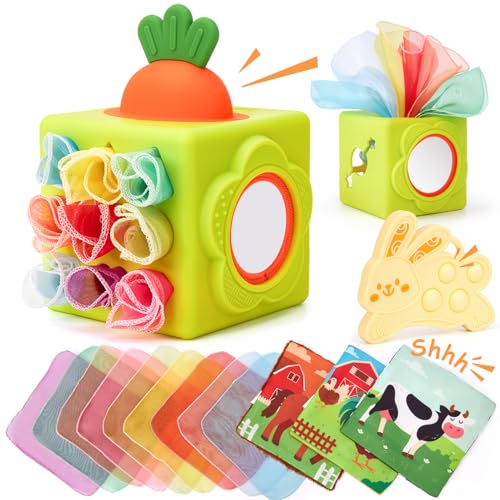
Made from baby-safe silicone, this 6-in-1 activity cube emphasizes durability and mess-free play. Features include a tissue pull slot, push/pull textures, a mirror for self-recognition, and a teether teeming with sensory popper functions. Best for: households needing a sturdy, easy-clean option that still offers rich sensory play. Limitation: silicone may be heavier than fabric versions, so younger infants may need assistance when pulling items out.
Buying Guide: Tissue Box Toys For Babies
- Age-appropriate design: Look for 6-12 months targets with safe fabrics, reinforced stitching, and non-toxic materials.
- Sensory variety: A mix of textures, sounds, and visuals supports visual, auditory, and tactile development.
- Mess-free play: Silicone or fabric boxes with simple pull-and-release mechanisms reduce cleanup during exploration.
- Durability and cleaning: Removable scarves and tissues should be washable or easily sanitized.
- Portability: Compact, travel-friendly designs help maintain development on the go.
Additional Considerations
- Replacement parts: Check if scarves or crinkle papers can be replaced if worn.
- Safety first: Ensure there are no small parts that could detach and pose a choking risk as babies become more mobile.
- Transition life stage: Some toys grow with the child; consider models that offer progressive play options.
FAQ
- What age is best for tissue box toys?
Most tissue box toys are designed for babies around 6-12 months, aligning with early fine motor and sensory milestones.
- Are these toys safe for babies who mouth everything?
Choose toys made from non-toxic materials with reinforced stitching and avoid loose parts that can detach.
- Can these toys help with language development?
Yes. Some designs include patterns with letters or numbers to stimulate early recognition and storytelling cues.
- How should I clean these toys?
Fabric-based toys can be spot-cleaned; silicone variants are typically wipe-clean. Always follow manufacturer care instructions.
- Which toy is best for travel?
Look for compact, lightweight designs with easy-clean surfaces and minimal parts for quick packing.
- Do these toys require supervision?
Supervision is advised for infants learning to pull and explore to ensure safety and prevent stuffing items into the mouth.