The top choice for a 12-month-old’s toothbrush is a small, soft-bristled brush designed for tiny mouths and little hands. This guide highlights five baby-friendly options chosen for safety, ease of use, and age-appropriate design. Best for: toddlers just starting brushing, parents seeking gentle, beginner brushes that promote independent brushing without fuss.
Quick comparison table of selected products:
| Product | Best For | Key Benefit |
|---|---|---|
| Dr. Brown’s Infant-to-Toddler Toothbrush, Giraffe | First brushes | Soft bristles and easy-to-grip handle |
| Dr. Brown’s Infant-to-Toddler Toothbrush Set, Pink | Learning brushing with toothpaste | Training brush with paste option |
| Dr. Noah Bamboo Baby Toothbrush | Plastic-free option | Zero microplastics, dentist-designed |
| Jordan* Step 1 Baby Toothbrush | First brushing experience | Soft bristles, baby-friendly grip |
| Dr. Brown’s Baby & Toddler Dinosaur 2-Pack | Multi-use for growing mouths | Two-pack for different stages |
Dr. Brown’s Infant-to-Toddler Toothbrush, Giraffe

Best for: babies starting to explore brushing who need a tiny handle and gentle bristles. This training brush is sized for small mouths and fingers, helping your child build independent brushing skills. The soft bristles clean gums and first teeth without irritation, and the easy-grip handle supports a secure hold as you guide brushing.
Limitations: designed primarily for initial brushing; may be too small for older toddlers transitioning to larger toothbrushes.
Dr. Brown’s Infant-to-Toddler Toothbrush Set, Pink
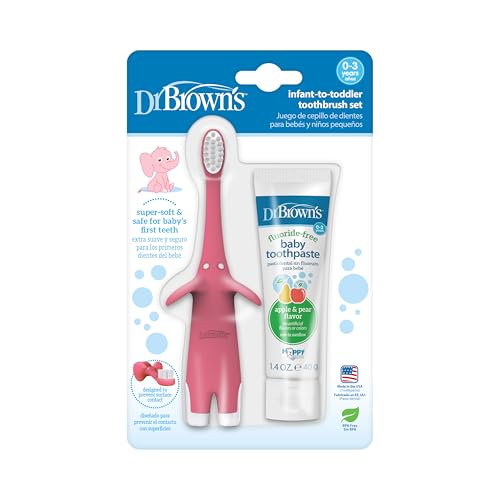
Best for: households teaching brushing with toothpaste. This set pairs a training toothbrush with a fluoride-free toothpaste option, enabling small, circular brushing motions to clean gums and initial teeth as part of a routine. It helps children learn to brush with supervision and builds early habits.
Limitations: fluoride-free toothpaste may require separate purchase if you prefer a different toothpaste type later.
Dr. Noah Microplastic-Free Bamboo Baby Toothbrush

Best for: families seeking a plastic-free option. This bamboo-handled brush uses plant-based bristles and is laboratory-tested for microplastics, offering a safer alternative for babies and toddlers concerned about environmental impact.
Limitations: natural materials may require more careful cleaning and drying to prevent mold or odor between uses.
Jordan* Step 1 Baby Toothbrush

Best for: establishing a dental routine with a purpose-built first toothbrush. This Step 1 design features extra-soft bristles, a gentle bite ring, and a small handle suitable for both adult and baby use. It supports a safe, swallow-prone design while teaching brushing basics.
Limitations: the included ring may require regular cleaning to prevent buildup if not rinsed properly after brushing.
Dr. Brown’s Baby and Toddler Toothbrush 2-Pack

Best for: growing mouths across early toddler years with a value multi-pack. This two-pack includes simplified, soft-bristled brushes designed for baby and toddler stages, facilitating a smooth transition as teeth emerge and mouths grow.
Limitations: two-pack may require rotation depending on your child’s preference for brush styles over time.
Buying Guide: Key Purchase Considerations
- Age appropriateness: Look for brushes labeled for infants or infants-to-toddlers with small heads and soft bristles.
- Grip and control: Choose handles with easy-to-hold formulations to promote independence while you supervise brushing.
- Materials: Consider BPA-free plastics or bamboo options if plastic exposure is a concern; inspect bristle softness to prevent gum irritation.
- Toothpaste compatibility: Some sets include fluoride-free toothpaste; plan for a toothpaste choice that aligns with your dental plan for your child.
- Maintenance: Plain, dishwasher-safe or easily sanitized brushes help maintain hygiene for daily use.
- Long-term value: Multi-packs or sets with varying brush sizes support growth from 0-3 years and beyond.
- Safety features: Avoid designs with detachable parts that could be swallowed; look for rounded bristle tips and snug fittings.
Multiple Perspectives
- Environmentally conscious buyers may prefer bamboo handles and non-plastic bristles to minimize microplastics exposure.
- Parents focusing on routine formation may value training brushes that combine gentle instruction with visual cues for brushing.
- Caregivers seeking budget-friendly options can benefit from multi-packs that cover early years without frequent replacements.
FAQ
- What age should I start brushing my baby’s teeth? Start as soon as the first tooth erupts, using a soft-bristled brush and a tiny smear of toothpaste if fluoride toothpaste is appropriate for your child.
- Should I use toothpaste with fluoride for a 12-month-old? Use fluoride-free toothpaste for babies under 3 if advised by your pediatric dentist, and switch to fluoridated toothpaste when recommended.
- How do I teach my child to brush independently? Start with you guiding the brush, demonstrate slow circular motions, praise progress, and gradually allow the child to brush with supervision.
- What’s the difference between infant and toddler brushes? Infant brushes are smaller with shorter handles for early grip; toddler brushes may be slightly larger but still gentle, designed for developing motor skills.
- Is a two-pack or multi-pack better for a 12-month-old? A multi-pack offers flexibility for the growing mouth and replacements as teeth emerge; it’s convenient for busy families.
- Do bamboo toothbrushes work well for babies? Yes, bamboo brushes with soft bristles provide a plastic-free option, though care is needed to dry properly and prevent mold between uses.