If you’re shopping for a 12–24 month-old, you want toys that are safe, simple to use, and designed to support early learning. This guide highlights five top Amazon picks that fit those needs, with clear reasons for who they’re best for and practical considerations. Each option prioritizes age-appropriate design, motor skill development, and sensory engagement. The top picks cover push-and-go cars, beginner balance bikes, Montessori-style stacking and sorting, and interactive learning toys. Whether you’re buying for a curious toddler or a practical gift giver, these selections offer straightforward play value and safe construction for small hands.
Summary of chosen products:
| Product | Best For | Key Benefit |
|---|---|---|
| iPlay, iLearn Press to Go Car Toys | Very young toddlers (6–18 months) | Battery-free, safe, friction-powered car that stimulates chasing and cause-and-effect learning |
| SEREED Baby Balance Bike | Toddlers beginning to walk and ride | Pedal-free, stable design supports balance and confidence |
| hahaland 10-in-1 Cloth Fishing Game | 12–24 months, color and number awareness | Soft, fabric-based fishing with Velcro for safe play |
| kecristv Shape Sorter Wooden Toys | 2-year-olds, early problem-solving | Wooden shapes and sorting pieces for hands-on cognitive development |
| Play-Act Learning Farm Train | Preschoolers and new learners | Interactive sorting and counting through a colorful train set |
iPlay, iLearn Press to Go Car Toys for Toddlers

Best for: very young toddlers who enjoy quick, battery-free play. This press-to-go car features rounded edges and smooth surfaces for safety, reducing choking risk with no small parts. It’s made from quality ABS and is designed for early gross-motor exploration as little hands press the car head and watch it roll. The bright colors and cartoon-designs support sensory and cognitive development through simple cause-and-effect play.
Why selected: The toy emphasizes safe materials and uncomplicated action, ideal for first-year milestones where toddlers learn that pressing moves an object. It’s a good transitional toy for sit-and-play and floor exploration.
Caution: The toy relies on mechanical friction—if looked after, it remains durable, but repeated harsh pressing can wear the surface over time. Suitable for supervised play in safe spaces.
SEREED Baby Balance Bike for 1-2 Year Olds
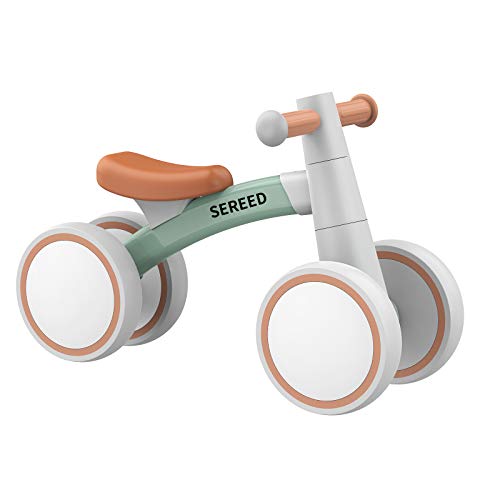
Best for: toddlers transitioning to independent mobility. This 4-wheeled balance bike helps develop balance, steering, and confidence without pedals. Its 135-degree turning limit and gravity-based steering keep the child supported while exploring indoors or outdoors. The aluminum frame and non-slip wheels provide a sturdy, comfortable ride on various surfaces.
Why selected: It supports early physical skills in a safe, low-pressure way. The design reduces the risk of tipping and encourages exploratory movement that lays groundwork for riding later on.
Caution: Early balance work requires adult supervision, especially on uneven floors or stairs. Ensure the seat and handlebars are correctly adjusted for the child’s height before every ride.
hahaland Montessori 10-in-1 Cloth Fishing Game

Best for: toddlers who benefit from sensory play and early math skills. This 10-piece cloth fishing set uses Velcro and felt rather than magnets, providing a safe tactile experience. The set includes a storage bag/ocean mat, stacking cups, and a range of colors and numbers to promote counting and color sorting as kids “catch” fish.
Why selected: It blends hands-on learning with imaginative play and fine motor development. The soft, cloth materials reduce choking hazards and are easy to clean, making it practical for daily use.
Caution: The Velcro hook-and-loop system should be checked periodically for wear to maintain a secure “catch.”
kecristv Montessori Sorting Wooden Toys

Best for: toddlers age 1–3 who are developing problem-solving and fine motor skills. The set includes 20 chunky wooden blocks and various shapes with food-safe paints. The large pegs and sturdy construction make it easy for little hands to handle, stack, and fit pieces into corresponding slots.
Why selected: Wooden shapes with bright colors promote shape recognition, counting, and sorting. The design supports calm, focused play and can be integrated into simple “which goes where” activities, fostering early cognitive skills.
Caution: Wooden parts should be checked for splinters or loose joints before play. Avoid prolonged exposure to moisture to preserve finish.
Play-Act Learning Farm Train

Best for: preschoolers just beginning to sort, count, and match. The farm-themed train includes 9 animals and 10 numbered barns. Children can practice counting, loading and unloading, and matching colors and numbers in an interactive, open-play format.
Why selected: This toy supports early literacy and numeracy through hands-on play. The open train design encourages cooperative play and imaginative storytelling with the farm theme.
Caution: Some parts are small enough to be mislaid; supervise younger toddlers to keep pieces accounted for during playtime.
Buying Guide: How To Choose Safe, Age-Appropriate Toys For 1-Year-Olds
What safety features matter for toddlers?
Look for rounded edges, no small detachable parts, and non-toxic paints and materials. Toys should be sturdy enough to withstand rough handling and easy to clean.
Which toys support developmental milestones?
Push-and-go toys encourage cause-and-effect understanding and gross-motor skills. Balance bikes, even without pedals, help with balance and coordination. Sorting and counting toys promote early math, color recognition, and fine motor control.
Is simplicity better for this age?
Yes. Simple, open-ended toys allow toddlers to explore different ways to play, which supports creativity and prolonged engagement without confusion.
How should I manage playtime with multiple pieces?
Choose toys with clear storage or built-in containers, and supervise to prevent small parts from becoming choking hazards. Regularly inspect pieces for wear and tear.
What about materials and durability?
Prefer ABS plastics for smooth surfaces, aluminum frames where appropriate, and wood with child-safe finishes. Durable designs withstand droppage and rough handling common with toddlers.
How to rotate toys for ongoing interest?
Rotate a few toys weekly to renew attention and prevent overstimulation. Pair toys to create new play scenarios and extend the learning benefits over time.
FAQ
- Q: What age range is best for these toys?
- A: Most items are designed for children around 12–24 months, with some suitable for up to 3 years old depending on the child’s development.
- Q: Are these toys safe for mouthing?
- A: All items listed here emphasize safety features like rounded edges and non-toxic materials. Always supervise mouthing and check for wear.
- Q: Do any of these toys require batteries?
- A: The press-to-go car operates without batteries, while other toys rely on manual play for engagement.
- Q: How do I store these toys when not in use?
- A: Use the included bags or designated storage areas and keep small parts together to avoid loss.
- Q: Can these toys support learning beyond basic shapes and colors?
- A: Yes. Many items offer counting, sorting, pattern recognition, and early motor skill development that scale with the child’s growing abilities.