Answering the question, the best waist seat for a baby is a hip-seat carrier that shifts weight to the hips and lower back, offering ergonomic support and quick, simple use. This guide highlights five clear options suited for different caregivers and scenarios—from new parents seeking lightweight ease to active families needing storage and versatility. Each product section explains who it’s best for, why it was chosen, and a practical caveat to consider.
| Product | Best For | Capacity | Highlights |
|---|---|---|---|
| Tushbaby Original Grey | Comfort-focused caregivers | Up to 45 lbs | Built-in lumbar support, storage, no foam padding |
| HKAI Hip Carrier Grey | Parents needing multi-pocket storage | Up to 44 lbs | Five pockets, multiple carries, ergonomic hip seat |
| Tushbaby Original Black & Gold | Style-conscious wearers with function | Up to 45 lbs | Lumbar support, simple setup, storage |
| MOMTORY 6-in-1 Carrier | Long-lasting use from infant to toddler | 7-50 lbs | Six positions, all-season fabric |
| Regalo Hip Seat Carrier | Budget-friendly daily carrier | 6-36 months | Adjustable waist, storage pockets |
Tushbaby Original Hip Seat Grey

The Tushbaby Original Hip Seat in Grey is designed to transfer weight to the hips and lower back, reducing shoulder strain. Best for caregivers who want a straightforward, foam-free structure with built-in lumbar support and a wide waistband.
Who it’s best for: caregivers prioritizing ergonomic support during frequent ups and downs, and who desire simple setup without extra padding. Why selected: the structured hip seat provides firm support and the design emphasizes comfort for long use.
Limitations: lacks extensive additional storage compared to multi-pocket models; best when you don’t need many external compartments. Caution: ensure the waistband fits securely to prevent slipping during active moves.
HKAI Baby Hip Carrier Grey

HKAI offers newborn-to-toddler versatility, with a non-slip hip seat and multiple carrying positions. It includes five pockets and a bottle holder, prioritizing on-the-go storage and adaptability for different parents and babies.
Who it’s best for: families needing practical storage and varied carrying options. Why selected: the combination of ergonomic hip-seat design with extensive pockets improves convenience for errands and travel.
Limitations: more features mean a longer setup; for very small newborns, confirm positioning and support in the chosen carry style. Caution: assess strap and pocket security when carrying with heavy items.
Tushbaby Original Black & Gold
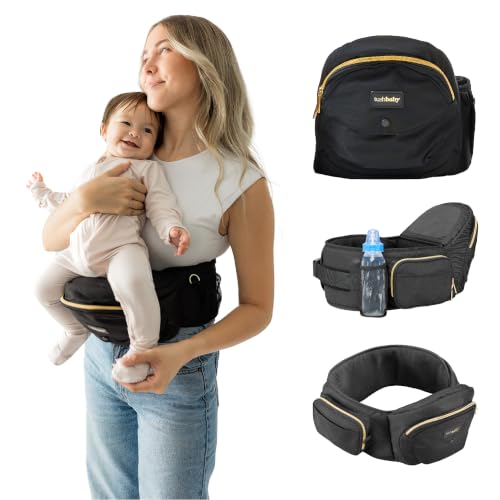
This variant of the Tushbaby hip seat combines the same ergonomic benefits with a stylish Black & Gold finish. It is Best for caregivers who want comfort plus a touch of visual flair during daily outings.
Who it’s best for: parents seeking comfortable, simple use with a slightly dressier look. Why selected: identical ergonomic features with a distinct aesthetic. Caution: similar storage limitations as the Grey version; verify needs before purchasing.
MOMTORY 6-in-1 Carrier

MOMTORY is a 6-in-1 carrier designed to grow with the child from infancy to toddlerhood. It features six carrying positions and a baby hip seat for sitting or lying, plus wide fabric for skin-friendly comfort.
Who it’s best for: families seeking a long-term carrier with multiple carry modes and a straightforward wear. Why selected: broad versatility and 6-position design accommodate changing needs across years. Caution: ensure correct hip-seat use to maintain ergonomic alignment as baby grows.
Regalo Hip Seat Carrier

Regalo’s Hip Seat Carrier emphasizes an ergonomic hip seat with a wide adjustable waist belt and secure buckle. It’s suited for everyday use with a focus on comfort for both baby and caregiver across ages 6–36 months.
Who it’s best for: budget-conscious buyers needing a reliable, adjustable carrier without extra frills. Why selected: proven ergonomic seat design and long-use window. Caution: storage options are more modest than multi-pocket models; plan for essentials carefully.
Buying Guide: Key Considerations
- Age and weight range: Most hip-seat carriers support up to about 44–50 lbs; confirm your child’s current weight and growth trajectory.
- Ergonomics: Look for a wide, padded waistband, lumbar support, and a seat that promotes an M-shaped hip position for healthy development.
- Carry positions: If you want versatility, choose a carrier offering multiple carry modes (facing in/out, hip, back, cradle).
- Storage and on-the-go needs: If you travel or shop often, prioritize models with pockets and convenient access to essentials.
- Ease of use: Consider whether the carrier is simple to put on and adjust with minimal wrapping or padding involved.
- Materials and seasonality: All-season fabrics and breathable mesh help with temperature regulation for both baby and caregiver.
FAQ
- What is a hip-seat carrier? A hip-seat carrier uses a structured seat that transfers most of the child’s weight to the caregiver’s hips and back, reducing shoulder strain.
- What age should I use a hip seat carrier? These carriers are typically suitable from infancy through toddlerhood, up to around 45 pounds, depending on the model.
- Are hip-seat carriers safe for hip development? When used with proper positioning (M-position hips, baby centered on the seat), they support hip and spine development.
- Do hip-seat carriers require a lot of adjustment? Some models offer multiple carries but may require initial setup; look for adjustable waistbands and straightforward straps for easier use.
- Which carrier offers the most storage? Models like HKAI with five pockets provide additional space for essentials during outings.
- Can I use these carriers for long trips? Yes, with ergonomic design and proper fit, they can support longer wear, but take breaks as needed to avoid fatigue.