Finding the right weaning cup for a baby aged 4-12 months involves balancing spill control, ease of use, and teething safety. The top picks below are designed to help babies transition from bottles to independent drinking. Each product is suited to different caregiver needs: tiny open cups for precise practice, 2-in-1 sets for progression, and spill-proof designs for on-the-go use. The following selections are among the most relevant for a typical American household seeking reliable, beginner-friendly options.
| Product | Why It Stands Out |
|---|---|
| SAMiGO Silicone Baby Cups | Compact 2 oz open-cup training with a weighted base to reduce spills; ideal for tiny hands and early practice. |
| Moonkie Baby Training Cup & Sippy Cup Set (Mint) | Two-in-one set supporting transition from bottle to independent drinking; 100% baby-safe silicone. |
| Dr. Brown’s Milestones Baby’s First Straw Cup | Weighted straw that follows liquid movement; easy-to-grip handles for growing toddlers. |
| PandaEar Tiny Silicone Cup (Blue/Green) | Very small 3.5 oz design with non-slip bumps; durable, dishwasher-safe silicone for daily use. |
| Nuby Grip N’ Sip | No-spill cap with soft spout and easy handles; good option for gradual transition from bottle to cup. |
SAMiGO Silicone Baby Cups for 6-12 Months

Best for: caregivers who want a compact, open-cup training option that fits baby’s small hands. The 2 oz capacity matches tiny sips, reducing spill risk and encouraging consistent practice. This cup is designed to shorten the learning curve for open-cup drinking, with a bottom that helps keep the cup steady during use. The plan is to help babies gain confidence while minimizing messes.
Why selected: Its baby-friendly size and weighted, textured bottom make it easier for little ones to grip and control. This is a straightforward, low-friction tool for early weaning stages, particularly for babies who already demonstrate interest in drinking from a cup.
Caution: Spills can still occur, especially if the cup is knocked over during an enthusiastic sip. Not ideal for very active, tipping-prone toddlers without supervision.
Moonkie Baby Training Cup & Sippy Cup Set (Mint)
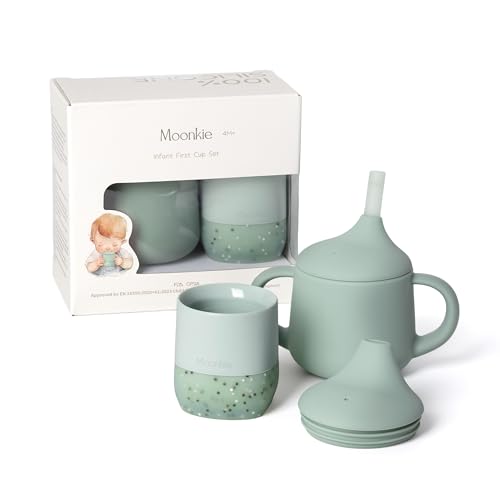
Best for: babies ready to progress from bottle to independent drinking in a structured two-step approach. The set blends a sippy cup for early practice with an open cup to promote advanced drinking skills and oral coordination. It supports self-feeding while keeping silicone safety at the forefront.
Why selected: The product emphasizes a smooth transition with a focus on oral development. 100% baby-safe silicone makes it gentle on gums and teeth, which is important for ongoing teething phases and early chewing habits.
Caution: As with any multi-piece training kit, small parts can be easier to misplace—caregivers should supervise and store components safely when not in use.
Dr. Brown’s Milestones Baby’s First Straw Cup

Best for: caregivers seeking a smooth bottle-to-cup transition that can grow with a child. The weighted straw feature follows the liquid, making sipping comfortable from any angle. Side-grip handles help little hands maintain control as baby develops motor skills.
Why selected: This cup addresses a common transition challenge—motor control and straw withdrawal—by combining a weighted straw with easy-to-grip handles. It supports continued development as the child becomes more adept at sipping from a cup.
Caution: The design relies on the straw mechanism; if a caregiver is seeking a pure open-cup practice option, this may be considered a step in a different direction from open-cup training.
PandaEar 2 Pack Tiny Silicone Drinking Cup

Best for: families needing a compact, durable silicone option that is easy to clean and share across siblings. The non-slip bumps help secure small hands during practice. The 3.5 oz capacity is ideal for tiny sips without overwhelming the baby.
Why selected: The silicone material is a standout for durability and safety, with practical non-slip features that support independence as babies explore new drinking skills. It’s a low-maintenance option suitable for everyday use.
Caution: Silicone cups can be more flexible than hard plastic; ensure a steady grip to avoid accidental tipping during first attempts.
Nuby Grip N’ Sip Baby Sippy Cup

Best for: parents who want a spill-prevention design with a controlled flow that grows with baby. The no-spill spout and TOUCH-FLO valve help babies learn to drink at their own pace while reducing messes.
Why selected: The combination of a soft spout, removable handles, and a smart valve makes this cup versatile for incremental skill-building as the child develops better lip seal and coordination. It can serve as a reliable transitional cup through several stages.
Caution: Some babies may prefer either a straw or an open cup; this option sits between categories and may require adaptation if a child resists the built-in valve.
Buying Guide: Key Purchase Considerations
- Intended age and transition stage: Choose cups designed for babies who are just starting to wean versus those who already use a sippy cup.
- Material safety: Prioritize BPA-free, food-grade silicone or appropriate plastics; consider teething needs and gum safety.
- Spill control vs. practice value: Open-cup training emphasizes sipping technique; spill-proof models reduce messes but may limit lip closure practice.
- Size and handling: Look for small-capacity cups for early stages and easy-to-grip handles for improving motor skills.
- Cleaning and durability: Dishwasher-safe materials save time; consider whether components are easy to assemble and reassemble for daily use.
- Shape compatibility: For families with multiple cups, choose designs that are interchangeable or stackable to reduce clutter.
Frequently Asked Questions
- What age should I start using a training cup?
Often around 4-6 months to 12 months, depending on the baby’s readiness and interest in drinks other than breast milk or formula. - Are silicone cups safer than plastic?
Silicone is generally durable and free of BPA; it is soft on gums and teeth, making it a popular choice for teething babies. - Is an open cup better than a sippy cup?
Open cups promote lip closure and oral development, while sippy cups help manage spills during early practice. - What should I look for in a spill-proof cup?
Look for a secure spout or valve, a stable base, and handles that are easy for your child to grip. - How many cups should I buy initially?
A small set (2-3 cups) gives options for different stages and reduces the need to wash constantly. - Can these cups be used outdoors?
Yes, many are designed for on-the-go use, though spills can still occur with open cups if not supervised.