If you’re searching for a car seat that fits a 9-month-old, you want a seat that transitions smoothly from rear-facing to forward-facing as your child grows. The best picks below are 3-in-1 and convertible seats designed for extended rear-facing use and easy adjustments. They’re suitable for parents seeking flexibility, easy cleaning, and space-saving designs. Each product is explained with who it’s best for and why it was chosen, plus practical cautions to consider when comparing options.
Summary table of chosen products:
| Product | Best For | Key Reason |
|---|---|---|
| Safety 1st Grow and Go All-in-One (Alaskan Blue) | Growing families; long rear-facing use | 3-in-1 with QuickFit harness; easy to clean |
| Graco Extend2Fit Convertible (Gotham) | Longer rear-facing legroom | Extendable panel adds up to 5″ legroom |
| Safety 1st Grow and Go All-in-One (Vineyard) | Same as above; color option | 3-in-1 design; Easy maintenance |
| Graco Slimfit 3-in-1 (Jarret) | Small cars; space-saving | Slim design; 10% narrower |
| Safety 1st Ellaris 3-in-1 Slim Fit (London Blue) | Slim profile; growing child | 5-position headrest; travel-friendly |
Safety 1st Grow and Go All-in-One: Alaskan Blue

This 3-in-1 car seat supports rear-facing from 5–40 lbs, forward-facing from 30–65 lbs, and uses a belt-positioning booster up to 100 lbs. It includes QuickFit harness adjustments for fast fitting and a washer-dryer-safe seat pad for easy cleaning. Best for parents who want a single seat that grows with their child and minimizes rethreading as the child ages. Limitation: Some parents find the harness adjustments less intuitive during frequent height changes.
Graco Extend2Fit Convertible Car Seat: Gotham

This seat transitions from rear-facing (4–50 lbs) to forward-facing (26.5–65 lbs) and features an Extend2Fit 4-position extension panel for up to 5″ of extra legroom, allowing a child to ride rear-facing longer. Best for families prioritizing rear-facing duration and legroom in the back seat. Caution: Heavier use of the extension panel may require more space in the vehicle; verify fit in compact cars.
Safety 1st Grow and Go All-in-One: Vineyard Girl

This is another 3-in-1 option with rear-facing 5–40 lbs, forward-facing 30–65 lbs, and booster up to 100 lbs. It features QuickFit harness for simple adjustments and a machine-washable seat pad. Best for families who want a familiar grow-with-you design in a different color style. Limitation: Seat pad and cupholders are dishwasher-safe but require careful reattachment after cleaning.
Graco Slimfit 3-in-1 Convertible Car Seat: Jarret

Offers a 3-in-1 lifecycle from rear-facing (5–40 lbs) to forward-facing (26.5–65 lbs) to a highback booster (40–100 lbs). Slim design and dual integrated cup holders that rotate away save back-seat space. Best for small vehicles or families needing extra room in the back. Caveat: Slim designs can feel less cushioned for longer rides compared to bulkier seats.
Safety 1st Ellaris 3-in-1 Slim Fit: London Blue

This slim 3-in-1 seat adapts to rear-facing, forward-facing, and booster configurations with a 5-position headrest. Its slim profile helps maximize back-seat space. Best for parents who need a compact seat that still grows with the child. Caution: Some users report that the headrest height range may feel tighter for taller toddlers.
Safety 1st Ellaris 3-in-1 Slim Fit: Smokey Haze

Similar 3-in-1 Slim Fit design with rear-facing, forward-facing, and booster modes. Best for households seeking a space-saving option that still provides growing room. Limitation: Slim-fit models may have less padding compared to bulkier configurations, which may affect comfort on longer trips.
Graco TriRide 3-in-1 Convertible Car Seat: Redmond
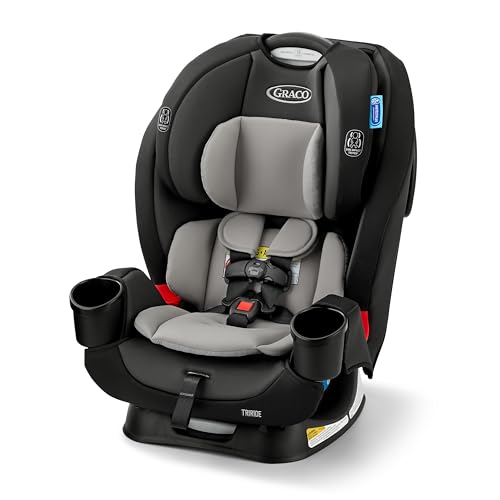
The TriRide seat grows with a child from rear-facing to forward-facing to highback booster. It includes Graco ProtectPlus Engineered for safety standards and a no-rethread harness that adjusts with the headrest. Best for families wanting a robust, all-in-one option with a wide weight range. Caution: Some users may prefer easier-to-clean materials for frequent spills.
Buying Guide: How To Choose The Right Car Seat For A 9 Month Old
- Rear-facing duration: For safety, keep your child rear-facing as long as possible within the seat’s weight limits. Look for seats supporting at least 40 lbs rear-facing if possible.
- Ease of adjustment: QuickFit or similar harness systems save time during daily use and new-baby adjustments.
- Space in your vehicle: Slim designs save room in tight back seats but may trade off padding. Check fit by measuring your car’s back seat and testing with the seat installed.
- Cleaning and maintenance: Removable, washer-safe seat pads and dishwasher-safe cupholders reduce cleaning effort for busy families.
- Longevity and growth: A 3-in-1 seat that transitions to forward-facing and booster modes provides value as your child grows beyond infancy.
- Install method and compatibility: Ensure the seat works with your vehicle’s LATCH system or seat belt, and verify installation time and firmness.
- Material and comfort: Look for breathable fabrics, adequate padding for long trips, and a headrest that can adjust as the child grows.
Frequently Asked Questions
- What is the recommended age for switching from rear-facing to forward-facing?
Answer: Most seats allow forward-facing around 30 pounds, but it’s safest to keep rear-facing as long as the seat’s weight limit allows. - Can I use a 3-in-1 seat from infancy?
Answer: Yes, 3-in-1 seats are designed to support rear-facing from infancy through booster use, often simplifying transitions in one seat. - Are slim-fit seats less safe than standard seats?
Answer: Safety depends on design and testing; slim-fit seats may have lighter padding but still meet safety standards. Always follow weight limits and installation instructions. - How do I know if a seat fits my car?
Answer: Check vehicle compatibility charts from the manufacturer and test-fit the seat in your back seat before buying. - What maintenance is required for these seats?
Answer: Remove and wash seat pads as needed; clean cupholders and harness straps per manufacturer guidelines. Ensure no hardware is damaged after cleaning. - Is a longer rear-facing duration always better?
Answer: Yes, longer rear-facing typically increases safety for young children, provided the seat supports those weight limits.