Finding the best booster seat for a growing child means prioritizing safety, ease of use, and long-term fit. This guide highlights five top options that balance protection with comfort, making car travel safer for kids aged roughly 4 to 10. Each pick is suitable for families seeking reliable, durable boosters that accommodate a wide weight and height range. The top products cater to different needs, from highback versatility to lightweight travel boosters, helping you choose based on travel frequency, vehicle types, and space concerns.
Summary table of chosen products
| Product | Best For | Key Benefit | Limitations |
|---|---|---|---|
| Graco TurboBooster 2.0 Backless (Denton) | Big-kid booster in cars with not enough headroom | Strong crash protection with Graco ProtectPlus | Backless only; no highback support |
| Graco TurboBooster 2.0 Highback (Declan) | Growing child needing convertible highback to backless | 2-in-1 design for evolving needs | Heavier than backless models |
| Graco TurboBooster LX Backless with Affix Latch (Rio) | Compact, easy install for quick upgrades | Front-adjust LATCH and belt positioning | Backless only; relies on vehicle belt fit |
| Cosco Topside Backless Booster (Leo) | Budget-friendly, portable booster | Lightweight and compact design | Backless only; limited features |
| Evenflo GoTime LX Booster (Astro Blue) | Adjustable fit for growing kids | 7-position height adjustments | Backless/low-back options are limited |
Graco TurboBooster 2.0 Backless (Denton)

Best for: Parents needing an affordable, simple booster for big kids who already meet seat belt fit requirements. This backless option supports children from 40 to 100 pounds and up to 57 inches tall, making it ideal for cars with limited headroom or for quick, seat-to-seat transfers. The seat’s safety framework includes Graco ProtectPlus Engineered, which combines crash tests for frontal, rear, and rollover protection, along with extra testing aligned to New Car Assessment Program standards and extreme interior temperatures. Caution: It is a backless design, so head and neck support is limited compared with highback models. Best used when a highback isn’t necessary or when space is at a premium.
Graco TurboBooster 2.0 Highback (Declan)

Best for: Families seeking a long-term booster that grows with the child. The 2-in-1 design transitions from a highback to a backless booster as needed, supporting children from roughly 40 to 100 pounds. The safety profile includes Graco ProtectPlus Engineered with rigorous crash testing and reinforced head support and adjustable armrests for comfort. Caution: Slightly heavier than purely backless options, which can matter for vehicles with limited storage or frequent移移. Choose this if you want a single seat that covers multiple stages of booster use.
Graco TurboBooster LX Backless with Affix Latch (Rio)

Best for: Families needing quick install and reliable fit for big kids. The booster fits children 40-100 pounds and 43-57 inches tall and uses a Front-adjust LATCH system to secure the booster quickly to the vehicle seat. This model provides a proper belt fit to keep the lap and shoulder belts positioned correctly. Caution: As a backless booster, it lacks highback head and neck protection, which may be a consideration in vehicles with higher crash exposure or for younger, more vulnerable riders.
Graco TurboBooster 2.0 Backless (Trisha)

Best for: Budget-conscious shoppers who want a dependable backless option for kids aged 4-10. The Trisha model mirrors the Denton booster with a 40-100 pound weight range and a height cap up to 57 inches. It features Graco ProtectPlus Engineered for comprehensive crash protection across crash types and interior temperature testing. Caution: Backless only; may not provide head support in vehicles with low seatbacks or challenging headrest configurations. Choose this if price and portability are priorities.
Cosco Topside Backless Booster (Leo)

Best for: Families seeking a lightweight, portable booster for travel or second-car use. The Leo booster is designed for children 40-100 pounds and 43.4-57 inches tall, offering a simple lift and belt positioning to ensure a proper fit. It’s notably easy to move between vehicles due to its compact design and minimal footprint. Caution: As a backless option, it provides limited upper-body support and no headrest integration, which may be a consideration for long trips or taller kids. Ideal for quick, budget-friendly upgrades.
Evenflo GoTime LX Booster (Astro Blue)
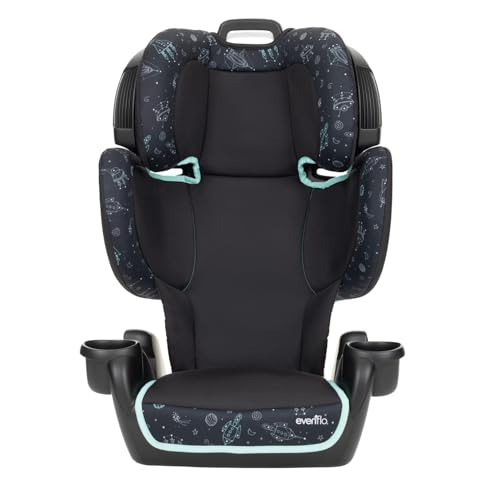
Best for: Parents who want an adjustable, multi-position booster that grows with their child. The GoTime LX offers seven height positions and supports kids weighing 40 to 120 pounds, with transitions from high-back to no-back mode for older children. It meets or exceeds federal safety standards and focuses on ease of adjustment and comfort. Caution: Being primarily a backless or low-back option may limit neck and shoulder support for certain seating positions; assess vehicle headrest compatibility before purchase.
Buying Guide: Key Considerations When Choosing a Booster Seat
- Age, weight, and height ranges: Look for seats that cover your child’s current size and anticipate growth.
- Back vs. backless design: Highback boosters provide head and neck support; backless boosters are lighter and more portable but offer less protection.
- Installation method: Consider LATCH compatibility, belt-positioning, and ease of securing the booster in your vehicles.
- Safety features: Graco ProtectPlus Engineered and other multi-crash protection systems add layers of safety across common crash types.
- Comfort and adjustability: Height and armrest adjustments improve fit and reduce movement during travel.
- Portability and travel needs: If you frequently move the booster between cars or travel by plane, lightweight options may be preferable.
- Vehicle compatibility: Some cars have lower belt anchors or limited headroom; verify fit with your vehicle’s seat design.
Frequently Asked Questions
- What is the weight range for most booster seats?
- Do I need a highback booster for newer cars?
- When should a child transition from a booster to a car seat?
- Are backless boosters safer in crashes?
- How important is the LATCH system on a booster?
- Do boosters require maintenance?
Most boosters accommodate children from about 40 to 100 pounds, though some models extend to 120 pounds or more.
Highback boosters provide head and neck support and are generally recommended for children who are still learning to sit properly in a seat belt.
Children typically transition from a booster once they exceed the car’s belt fit range or reach a height or weight where the seat belt sits correctly on the pelvis and chest. Always follow the product’s guidelines and vehicle safety recommendations.
Backless boosters rely on the vehicle seat belt for protection and may not offer head and neck support in a crash. Highback boosters provide additional protection, especially for younger or shorter riders.
LATCH can help secure the booster more easily, but many boosters rely on the seat belt for installation. If your vehicle has LATCH anchors that align with the booster, use them if the model supports it.
Yes. Clean the covers and padding as needed, and ensure buckles and straps move freely. Some models offer removable, machine-washable covers for easy cleaning.