Answer: For a 6-month-old beginning solids, choose organic, stage-appropriate purees and teething-friendly snacks that align with your baby’s developmental needs. This guide highlights five top organic options that balance nutrition, ease of use, and on-the-go practicality. Best uses vary: some are ideal for introducing flavors, others for on-the-go meals, and a few designed to support early chewing and gum comfort. The products below are organized to help you compare texture, ingredients, and suitability for your baby’s stage of exploration.
| Product | Brand | Why It Stands Out |
|---|---|---|
| Cerebelly Organic Baby Food Pouches Variety Pack | Cerebelly | 16 brain-supporting nutrients; on-the-go pouches |
| Plum Organics 6+ Months Variety Pack | Plum Organics | Non-GMO blends of fruits and vegetables; on-the-go pouches |
| Happy Baby Organics Stage 2 Pouches | Happy Baby | Clearly Crafted; stage 2 textures for exploratory eaters |
| Serenity Kids 6+ Months Pouches | Serenity Kids | Veggie-first pouches with balanced macros |
| Gerber Stage 2 Fruit & Veggie Tubs | Gerber | Convenient tubs; variety for flavor exposure |
Cerebelly Organic Baby Food Pouches

Cerebelly blends organic whole foods for babies and toddlers, focusing on brain-supporting nutrients. The 4 oz pouches are shelf-stable and travel-friendly, enabling easy feeding during outings. Best for parents seeking nutrient-dense options that emphasize diversified ingredients and long-term growth support. A potential limitation is that flavor variety may be less familiar to some babies compared to fruit-forward options.
Plum Organics 6+ Months Variety Pack

Plum Organics offers organic fruit and veggie blends in a non-GMO, unsalted, unsweetened format. The variety pack introduces babies to multiple flavors like apple-broccoli and carrot blends, supporting palate expansion. Best for: parents seeking a range of flavors in one purchase. Choose this if you want clean labeling with simple ingredients; avoid if your baby prefers more fruit-forward sweetness or if your routine requires non-pouch formats.
Happy Baby Organics Stage 2 Pouches

Happy Baby Stage 2 pouches feature clearly crafted ingredients with vibrant colors visible on the package. These are designed for Stage 2 eaters, supporting a smooth puree with new flavors as babies develop their taste and texture preferences. Best for: babies transitioning to more complex textures. Caution: check ingredient lists for potential allergens and ensure stage suitability for your child’s development level.
Serenity Kids 6+ Months Pouches
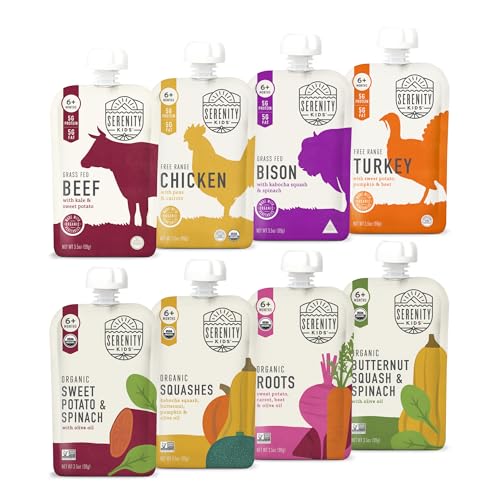
Serenity Kids focuses on veggie-rich pouches with balanced macros designed to ease the transition to more substantial meals. The ingredients emphasize real vegetables and meats, with no added sugar. Best for: families looking for a varied, protein-containing pouch option. Limitation: some blends lean more savory, which may require gradual flavor introduction for sensitive palates.
Gerber Stage 2 Fruits & Veggies Tubs

Gerber’s Stage 2 tubs provide a convenient option for on-the-go feeding with a mix of fruit and vegetable flavors. This pack helps expose babies to a variety of tastes and textures in a portable format. Best for: families seeking a familiar, trusted brand with easy, ready-to-use portions. Limitation: tub packaging may be less travel-friendly than single-serve pouches.
Buying Guide
What should you consider when choosing organic baby foods for a 6-month-old?
- Texture and stage: Stage 2 options are smoother yet offer more variety than Stage 1, suitable for babies starting to explore textures.
- Ingredients list: Look for organic, non-GMO ingredients with minimal processing; avoid added sugars and artificial flavors.
- Nutrient balance: Prioritize blends with iron, zinc, and essential vitamins to support growth and development.
- Convenience: Pouches are portable and easy for parents on the go; tubs or jars may be better for home meals and spoon feeding.
- Flavor variety: A mix of fruit-forward and veggie-forward options helps acclimate babies to a broad palate.
Frequently Asked Questions
- When can I start feeding organic baby food to my baby?
– Most babies show readiness around 6 months, but consult your pediatrician before introducing solids. - Are all organic baby foods safe for 6-month-olds?
– Organic labeling helps minimize exposure to pesticides, but always check for stage suitability and allergen information. - Should I choose pouches over tubs?
– Pouches are convenient for on-the-go feeds; tubs can be practical for home meals and spoon feeding. - What nutrients are especially important in early foods?
– Iron, zinc, and vitamin D are commonly emphasized for late infancy; supplement considerations should follow pediatric guidance. - How should I introduce new flavors?
– Introduce one new flavor at a time and watch for reactions over a few days to identify potential allergies. - Is sugar added to organic baby foods?
– Reputable brands avoid added sugars; read labels to confirm.