Answering the search for age-appropriate sensory books, this guide highlights five top options that support tactile, visual, and auditory development in infants and toddlers. Best for parents seeking safe, chewable, and engaging early-learning tools, these books promote fine motor skills, focus, and early language skills. Each pick is suitable for babies from newborn to 12 months, with some expanding play as the child grows. The following table summarizes the essentials to help you compare at a glance.
| Product | Best For | Key Benefit | Age Range |
|---|---|---|---|
| hahaland Baby Books 0-6 Months | First tactile exploration | 3D tails, multiple textures, and sound features | 0-12 months |
| Macabaka Montessori Soft Baby Book | Tummy time & cognitive growth | 8 pages, high-contrast visuals, unbreakable mirror | 0-12 months |
| Dr.Rapeti Soft Cloth Books 6-Pack | Varied themes for habit formation | Six themes with tactile surfaces | 0-12 months |
| Gojmzo Busy Board | On-the-go learning | 8 pages, 30+ activities for fine motor skills | 12-24 months |
Hahaland Baby Books 0-6 Months
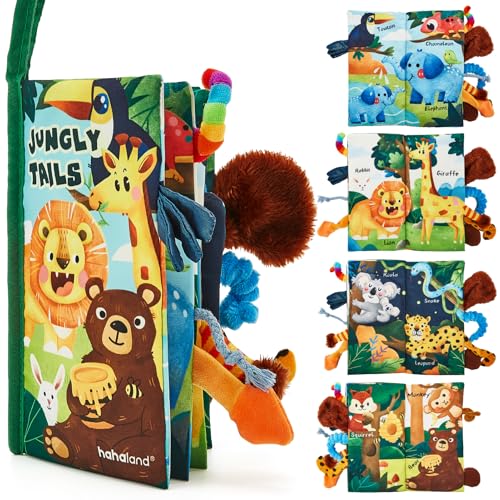
The Hahaland infant book focuses on soft, BPA-free fabric and chewable textures, designed for babies from birth to 12 months. It features 3D tails with ten distinct textures to encourage sensory exploration, aiding tactile development and hand-eye coordination. The embedded sound mechanism provides rustling and squeaking responses when pages are flipped, supporting auditory and visual stimulation. It is reinforced for durability and easy cleaning, making it a practical travel toy for parents on the go.
- Best for babies who are teething or prefer chewable, safe fabric toys.
- Choose this for a compact, easy-to-clean sensory book that grows with early exploration.
Best for: Parents seeking a soft, chew-safe sensory book with clear, high-contrast visuals and engaging sounds. Limitation: Because of the stuffed pages and sound device, the book can be more delicate than cloth-only options and requires gentle handling to maintain shape after chewing.
Macabaka Montessori Soft Baby Book
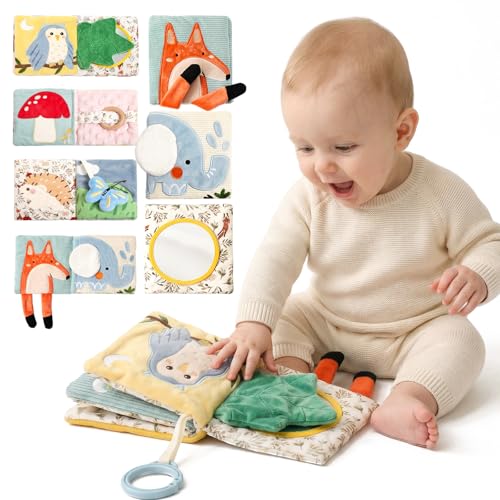
Macabaka’s Montessori-inspired soft book is designed as a baby development gym with eight pages of guided discovery. It emphasizes sensory engagement through high-contrast visuals and six unique textures (satin, faux fur, ribbed cotton) to nurture touch and exploration. An unbreakable mirror promotes self-recognition, while a movable ring and interactive elements support fine motor skills and cognitive growth. This book is well-suited for tummy time and car rides, turning routine moments into learning opportunities.
- Best for: Parents following Montessori-inspired activities and a mirror-based self-awareness aid.
- Choose this for a structured, multi-texture experience that supports early problem solving.
Limitation: Some babies may require assistance to fully engage with the page-based activities, so it may work best with caregiver interaction during play.
Dr.Rapeti Soft Cloth Books 6-Pack
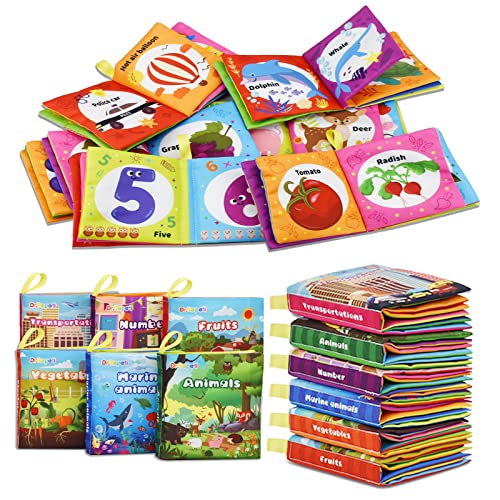
This Dr.Rapeti set offers six distinct themes—animals, marine life, fruits, vegetables, transportation, and numbers—designed for broad sensory exploration. The cloth construction is soft, washable, and non-toxic, making it ideal for babies who are exploring textures and colors with hands and mouths. The themes promote early recognition, vocabulary-building, and categorization, supporting language development alongside sensory play.
- Best for: Families wanting a diverse, multi-theme set that’s easy to maintain and safe for mouthing.
- Consider this for initiating early literacy skills through visual cues and simple words.
Limitation: While the books are durable, frequent machine washing may impact fabric texture over time; hand washing is recommended for longevity.
Gojmzo Busy Board Montessori Toys

The Gojmzo Busy Board brings Montessori-inspired learning to a portable format with eight pages and over 30 activities. It covers zippers, shoelaces, buttons, alphabet and color matching, animal puzzles, clock and calendar concepts, and threading games. This makes it a strong option for toddlers developing fine motor skills, problem-solving, and cognitive sequences. The soft felt construction and reinforced stitching enhance safety for curious hands and mouths.
- Best for: Toddlers ready for more complex, hands-on activities that support practical life skills.
- Choose this if you want a comprehensive, travel-friendly tactile learning board with many activities.
Limitation: The plethora of activities may be overwhelming for very young babies; best used with supervision and guided sessions as attention shifts.
Buying Guide
What matters when selecting sensory books for babies
- Safety and materials: Look for BPA-free fabrics, non-toxic prints, and durable stitching. Chew-safe options are preferable for teething babies.
- Age appropriateness: Choose books that align with your child’s development stage—newborns benefit from high-contrast visuals and textures; older infants and toddlers benefit from puzzles, fine motor activities, and self-recognition aids.
- Texture variety: A mix of crinkle, satin, faux fur, and ribbed textures supports tactile discrimination and exploration.
- Auditory and visual stimulation: Books with rustling sounds or soft squeaks, plus bright colors and simple images, help auditory and visual development.
- Durability and washability: Reusable cloth or fabric books that withstand teething and frequent washing are practical for everyday use.
- Portability: Travel-friendly designs encourage learning during car rides or stroller walks without heavy bulk.
Frequently Asked Questions
- What is a sensory book and why is it good for babies?
A sensory book engages touch, sight, and sound to support early development in areas like motor skills, attention, and language.
- When should I introduce a tactile book to my baby?
From birth, with supervision, gradually increasing complexity as the child grows and develops manual skills.
- Are cloth books safer than board books for babies?
Cloth or fabric books are typically safer for mouthing and teething, reducing choking hazards compared with small rigid parts.
- How many pages or textures are ideal in a first sensory book?
Start with 4–8 pages and a handful of textures; expand as your baby explores and shows interest.
- Should I use these books during tummy time?
Yes, many baby sensory books are designed to be used during tummy time to support coordination and visual tracking.