If you need a reliable toddler step stool to help your child reach the bathroom sink, these five models offer strong stability, non-slip features, and easy portability. They’re best for toddlers learning to wash hands, brush teeth, or participate in potty training, with options suited to different ages and spaces.
| Product | Best For | Key Feature |
|---|---|---|
| Forbena Toddler Step Stool for Bathroom Sink | Young toddlers needing two steps | 8 slip-resistant feet; light and portable |
| Dreambaby Step Stool | Potty training and sink use | All-around contoured design; anti-slip rubber dots |
| Onasti Foldable 3-Step Stool | Growing children needing adjustable height | 270-degree top turn; folds flat |
| COOSEYA 2 Step Stools (2 Pack) | Dual-step reach; shared use | No-slip bottom and edges; double-layer height |
| AJVV Toddler Step Stool | General independence and reach | Anti-slip surface; lightweight with carrying handle |
Forbena Toddler Step Stool for Bathroom Sink
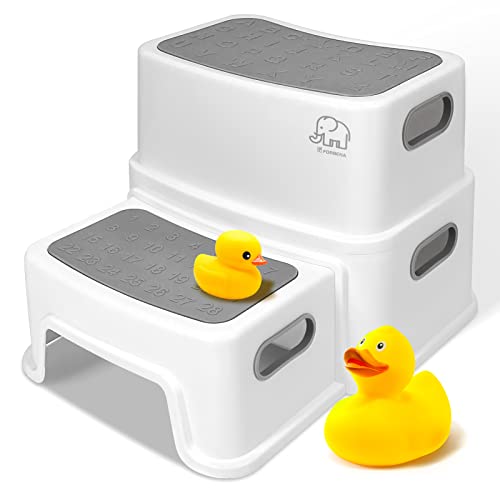
Best for: Toddlers who need a compact, two-step reach for bathroom tasks. This lightweight plastic stool supports up to 200 lb and includes comfortable carrying handles for easy maneuvering. The eight slip-resistant soft rubber feet reduce tile slipping, making it a solid choice for bathrooms or kitchens. The design emphasizes quick assembly and simple use for daily routines such as brushing teeth or washing hands. Limitation: heavier adults may find it less comfortable for use as a full-size step stool due to its size.
Dreambaby Step Stool for Kids

Best for: Potty training and sink use with a contoured design. It features 117 rubber traction dots and a durable, lightweight build, supporting up to 175 lb. The stool is sized to fit around toilet bases while also aiding in reaching sinks or kitchen counters. Caution: The surface may feel slick on wet floors if rubber dots wear down over time.
Onasti Foldable Step Stool (3 to 2 Steps)

Best for: Families needing height-adjustable steps and space-saving design. The top panel turns 270 degrees to convert a 3-step stool into a 2-step stool, with handles and non-slip pads for safety. It’s ideal for growing children who graduate from two to three steps and for use at sinks, toilets, or counters. Caution: Folding mechanisms require occasional alignment to maintain stability.
COOSEYA 2 Step Stools (2 Pack)

Best for: Multipurpose use and shared households. The double-layer design increases reach to higher surfaces like sinks and countertops. Features a no-slip bottom and safety edge design with rounded corners to reduce injuries. Best for: households needing two stools for simultaneous tasks or different rooms. Limitation: The two-pack design may require more storage space than a single stool.
AJVV Toddler Step Stool

Best for: Growing kids needing a sturdy, anti-slip stool with a light footprint. It features a right-angle structure and rubber bottom edging for stability and a higher reach. Best for: homes with small bathrooms or kitchens where a compact, portable stool is preferred. Caution: Some users may want additional height options beyond the two-tier design for taller sinks.
Buying Guide: Key Considerations for Toddler Step Stools
- Safety first: Look for non-slip surfaces, rubberized feet, rounded edges, and a stable A-frame or crossbar design to prevent tipping.
- Height options: Consider whether your child benefits from a two-step, three-step, or adjustable stool, especially for growing toddlers.
- Portability and storage: Foldable or lightweight stools are easier to move between rooms and store in small spaces.
- Weight capacity: Choose a model that supports both children and adults (if you anticipate sharing the stool or using it for adults occasionally).
- Durability and materials: Plastic stools are light and easy to clean; wooden stools offer robust stability but may require more care.
- Compatibility with tasks: If the stool will be used primarily at the sink, ensure the height allows comfortable reach without overreaching.
Frequently Asked Questions
- What should I look for in a toddler step stool for the sink?
A: Look for non-slip surfaces, stability, appropriate height, and ease of cleaning. Handles or grips help little hands move the stool safely. - Is a two-step stool better than a three-step stool for potty training?
A: A two-step stool is often sufficient for sinks and basic reaching, while a three-step model provides extra height for older toddlers or taller tasks. - Can these stools be used by adults?
A: Some models support up to 170–220 lb, but they are designed for children; verify weight capacity before adult use. - Are foldable stools safer for small bathrooms?
A: Yes, foldable stools save space and are easy to store, reducing clutter in compact bathrooms. - How do I choose between plastic and wooden stools?
A: Plastic is lighter and easier to clean; wood tends to be sturdier and may offer better long-term stability, depending on construction. - How can I ensure long-term safety as my child grows?
A: Select a stool with a higher weight capacity and adjustable height or a 3-step design to accommodate growth.