When shopping for babies and toddlers, parents seek wholesome, simple ingredients, easy-to-eat textures, and options that support early feeding skills. This guide highlights five veggie-based snacks that are popular with families and designed for little ones. Each product is evaluated for who it’s best for, why it stands out, and any limitations to consider. Whether you’re packing a lunchbox or a quick on-the-go snack, these picks aim to balance nutrition and kid-friendly flavors for growing appetites.
Buyer quick-look: The top picks selected here include organic veggie straws, dissolvable teething snacks, and toddler-friendly puffed options. They’re chosen for convenient packaging, kid-suitable textures, and simple ingredient lists. Use the comparison table to scan at a glance and then dive into each product section for details tailored to different age ranges and feeding needs.
| Product | Age Range | Best For | Main Benefit |
|---|---|---|---|
| Earth’s Best Sesame Street Veggie Snacks | Toddlers 2+ | Lunchboxes, snack time | Organic, kid-friendly flavors |
| Earth’s Best Veggie Crunchy Teethers | 6+ months | Teething relief | Dissolvable texture |
| Little Bellies Veggie Tubes | 12+ months | Finger foods | USDA Organic |
| Earth’s Best Garden Veggie Straws | Toddlers | On-the-go snacks | Hidden veggies |
| Earth’s Best Melty Hoops | 8+ months | First finger foods | Poppable, self-feeding |
Earth’s Best Organic Kids Sesame Street Veggie Snacks

Best for busy households seeking convenient, single-serve snacks with a playful theme. This pack features organic ingredients like real potatoes, spinach, and tomatoes, plus Sesame Street branding to engage toddlers. The compact bags are ideal for lunch boxes or car trips, helping to reduce mess while introducing veggie flavors.
Who it’s best for: toddlers who enjoy fun characters and need a reliable packable snack. Why selected: the blend of organic ingredients and easy-to-carry packaging supports on-the-go feeding without added fuss. Caution: check for allergen sensitivities and ensure age-appropriate bite sizes for younger children.
Earth’s Best Organic Teething Snack: Garden Veggie Crunchy Sticks

Best for babies 6 months and older who are teething and need a dissolvable snack. These sticks soften quickly, helping soothe gums while promoting interest in finger foods. The simple organic ingredient list supports budding taste preferences without complicated additives.
Who it’s best for: teething infants and early testers of finger foods. Why selected: dissolvable texture reduces choking risk for new eaters. Caution: dissolvability can vary; supervise to avoid small pieces remaining intact for very young chewsters.
Little Bellies Organic Veggie Tubes
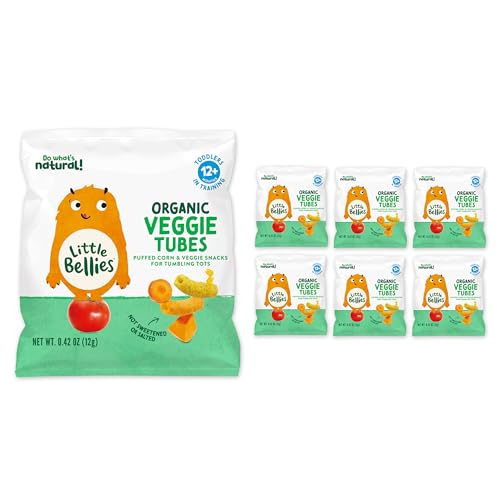
Best for toddlers who prefer small, tube-shaped snacks and a USDA Organic label. These tubes come in individual portions, designed for easy handling and portion control during meals or travel. The ingredients focus on recognizable natural foods, supporting simple and wholesome choices.
Who it’s best for: parents seeking organic, clearly sourced ingredients in kid-friendly handheld shapes. Why selected: trusted organic certification and packaging sized for little hands. Caution: check serving sizes to prevent over-snacking in a single sitting.
Earth’s Best Organic Garden Veggie Straws (Toddlers)

Best for toddlers 24 months and older who are ready for slightly more textured foods. These veggie straws include organic spinach and organic tomato in a light, crunchy snack. The product emphasizes simple, wholesome ingredients without artificial flavors or colors.
Who it’s best for: families who want a gluten-free, kid-friendly option with veggie-forward flavors. Why selected: strong vegetable content and age-appropriate texture. Caution: some toddlers may prefer sweeter flavors; offer alternatives if tolerance is limited.
Sensible Portions Garden Veggie Sea Salt Straws

Best for families who want a pantry-friendly option with a broader snack variety. These sea salt straws use a mix of veggie ingredients and potatoes, offering a lighter fat profile and familiar flavor. They are certified kosher and gluten-free, aiding dietary planning.
Who it’s best for: households needing a 0g cholesterol and 0g trans fat profile, with a focus on gentle, kid-friendly textures. Why selected: lower fat content than typical chips makes these a practical everyday option. Caution: check for added sodium if limiting salt intake.
Buying Guide: What To Consider When Choosing Veggie Straws For Babies
- Age appropriateness: Match textures to developmental stage, from dissolvable teething snacks to finger foods.
- Ingredient quality: Prioritize organic labels and simple ingredient lists when possible. Look for recognizable components and minimal additives.
- Texture and bite size: For younger babies, choose dissolvable or melt-in-the-mouth options; for toddlers, opt for small, easy-to-grip shapes.
- Allergies and dietary needs: Check for gluten-free, dairy-free, and allergen considerations relevant to your child.
- Portability and packaging: Single-serve pouches and compact tubs ease on-the-go snacking and reduce mess.
- Flavor variety: A mix of veggie-forward flavors helps expand taste preferences beyond standard snacks.
- Nutrition balance: Look for veggie content—spinach, tomato, or other vegetables—paired with wholesome bases like potatoes or grains.
Frequently Asked Questions
- Are veggie straws healthy for babies? They can be a convenient veggie-forward snack, but always review ingredients and ensure age-appropriate textures.
- What age should I start giving dissolvable teething snacks? Typically suitable for babies 6 months and older, as a teething aid under supervision.
- Do these snacks contain artificial flavors or colors? Many options advertise no artificial flavors or colors, but it varies by product. Check the ingredient list.
- Is gluten-free always necessary for veggie snacks? Not always, but gluten-free options are available for families avoiding gluten. Verify labeling on each product.
- Can veggie straws replace fruit or vegetables in a diet? They should complement a balanced diet with a variety of whole fruits and vegetables.
- How should I store these snacks? Store in a cool, dry place; reseal bags or use airtight containers to maintain freshness.